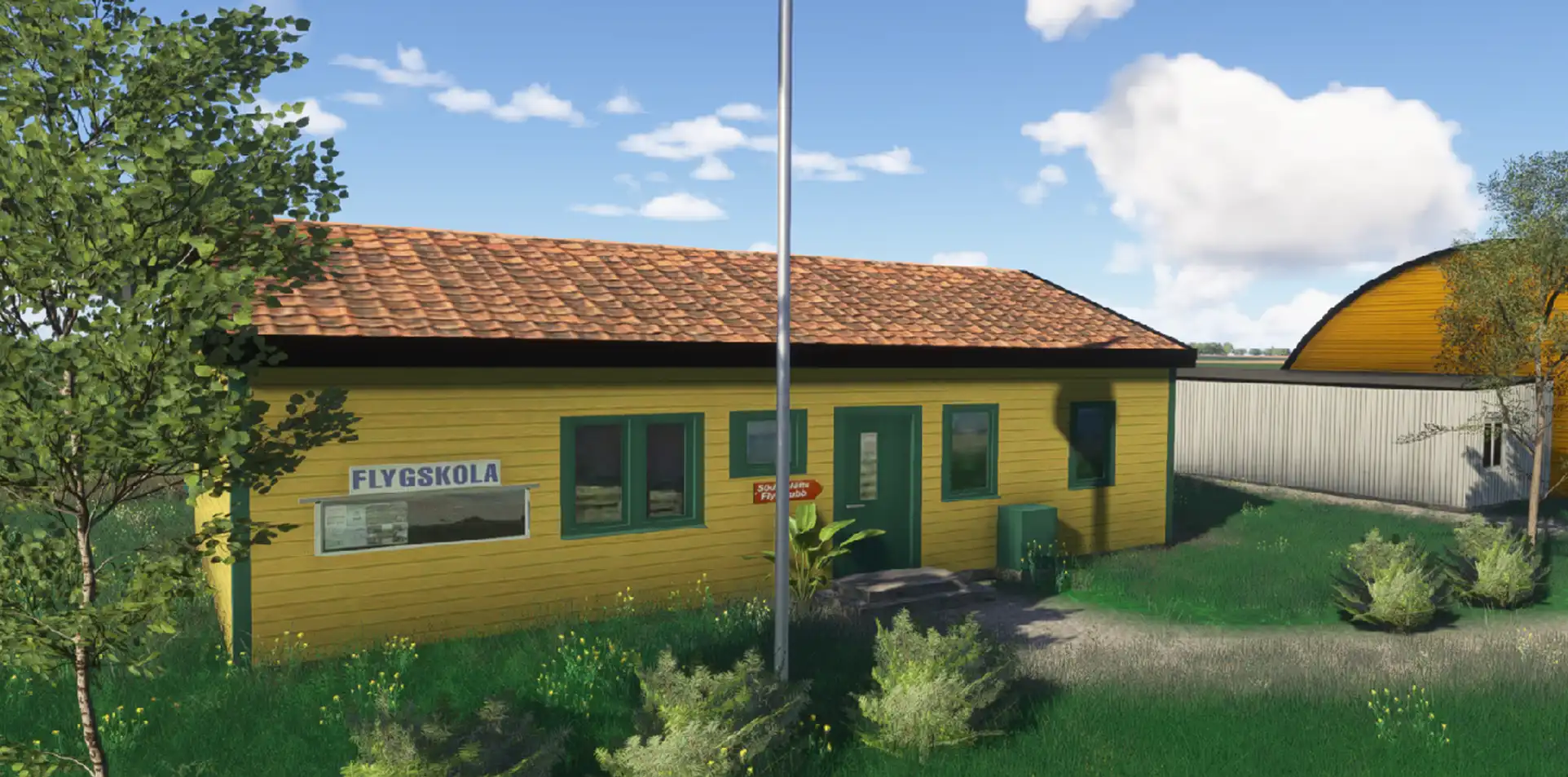
The Final Approach: A Legend Signs Off
July 13, 2025
Community
Lennart Arvidsson has long been a quiet constant for many in the Scandinavian flight simulation community - a symbol of dedication, passion, and craftsmanship. Over more than two decades, Lennart has brought Sweden to life in virtual skies, one runway, treeline, and terminal at a time.
From the early days of FS2000 and FS9 to the modern era of MSFS 2020 and 2024, Lennart’s work stayed true to a clear goal: making the simulator world feel more real. He rebuilt real airports across Sweden, often in overlooked or remote areas, and filled the gaps with fictional fields in lakeside villages and mountain valleys through his Fly & Fish series. His sceneries gave flight simmers destinations that felt believable, familiar, and worth visiting. Not just places to depart from.
Now, Lennart has announced that he is stepping back from scenery development. In a Facebook post shared with the Flightsim Sweden community, he explained his decision with humility and quiet clarity. What followed was an immediate wave of gratitude from across the Nordic simming world. A collective moment of recognition for a man who has shaped the virtual geography of several generations.
“Your work through the years is a fantastic life’s work,” wrote one member.
“Legend,” said another, simply.
Others thanked him for their best sim memories - approaches, landings, even entire regions that would not have existed without his hand.
"Your airports have made a huge difference in the simulator," one wrote. "Everything has its time. Now take care of yourself and your wife."
Even among the short and spontaneous replies, a deeper message was clear: Lennart’s work had not only enriched simulators, it had connected people, sparked imagination, and made the hobby feel more like home.
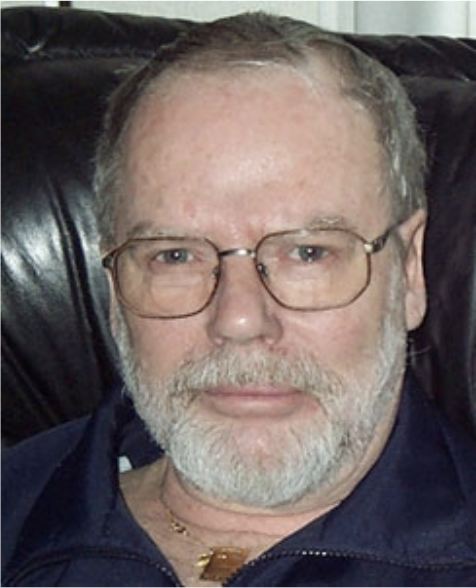
This article is both a tribute and an attempt to show the full scope of Lennart’s contribution to flight simulation. It includes not just the airports and scenery files but also his path into the hobby, how he developed over the years, and the care and creativity he brought to every project.
The Beginning
Before his venture into scenery design, Lennart had no experience with flight simulation. In the late 1980s and early 1990s, flight simulators did not thrive as they do today. Personal computers were just beginning to find their way into people’s homes, and simulation software was still rare and relatively unknown.
Lennart, however, was no stranger to visual storytelling. A professional graphic designer by trade, he spent his career as an art director in the advertising world. He led creative departments at international firms and eventually headed his own agency. It was a world of precision, aesthetics, and communication. These were qualities that would later find an unexpected home in flight simulation.
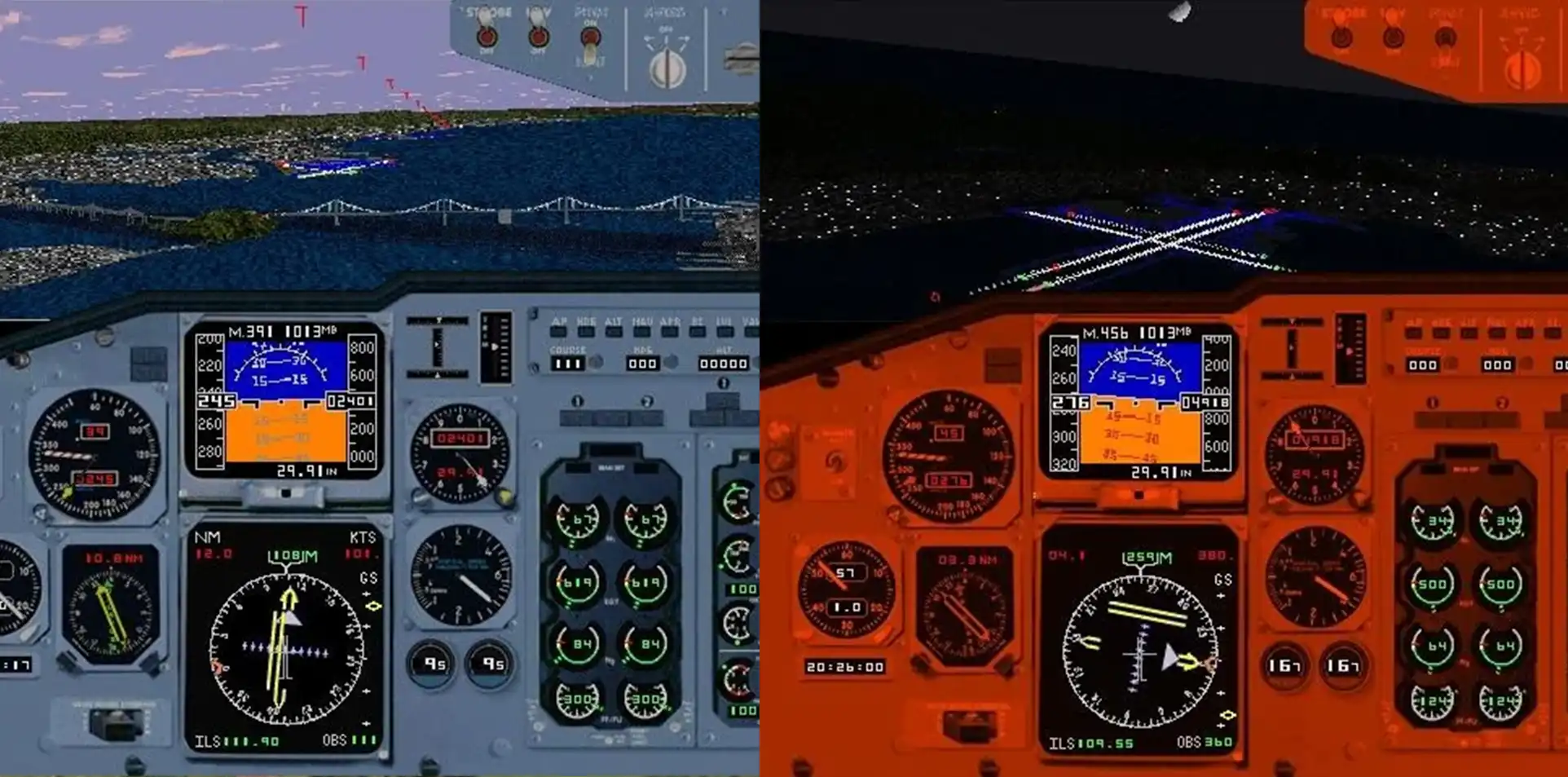
The spark came not from aviation but from a floppy disk handed to him by a colleague. It was one of the earliest versions of Microsoft Flight Simulator, featuring Chicago’s iconic Meigs Field. After hours, it became a quiet amusement.
Years later, after retiring from professional life, Lennart searched for something meaningful to fill his time. The memory of early virtual flight returned.
“When I retired, I wanted something to do in my spare time. I remembered that old disk and discovered that Microsoft Flight Simulator 95 was available. It seemed like it could be fun, so I bought it.”
A Disappointing First Journey
Lennart’s first flight in the simulator took off from Kastrup Airport in Copenhagen, just across the water from his hometown of Landskrona in southern Sweden. Curious and hopeful, he turned the aircraft toward home, eager to see familiar landscapes from above. But what met him on the screen was not the rolling fields of Skåne, nor the coastline he knew so well. It was a mess of grey, mottled textures with no resemblance to reality.
Surprised and disappointed, he decided to find out why. His search led him to a group called Swedflight, one of the early creators of Scandinavian scenery for the simulator. It turned out he was right. They were behind the Swedish landscape.
“I contacted a group called Swedflight, which I believed was responsible for the scenery. That was correct. Bo Wiberg was the group's leader, and I asked him why it looked the way it did. He explained how landscape textures were created and said they were satisfied with their appearance. Then he added, ‘If you think you can do better, go ahead,’ with a tone that suggested he didn’t think I could pull it off.”
Lennart took on the challenge, even if it was precisely as Bo had implied.
“It was a bit challenging, he was right about that. The texture format was R8, and its colour palette only permitted eight colours. Not much to work with.”
Creating believable terrain within such limitations required both patience and creative problem-solving. At the time, hardware could not handle many texture variations without significant performance issues. There were also visual constraints; each texture had to tile seamlessly in all directions, or it would break immersion with harsh edges and visible seams.
Undeterred, Lennart started designing new ground textures from scratch. He created fields, forests, and built-up areas for towns and villages, each carefully adjusted to blend with the others.
“I created field, forest, and urban textures for cities and villages. They turned out really well. Everyone in the group was happy and wanted more options when building the landscape.”
His contribution was so well-received that he became a full member of the Swedflight group. Together, they continued developing the visual side of the simulator, now in collaboration with a Norwegian team. The work expanded to include mountainous terrain, snow-covered areas, and more.
This was long before mesh scenery or terrain elevation data became common. Back then, if you wanted mountains, you had to build them as objects.
The Hurdles and Discoveries of Development
Of course, there were problems along the way. One of Lennart’s early challenges came when adding snow to mountaintops. But no matter what he did, the snow ended up in the middle of the mountain.
“It turned out the upper half of a texture would end up at the bottom of the object, and the lower half would be placed on top. So you had to split the texture at exactly the right pixel to make it look good.”
Then came an accidental discovery that would shape how nighttime scenery could look in the sim. While experimenting with colours, Lennart found that placing a single yellow pixel in a texture made it glow brightly at night.
“Night lighting was born.”
The innovation caught Microsoft’s attention. The head of the simulator production team contacted the Swedflight group and invited them to a meeting in Oslo. A date was set. It looked like a breakthrough moment. But just two days before the meeting, Lennart suffered a heart attack and was hospitalised.
“Bad timing, you could say.”
Even so, the meeting went ahead and was considered a success. After recovering, Lennart continued creating landscape textures for FS9 and FS98, supporting both Swedflight and the Norwegian group.
His collaboration with Bo Wiberg deepened, and the two became close friends. Bo would often visit Lennart at home. In many ways, it was thanks to Bo and that initial challenge that Lennart became a core texture artist for Swedflight.
Companies even approached Lennart about hiring him for commercial texture development. But he turned all those offers down.
A Stand Of Principle and a Step into the Spotlight
When MSFS 98 arrived, the Swedflight group transformed. The team was restructured and, before long, began moving in a commercial direction. Their new focus was on building payware airports. “Professional-grade scenery” sold to the public.
For Lennart, this was a turning point.
“I didn’t want to be part of that. Money creates conflict, and I felt that the flight simulation hobby didn’t need to be burdened with more costs for the user. But simultaneously, I understood that it was probably inevitable.”
Rather than compromise, he stepped away from Swedflight and began working on ground textures independently. He continued developing for MSFS 98 and eventually for FS2000, now as an independent creator without any group affiliation.
His solo work did not go unnoticed.
In September 2000, the primary American flightsim site, FlightSim.com, awarded him their Developers Award for Scenery Design Excellence for FS2000 Textures. A physical plaque arrived in the mail.
“A great honour. All I could do was say thank you and accept it.”

A New Partnership and a Shift Toward 3D
Creating ground textures was rewarding, but Lennart felt it was time for something new. A chance encounter in his hometown of Landskrona opened a new door.
“By coincidence, I met Pär Nilsson, who also lived in Landskrona. He enjoyed FS98 and had tried to create textures for buildings and other objects, but hadn’t succeeded. So I offered to help him.”
Together, they formed the group L&P: “Lennart and Pär”. Their work covered ground and building textures, expanding to several Swedish and Danish airports. Pär focused on creating the structures, while Lennart provided the textures. Their largest project together was a whole scenery for Copenhagen’s Kastrup Airport. But the partnership would not last forever.
“Unfortunately, he got stuck in his ways and didn’t want to move forward with newer software. So, eventually, we parted ways. I thought, well, I’ll continue on my own then.”
By now, the year was 2003. And if Lennart was going to continue building complete airport environments on his own, there was only one option left: He had to learn how to model in 3D.
“I don’t quite remember the name of the first program I started with, but I know I quickly moved on to FS Design Studio. It was fairly advanced at the time.”
For texturing, he initially leaned on familiar ground with Adobe Photoshop, a tool he had mastered during his years in advertising. Later, he switched to GIMP, which offered the capabilities he needed without the price tag.
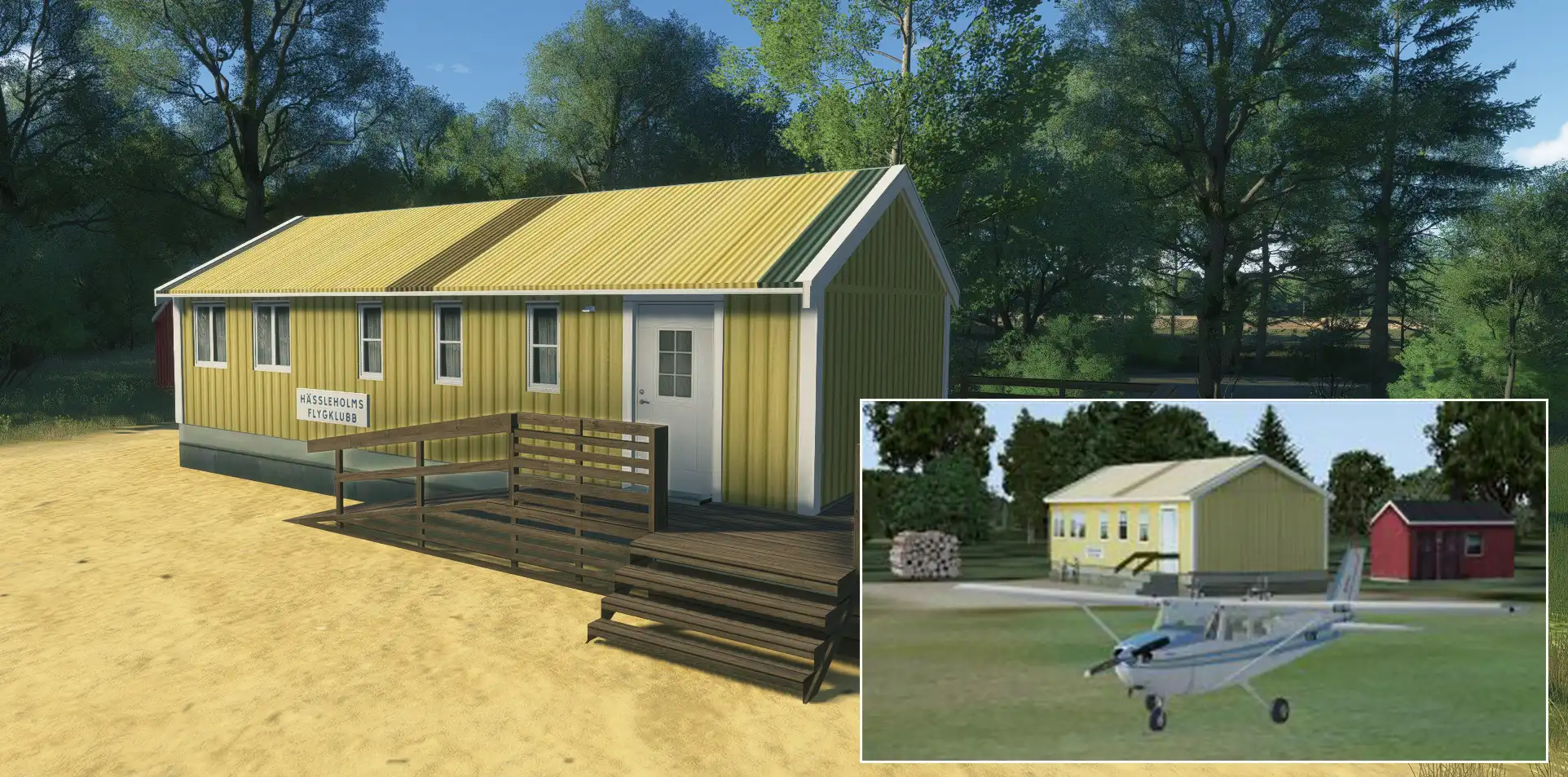
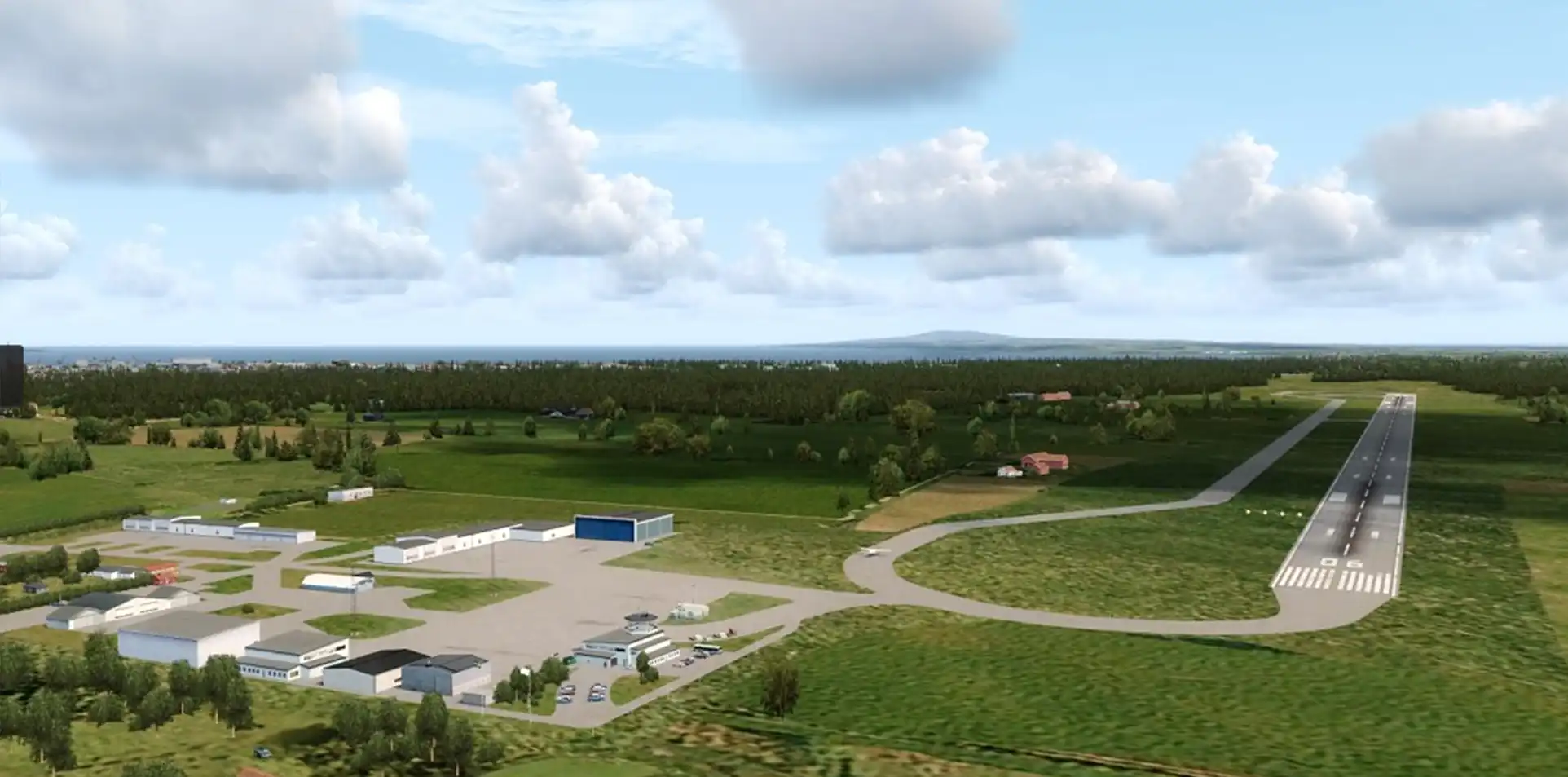
His first fully self-built airport was a small airfield in southern Sweden: ESFA Hässleholm-Bokeberg, made for FS2002 and later FS2004. From there, his airport portfolio grew steadily.
“I don’t remember exactly how many more I made for those two simulators, but it was probably between 20 and 30 airports. That was quite a while ago, and at 89, my memory isn’t what it used to be.”
Even so, the scale and ambition of his early solo work speak for themselves. Lennart had gone from designing textures to building complete environments, becoming a one-man scenery studio.
The FSX and SWD Period
Lennart was likely one of the first people in Sweden to install Flight Simulator X on his personal computer. He received a pre-release copy from a company in Malmö, the only Swedish retailer focused on flight simulation hardware and accessories.
“I got the copy to review the simulator. The company believed my name carried more credibility than their own. Maybe there was some truth to that.”
Unfortunately, Lennart no longer remembers the company's name but remembers the impression FSX made when he first launched it.
“Wow! That simulator was something entirely new. It was a huge step forward.”
FSX opened new possibilities and introduced a wave of technical changes. Lennart once again found himself back in learning mode. New tools, new workflows, and new rendering systems meant he had to start over in many ways.
But it was also an exciting time. The number of flight simmers grew rapidly, and the possibilities felt wider than ever. To get familiar with the new environment, Lennart started developing a few airports, experimenting with the tools, and exploring the new limits.
It wasn’t long before he had a new idea. If he kept building, maybe it was time to gather others around a new identity. That was the beginning of SWD (Sweden Design).
Painting a Country by Hand
By Lennart’s admission, it was a completely mad idea. But it was also too exciting not to try.
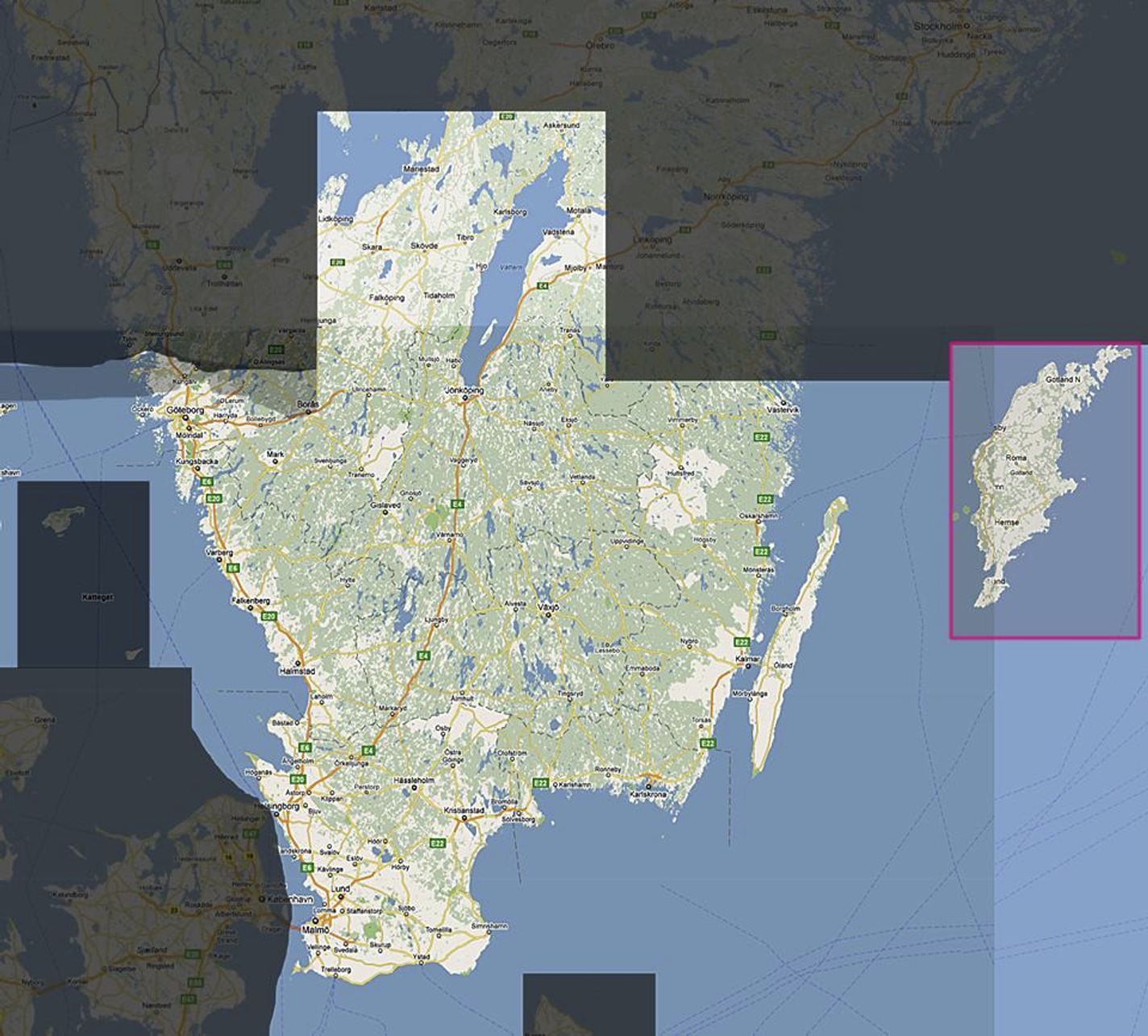
FSX may have introduced significant improvements in many areas, but its depiction of Sweden, especially the landclass data and coastlines, left much to be desired. In Lennart’s eyes, they were simply bad.
The idea? To remake Sweden field by field, forest by forest, town by town, with textures that genuinely represented the landscape. Accurate coastlines, rebuilt airports, and hand-crafted environments from south to north.
“Was it possible for me to do it alone? No, of course not.”
So he did what anyone facing the impossible should do. He built a team.
Martin Loxbo contributed many of the CAD files for the airports.
Hans Ramberg rebuilt the coastlines of Skåne.
Henrik Nielsen created a custom library of ships designed to match Swedish harbours.
Hans Pålsson donated his entire dataset from the FS9 land class project, SweClass.
A few others offered smaller contributions here and there.
The rest, Lennart did himself.
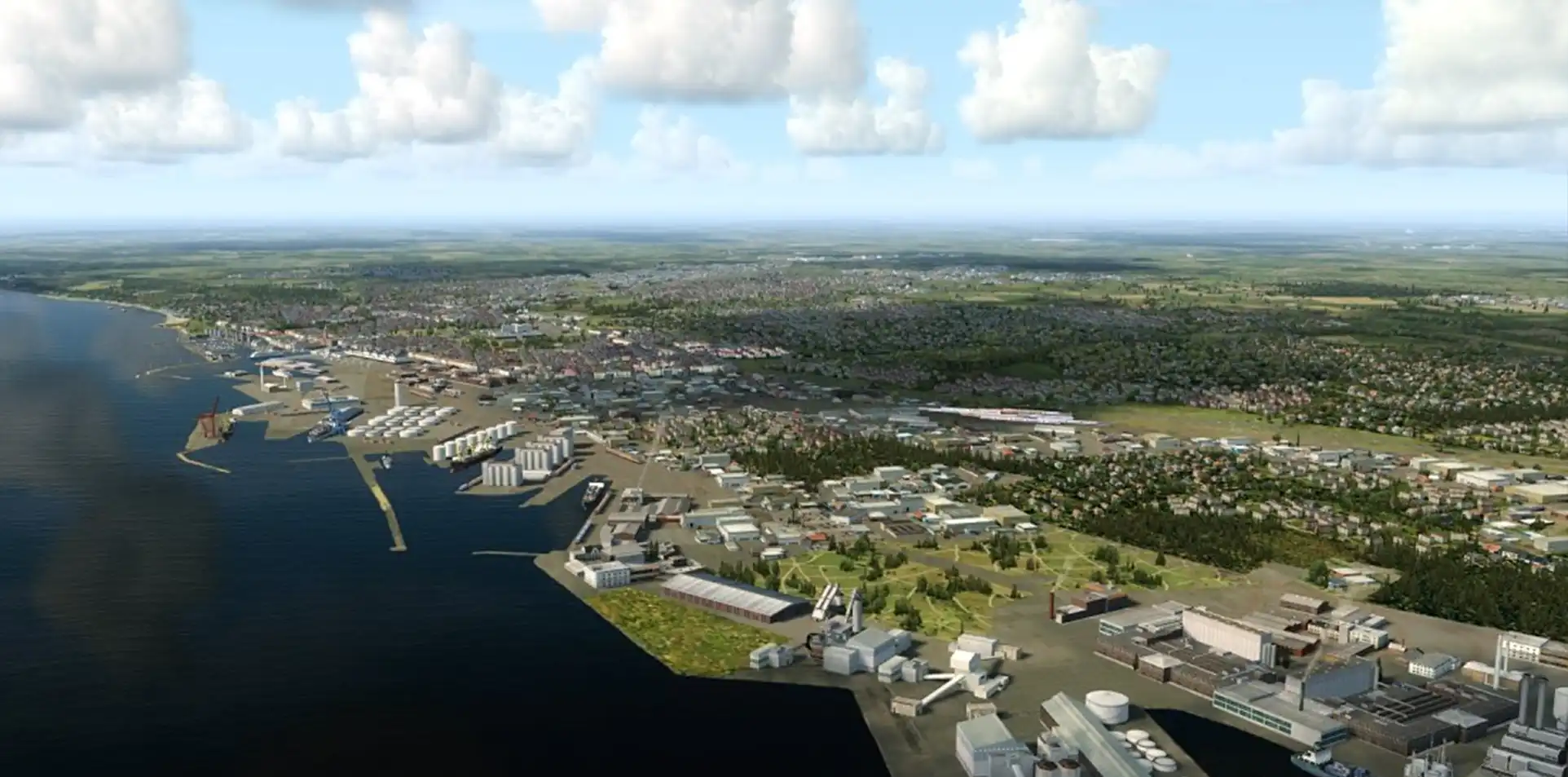
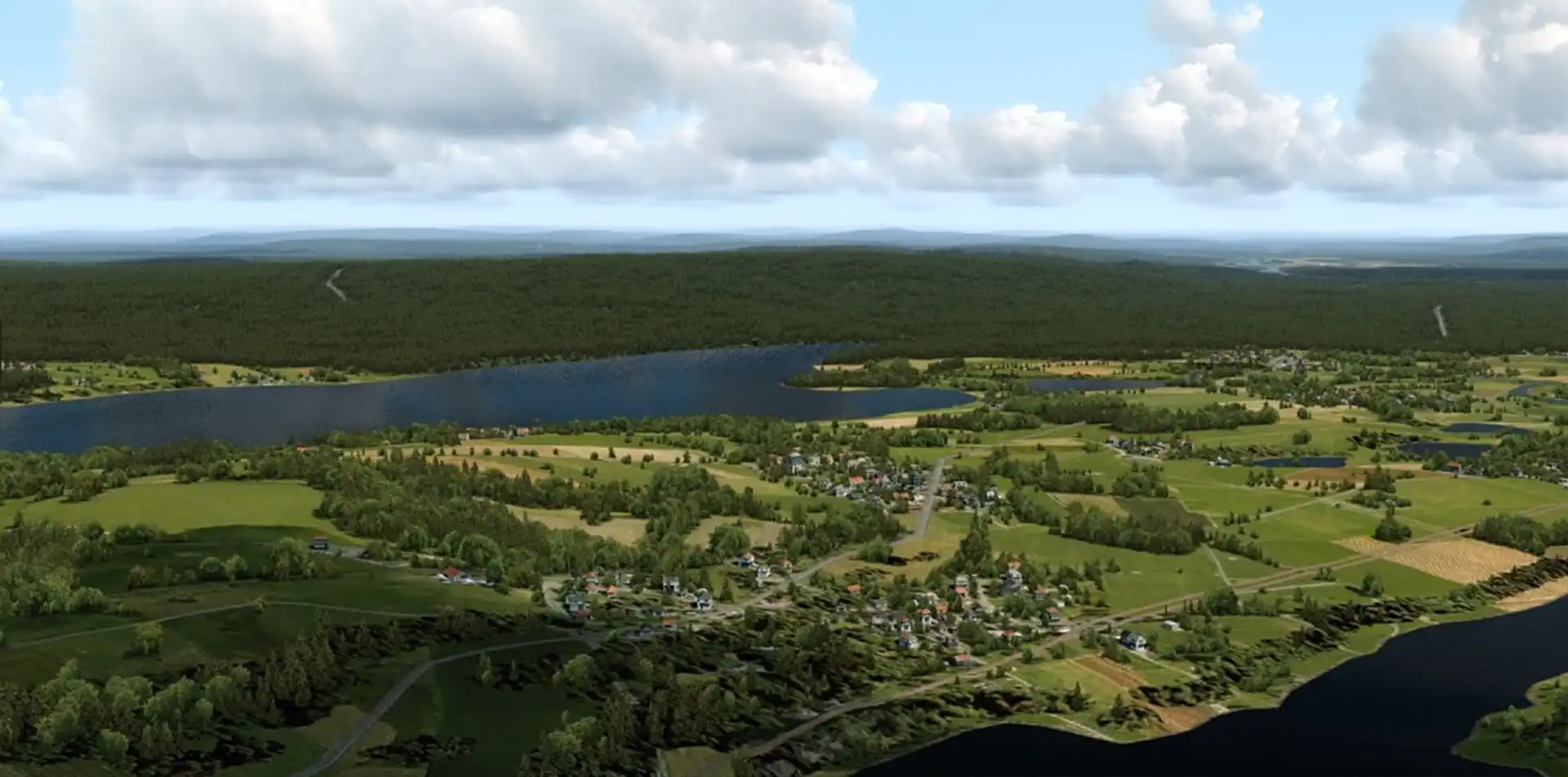
Lennart combined this material with Google Earth imagery to hand-craft a new land class for Sweden under the SWD banner. He recreated a significant portion of the country, nearly halfway up from the southern tip, before the workload became too much.
“When I look at images from the project today, I realise the landscape in many ways resembles MSFS 2020. Not bad for something that came out back in 2010.”
Building a Community Around the Vision
Lennart launched two Facebook pages to showcase the Sweden Design project and invite discussion. One was dedicated to development updates and progress reports; the other served as a general forum for feedback, questions, and community conversation.
The goal at the time was modest, but symbolic.
“The aim was to surpass the online Norwegian page, which had about 150 members.”
It did not take long. The SWD page quickly grew past 200 members, surpassing the original benchmark and signalling something more important: that flight simulation was starting to gain real traction in Sweden and Norway. The hobby was no longer just a niche. It was becoming a movement.
Eventually, Lennart handed the reins over to a new team of community leaders. Today, the page lives on as Flightsim Sweden, run by Drago Blagojevic, Daniel Martinsson, and Oskar Gustavsson Sandjö, with over 2,500 members.
“That was enough for me. I just wanted to build airports.”
The group continues to serve as a meeting place for Nordic simmers, growing far beyond its original purpose.
New Platforms and Unfinished Seasons
The years following FSX were marked by difficulty. Lennart faced health issues and repeated hospital stays. A time of uncertainty, frustration, and pause. At the same time, no clear successor to FSX emerged, and he felt that chapter had run its course.
So the question became: what now? He briefly explored Prepar3D, but it left little impression.
“I probably did something for P3D, but I barely remember. My age is catching up with me, I’m afraid.”
Instead, his attention turned to X-Plane 11.
“I moved over to X-Plane 11. A new program to build with, and a new way of thinking about landscapes.”
X-Plane 11 impressed him with its flight dynamics, which he considered excellent. But the visual environment, in his view, left much to be desired. The simulator’s terrain and landclass system did not meet the standard he had expected. Still, its development tool WorldEditor (WED) offered a welcome surprise.
“WED is very well structured - easy to learn and use.”
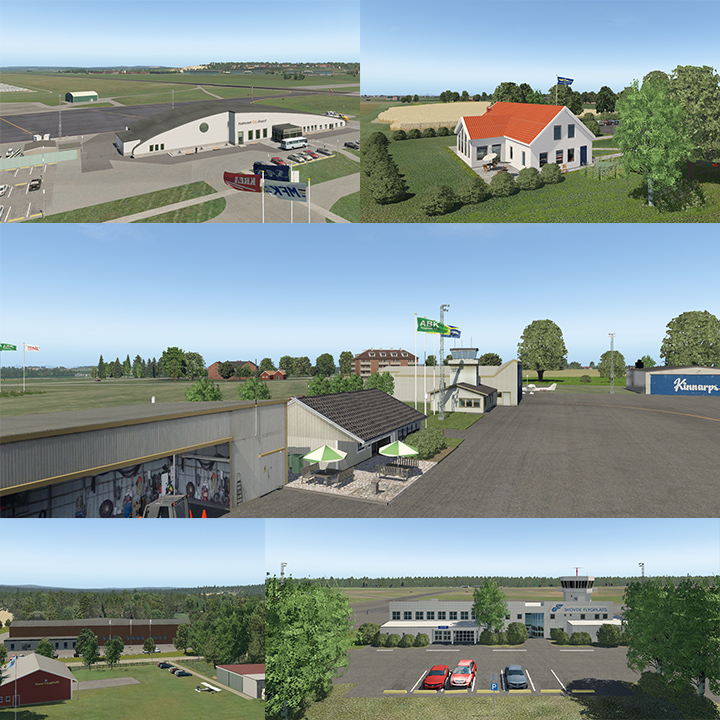
Lennart began developing scenery again, this time focusing on X-Plane 11. He created around 20 airports in varying sizes and a custom library of objects suited to the simulator. It included various types of grass textures and representations of grain fields. He never kept count of his creations, not out of carelessness, but because statistics had never been the point.
“I never kept track of what I made. I always thought it was pointless.”
When X-Plane 12 arrived, he transitioned again. The platform showed great potential, and he began building new airports. But one thing continued to bother him: the simulator’s approach to seasonal changes.
“It never felt finished.”
He spent considerable time developing a vegetation library designed to change with the seasons. But the transitions between seasonal states never quite worked properly. The result was a well-made library and ten unpublished airports.
“They’re nice and good-looking, but the seasonal changes just don’t work. X-Plane 12 still hasn’t solved that problem, in my opinion.”
P3D and Fly & Fish
Lennart also briefly explored development for Prepar3D, the simulator that many saw as FSX’s spiritual successor. But his memory of that chapter is faint.
“I did something for P3D, but my memory fails me regarding that simulator. I must have created something, but I only vaguely remember it. My age is catching up with me here, unfortunately. So we’ll have to skip over that.”
One project he remembers clearly and with playful pride is his long-running fictional series, Fly & Fish.
“Over the years, I’ve also relaxed by creating a series of fictional airfields called Fly & Fish, scattered across Scandinavia.”
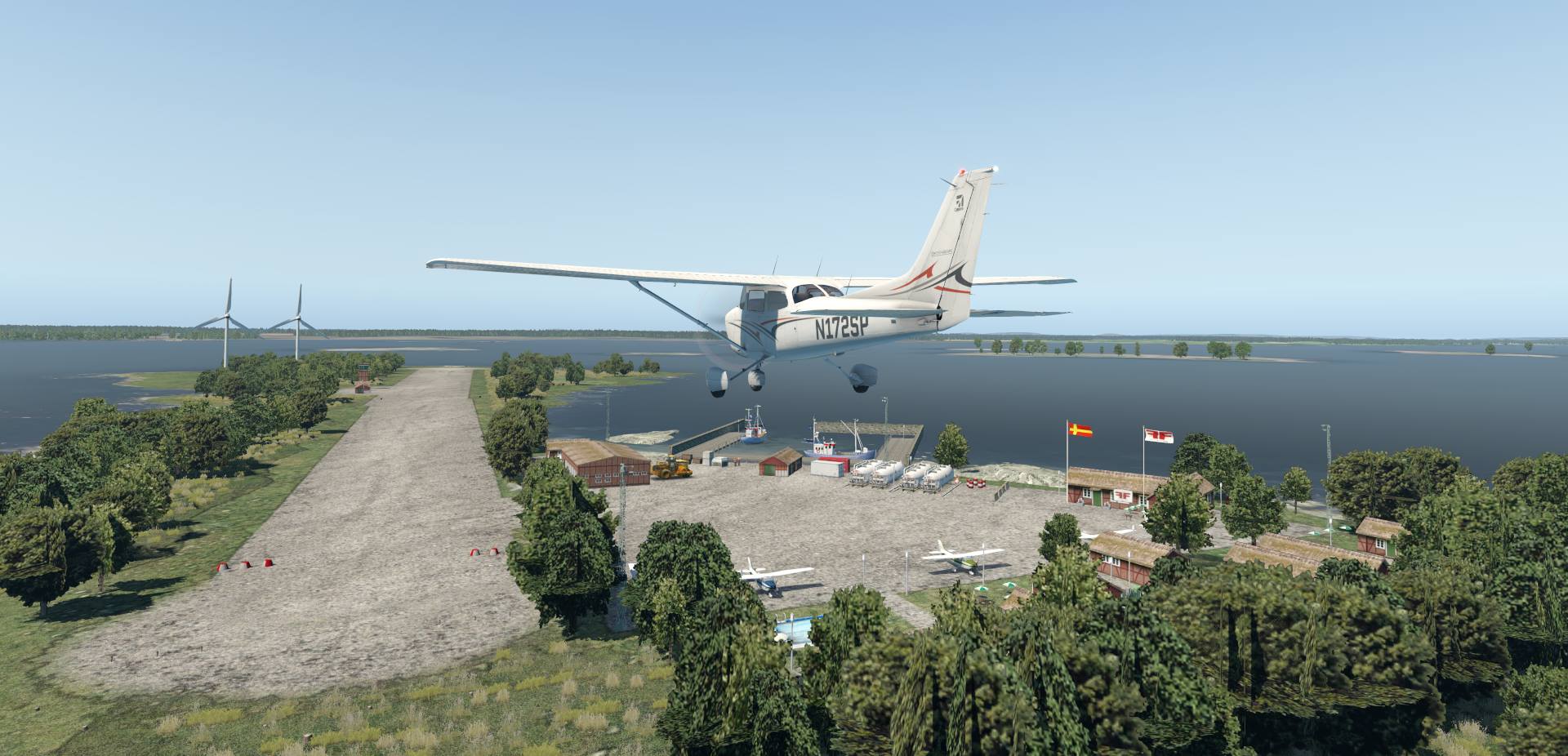
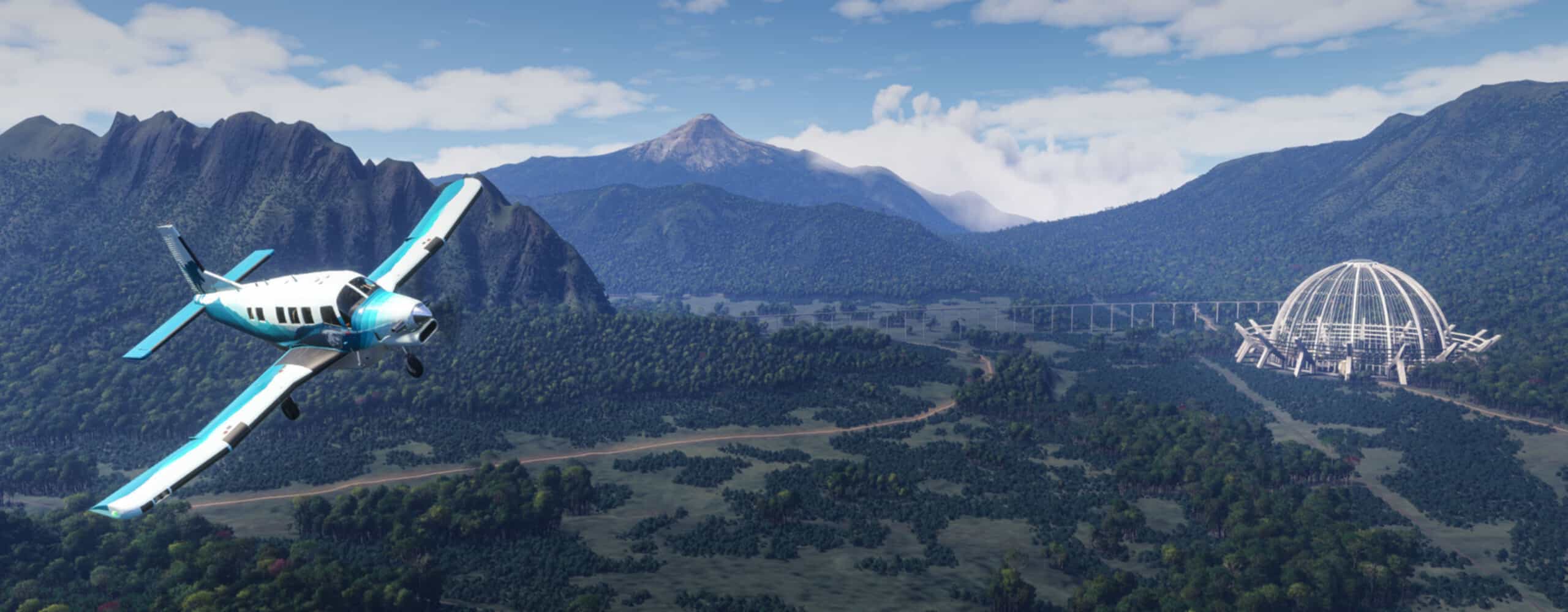
The idea behind the series was delightfully offbeat. These challenging airfields, inspired by bush flying, were often placed in unusual and remote locations: mountains, lakes, wilderness. No two were alike. Around ten were completed, each one a small adventure in its own right.
“It’s a bit of a silly series, I admit. But I’m childishly fond of them. I almost always fly small planes, like Cessnas and similar types.”
And he wasn’t the only one who appreciated them. Over the years, several bush pilots reached out, asking him to build more. Even the fictional airports found their audience.
“So clearly, there was some interest after all.”
The Final Generation of Flight Simulator
With the release of MSFS 2020, a new and exciting era began. For Lennart, it was nothing short of a revolution.
“What a leap for flight simmers. Weather, clouds, and landscapes all in an entirely new and fantastic form. The whole globe in aerial imagery. I remember asking myself, is this really possible?”
Everything had changed. The file systems, texture systems, and development tools had to be learned from scratch once again. Lennart adapted quickly. He began creating 3D objects in SketchUp and used ModelConverterX to finalise them for the simulator. The workflow served him well for years.
Though more advanced tools like Blender eventually became popular, Lennart chose to stick with what he knew. In MSFS’s scenery editor, he appreciated viewing results directly in the simulator. An enormous improvement over earlier workflows. Still, he wasn’t entirely convinced by the editor’s design.
“The tool's structure was, and still is, a disaster. Endless panels with different content and a rather illogical layout. But you just had to learn the logic of the French developers and smile.”
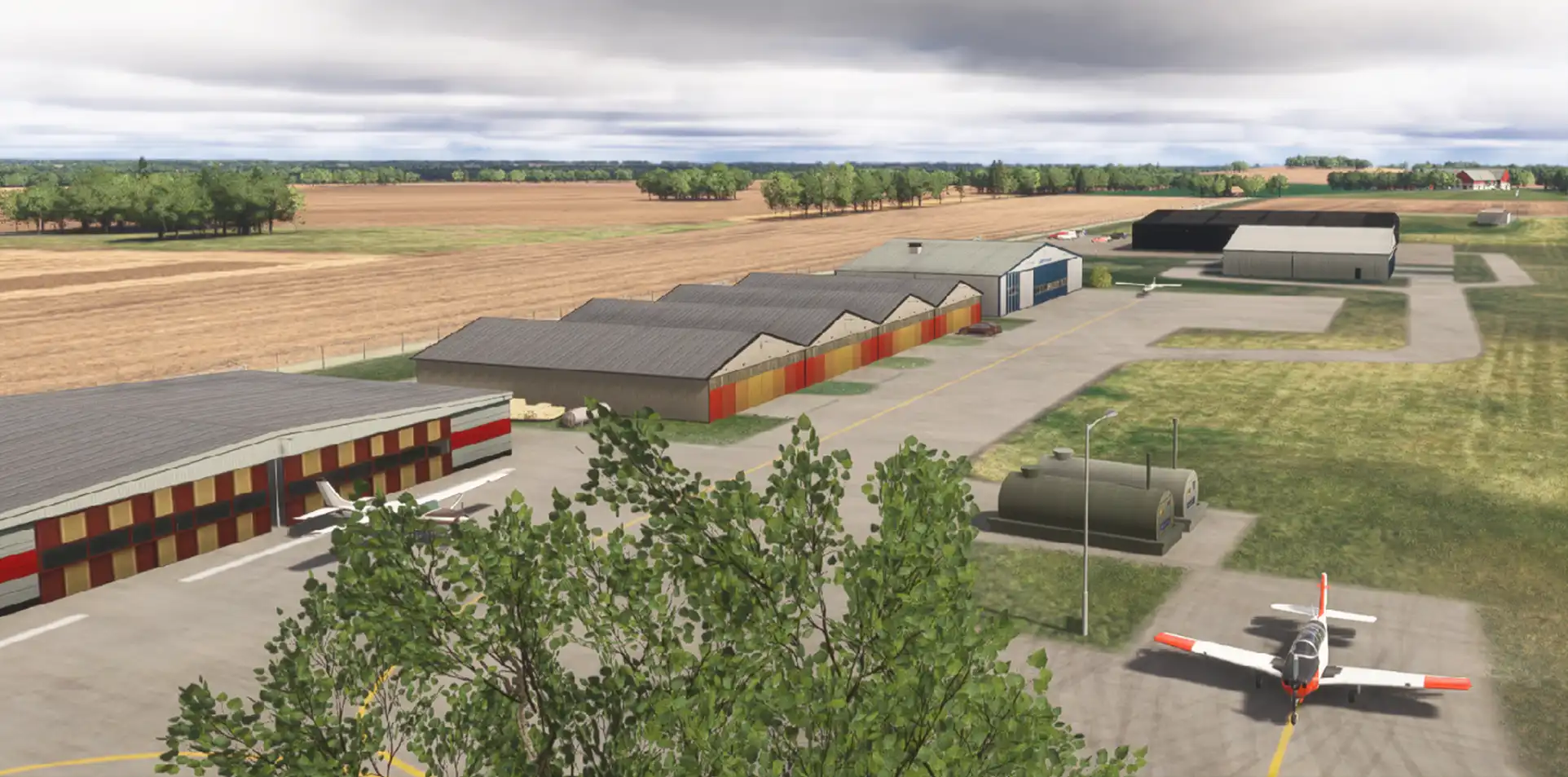
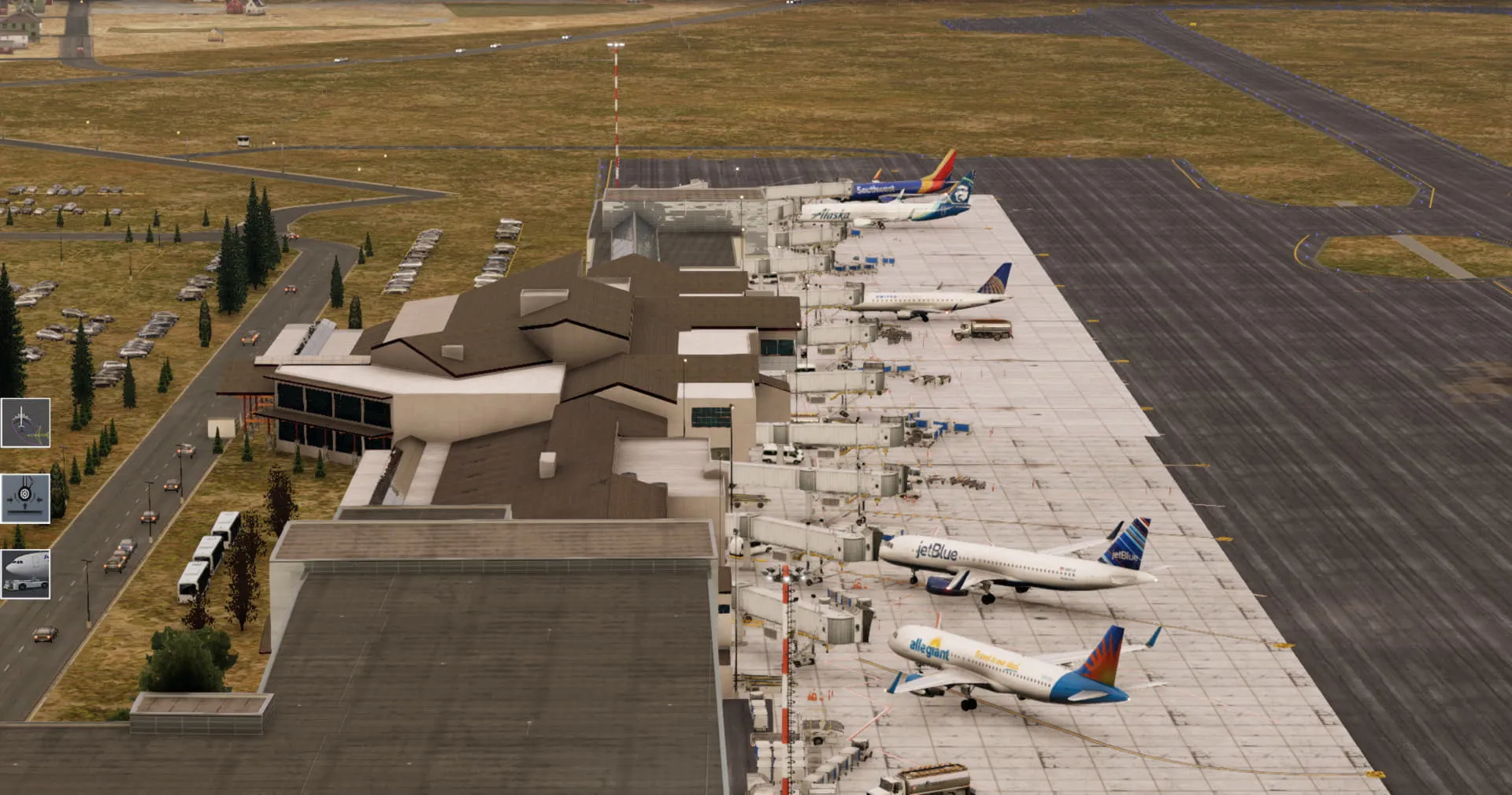
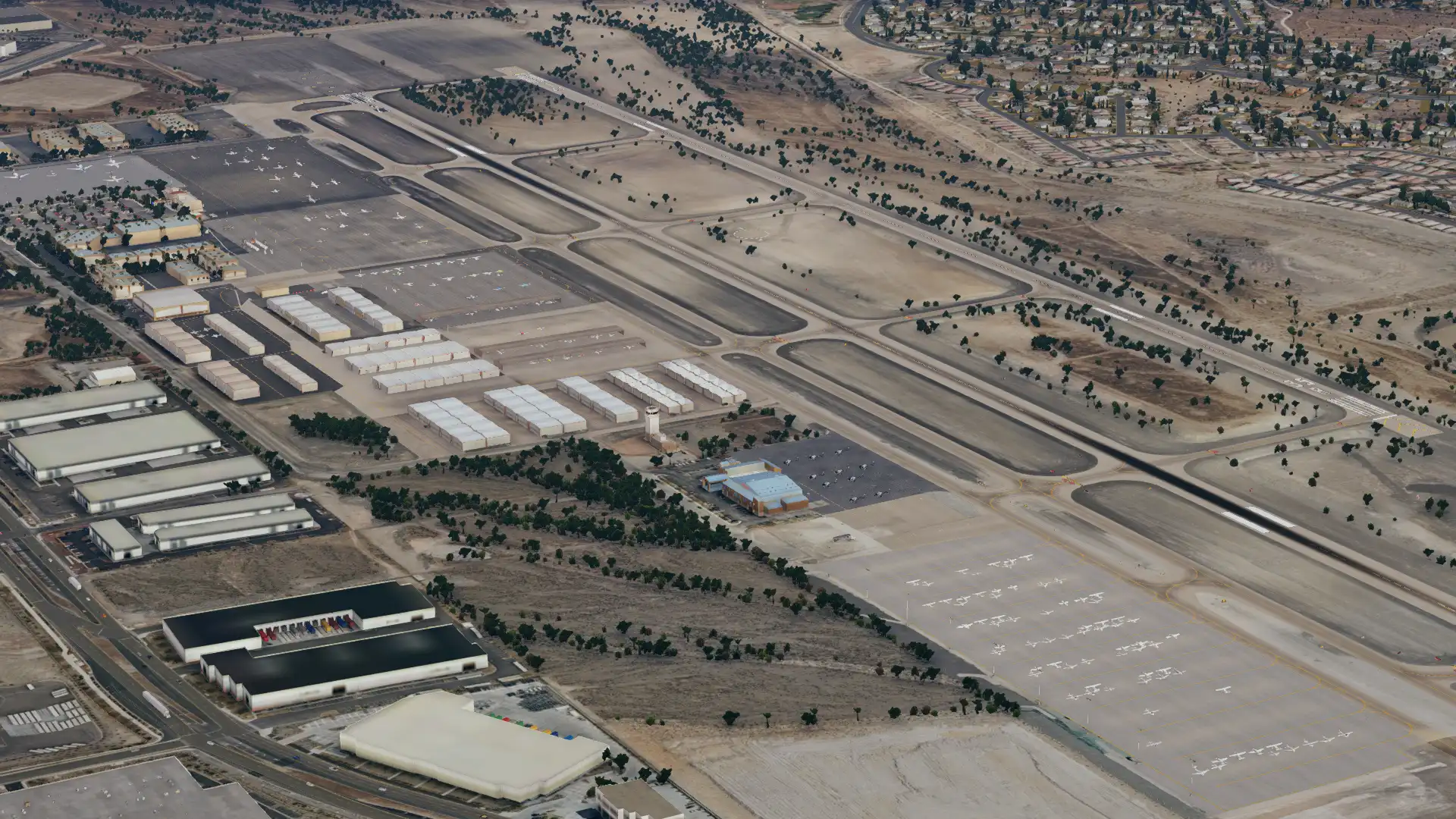
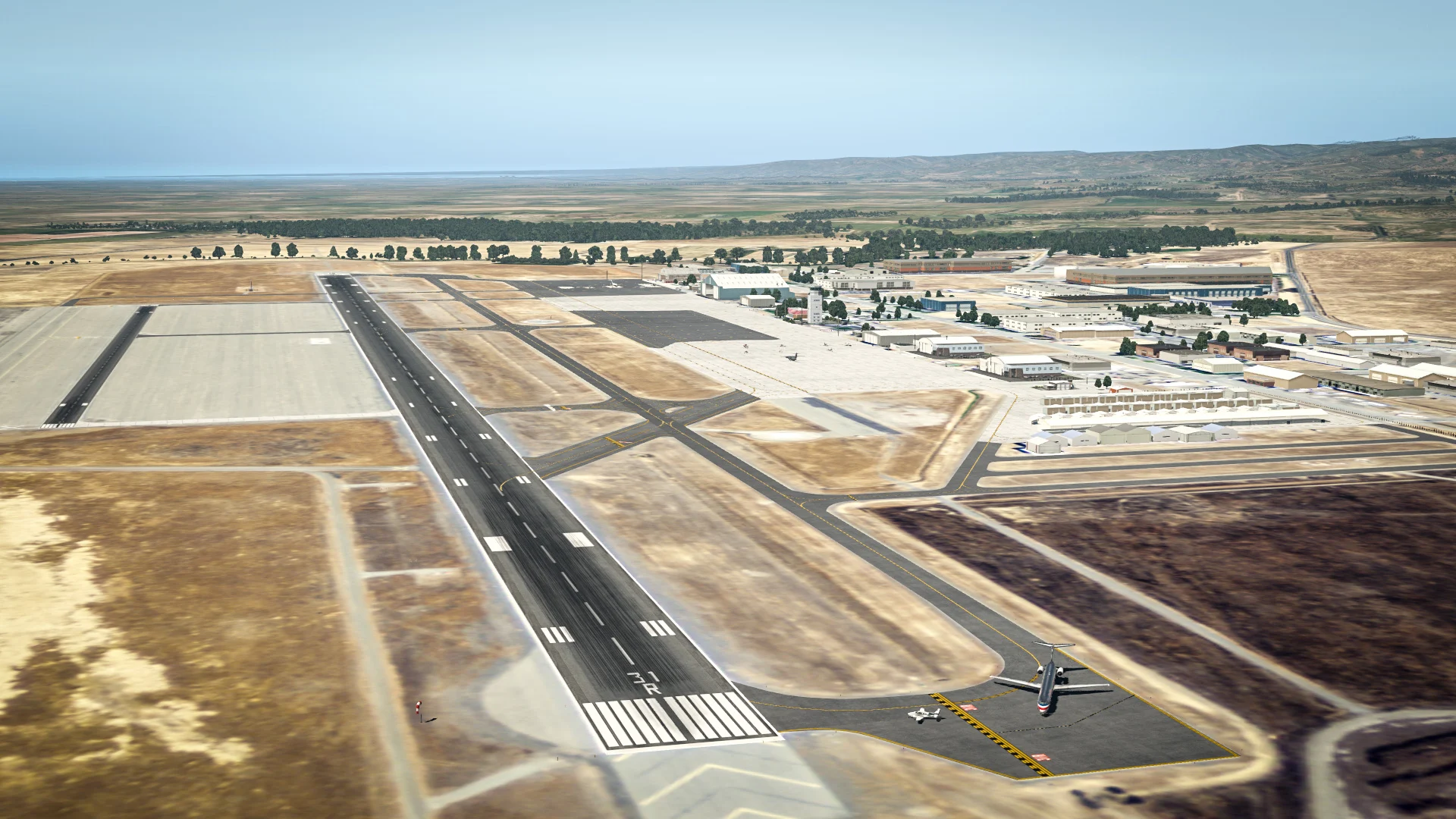
Lennart created around 30 Swedish airports for MSFS 2020 and several object libraries. As MSFS 2024 arrived, he successfully converted 17 of them to the new platform. He even had plans to create Jönköping in native MSFS 2024 format.
But then life intervened. His wife fell ill, and with that, priorities shifted.
“I realised I could no longer afford to spend so much time on the simulator. There are more important things in our lives now.”
In mid-2025, Lennart decided to step away for good.
Legacy and What Comes Next
Lennart’s work with the Sweden Design group resulted in more than just improved landclass data. The team also produced around 40 airports during its active years — a substantial effort by any measure. But that’s only part of the story.
Based on what I’ve been able to piece together, Lennart’s overall contribution beyond the SWD projects is nothing short of incredible.
By my count, he created:
- 25 sceneries for X-Plane 11, including several from the Fly & Fish series
- 16 sceneries for X-Plane 12, alongside custom vegetation libraries and seasonal experiments
- Coastal landclass projects and object libraries specifically tailored for Swedish regions
- Over 40 airports for Microsoft Flight Simulator 2020 and 2024, many of them originally built for FSX, then adapted for MSFS 2020 and later updated again for MSFS 2024.
This does not even include his earlier work for FS98, FS2002, FS2004, P3D or FSX - much of which is no longer archived. The scale of his contribution is difficult to fully quantify, but it is undeniably vast.
At the time of writing, I am still working to get a full overview of the files Lennart has shared with us for long-term preservation. The file library is over 10 GB in size - including airports, object libraries, and other materials for X-Plane and MSFS. There may well be much more than what I’ve been able to list here. I hope to one day dedicate the time needed to go through the archive properly and appreciate the full extent of his work.
Many of Lennart’s sceneries can also be found on the RBDesign website.
So what now?
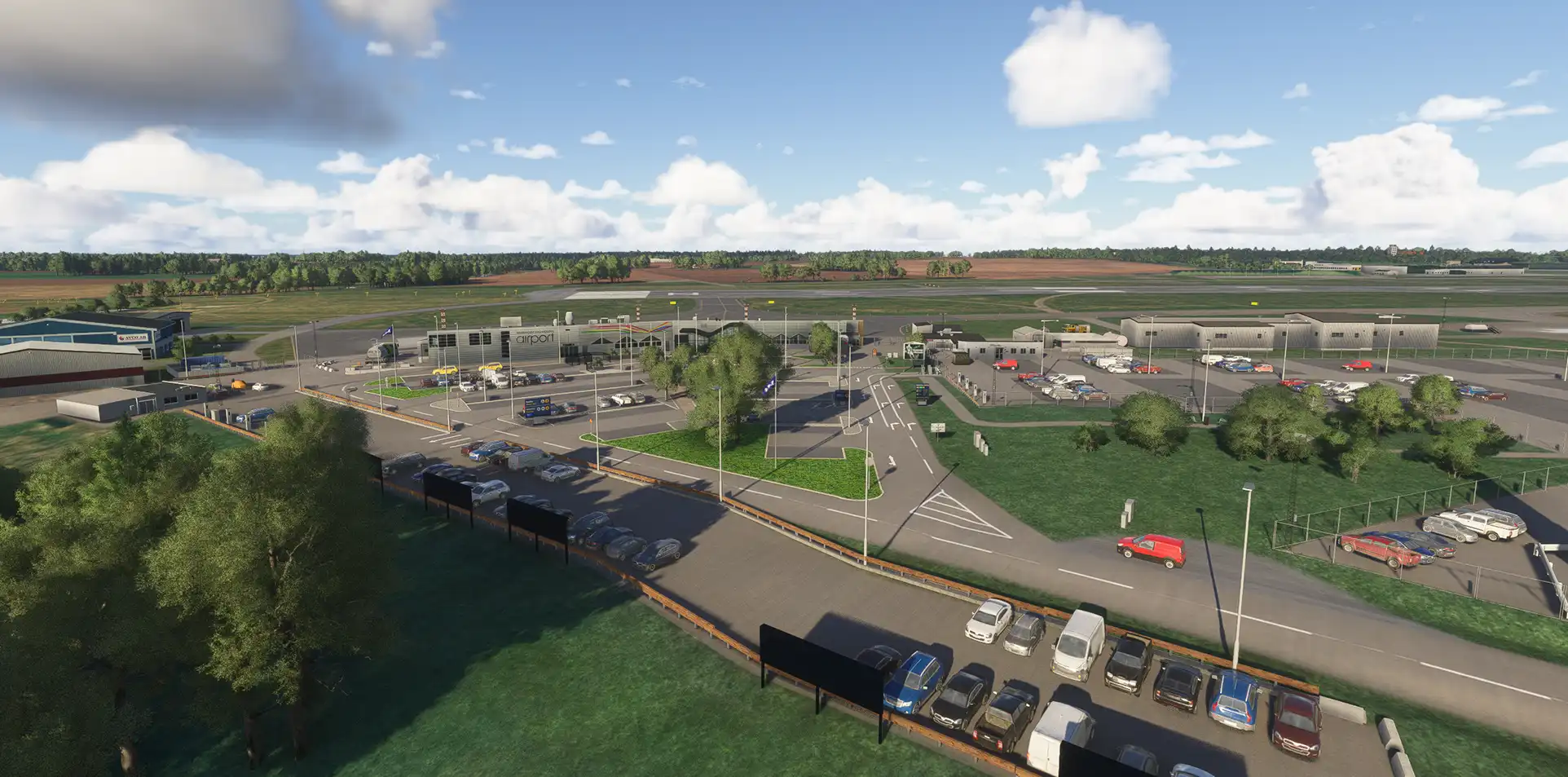
Lennart has decided to gather all his airports and development files for MSFS 2020, MSFS 2024, and X-Plane and upload them to our Threshold cloud archive. Many sceneries are available at www.flightsimsweden.se today, but the whole archive will be saved on Threshold servers and made available on the Threshold forums.
As Lennart puts it, he is approaching his ninetieth year. The future, he says plainly, is no longer a long one. But still, he hopes that his materials might be helpful in a future simulator or to someone who will pick up where he left off.
“It has been incredibly fun and inspiring to have had the opportunity to work with flight simulators for such a long time.”
With that, he adds one final story - a bit of design trivia from a life spent in creative work.
“Fifty-nine years ago, as the newly appointed head of the design department at one of Sweden’s largest packaging companies, I was given my first assignment: to design new artwork for a paper bag meant for loose candy. I decorated it with a pattern of colourful dots. That design is still printed today. Even my grandchildren and great-grandchildren enjoy getting candy in that bag.”
.png)
He closes his story with the same humility and grace that shaped his career.
“Tack för mig, flyg försiktigt och landa mjukt!”
(“Thank you for listening. Fly safe, and land softly.”)
When the Builders Step Back
When Lennart Arvidsson sent me the final message of this interview, he ended it with characteristic modesty:
“Here’s my attempt at a summary of what I’ve done. Unfortunately, my memory isn’t quite what it used to be. So I’ve probably forgotten a few things. But this is what I’ve managed to put together. I hope you can make something of it.”
The truth is, it is far more than a summary. It is a legacy. While Lennart has received recognition, including a well-earned developer award from FlightSim.com back in 2000, I had not fully grasped how profound and far-reaching his work truly is.
I had seen his name. What I had not seen was the decades of quiet dedication behind it.
There is something important to reflect on here - not just about Lennart but about how we tend to overlook the people who quietly built the foundation of this hobby - the ones whose work shaped how flight simulation looks and feels today, even if most users have never heard their names.
We often talk about progress in terms of platforms and technology. But behind every leap forward, there were individuals like Lennart Arvidsson - people who created not for profit or recognition but out of passion and curiosity. They laid down the textures, hand-placed the forests, shaped the coastlines, and filled in the gaps long before the tools were polished. They built worlds the rest of us now take for granted.
This isn’t just about honouring one person’s retirement. It is about recognising a generation of builders whose influence reaches into every corner of our current experience, from the freeware scenes we still fly to the philosophies that underpin how today's developers think about realism and regional accuracy.
Lennart is one of those builders. A pioneer in the true sense of the word. Not because he pushed for recognition, but because he consistently made things better. His creativity, attention to detail, and generosity with his time shaped not just scenery but also the spirit of the Sim community itself.
As our hobby continues to evolve, the community, especially the simulator platforms themselves, would do well to remember how much of this space was handcrafted by people like him.
These creators did more than build airports. They helped build the world we still fly in.
Fly safe, and land softly.
Share this page


COMMENT ADVISORY:
Threshold encourages informed discussion and debate - though this can only happen if all commenters remain civil when voicing their opinions.

.webp)

.webp)
