Threshold Review: Drzewiecki Design’s Katowice Airport for MSFS 2020/2024
December 23, 2025
Introduction
Katowice Wojciech Korfanty Airport (EPKT) serves the Katowice-Ostrava Metropolitan Area with a yearly average of 5.6 million passengers, making it the fourth-busiest airport in Poland.
It was built as an airbase for the Luftwaffe in 1940 (Poland was under German occupation at the time), with three stone and concrete airstrips of varying lengths (1000 to 1500 meters), and 50 meters wide.
It was used as a stopover for supply flights coming from the inner parts of Germany, with the Eastern Front as the final destination. The final phase of the conflict also saw the airport utilized for testing the Messerschmitt Me 163 Komet, a rocket-powered aircraft.
When the Soviet Army advanced into Polish territory in 1945, the airfield was seized by their air force, only to be handed back in the early 1950s, when the Polish Air Force assigned the base to their 39th Fighter Regiment, created in 1951.
In the early 1960s, a new runway was constructed, marking the beginning of regular passenger traffic, with LOT Polish Airlines operating direct flights to Warsaw.
In the final stretch of the 1960s, a passenger terminal was constructed, along with a taxiway and an apron, making it easier for airlines to operate in Katowice.
The early 2000s brought significant changes, as Poland’s admission into the European Union in 2004 led to a surge in passenger traffic, catching everyone off guard and prompting the administration to quickly expand the airport.
It wasn’t long before it was embraced by the low-cost carrier industry, with Wizz Air choosing it as their first base outside of Hungary, followed by other low-cost carriers over the subsequent years.
In 2007, in direct response to the post-Entry into the European Union (EU) traffic boom, a second terminal was opened to handle Schengen flights, followed by an arrivals-only terminal eight years later, in 2015. Also in that same year, they built a new 3200-meter-long runway, the second-longest in Poland.
It’s a focus city for ASL Airlines Ireland, Buzz (Ryanair), Electra Airways, Enter Air, LOT Polish Airlines, Lufthansa Cargo, Ryanair, Skyline Express, Smartwings Poland, and Wizz Air. Air Cairo, Air Dolomiti, Corendon Airlines, Freebird Airlines, Lufthansa, Nesma Airlines, Nouvelair, Pegasus Airlines, Plus Ultra, and Tailwind Airlines also serve it.
The scenery is said to feature an accurate rendition of the airport, with custom ground textures, an up-to-date ground layout, a custom terminal interior, custom ground service equipment, an accurate runway profile, performance-friendly optimization, and much more.
Installation
The scenery is distributed via OrbxDirect and features a one-click install and options configurator.
First Impressions
A year or two before being bitten by the aviation bug, my life used to revolve around playing Counter-Strike: Global Offensive with my friends and closely following the eSports scene. Katowice is an instant nostalgia magnet for most early CSGO fans because of the ESL Major Series One Katowice 2014, also known as the tournament where Valve introduced the team stickers, and this first batch went on to become extremely valuable over the years: most people didn’t consider it would skyrocket in price due to how cheap it was, applying it on their weapon skins or selling their collection to buy games on sale. Little did they know that they could be worth more than $50,000 today, depending on the sticker.
It was also no wonder it ended up becoming one of the destinations I wanted to visit in Microsoft Flight Simulator X and Prepar3d during my first few years as a virtual pilot, and I did it many times over. One of the perks of adhering to flight trackers pretty much since the beginning is that I do have the data for these things when I need to look it up for one way or another: the first record dates back to November 2019, although I’m sure I have been to Katowice during my FSX days, too, between 2015 and 2018.
Inevitably, Katowice became one of my favorite Polish airports, in part due to the Counter-Strike nostalgia but because it is truly a very neat little airport, with a considerable amount of routes (although most of them are now A321Neo routes, and we still don’t have Pratt & Whitneys), but there’s no shortage of 737-800 stuff and the occasional A320 hop whenever Wizz Air decides to use it (once or twice a day).
As there’s no A321Neo with PW engines yet and PMDG’s 737-800 was not out yet at the time (for MSFS 2024), I had to rely on my luck to find an A320 flight to Katowice, and it was, in fact, my lucky day: not only did I find the perfect route, the tail at hand was part of a livery pack that was MSFS 2024 compatible. Do you fathom how rare that is, considering how many A320s Wizz operates and how few 2024-compatible WZZ liveries are around? It felt like fate. It had to be.
Fate or not, the route of choice was a bit more than an hour-long flight from Dortmund, one of the few cases where Wizz still deploys the A320 on occasion (everything else is A21N). It went on without a single hitch up until the final approach: the weather couldn’t be any worse, with the runway lights only becoming fully visible after the last few hundred feet, and there was thick fog everywhere. While I generally do not mind this type of weather, it does bother me a bit when I’m doing a review flight, since I like taking screenshots with live weather on, and this kind of visibility doesn’t do the scenery any justice at all (I had to disable live weather eventually).
Weather troubles aside, the landing was surprisingly smooth, catching me off guard since I haven’t flown the IAE variant with sharklets in literal ages (was mostly flying Aer Lingus and Lufthansa lately, both with CFMs).
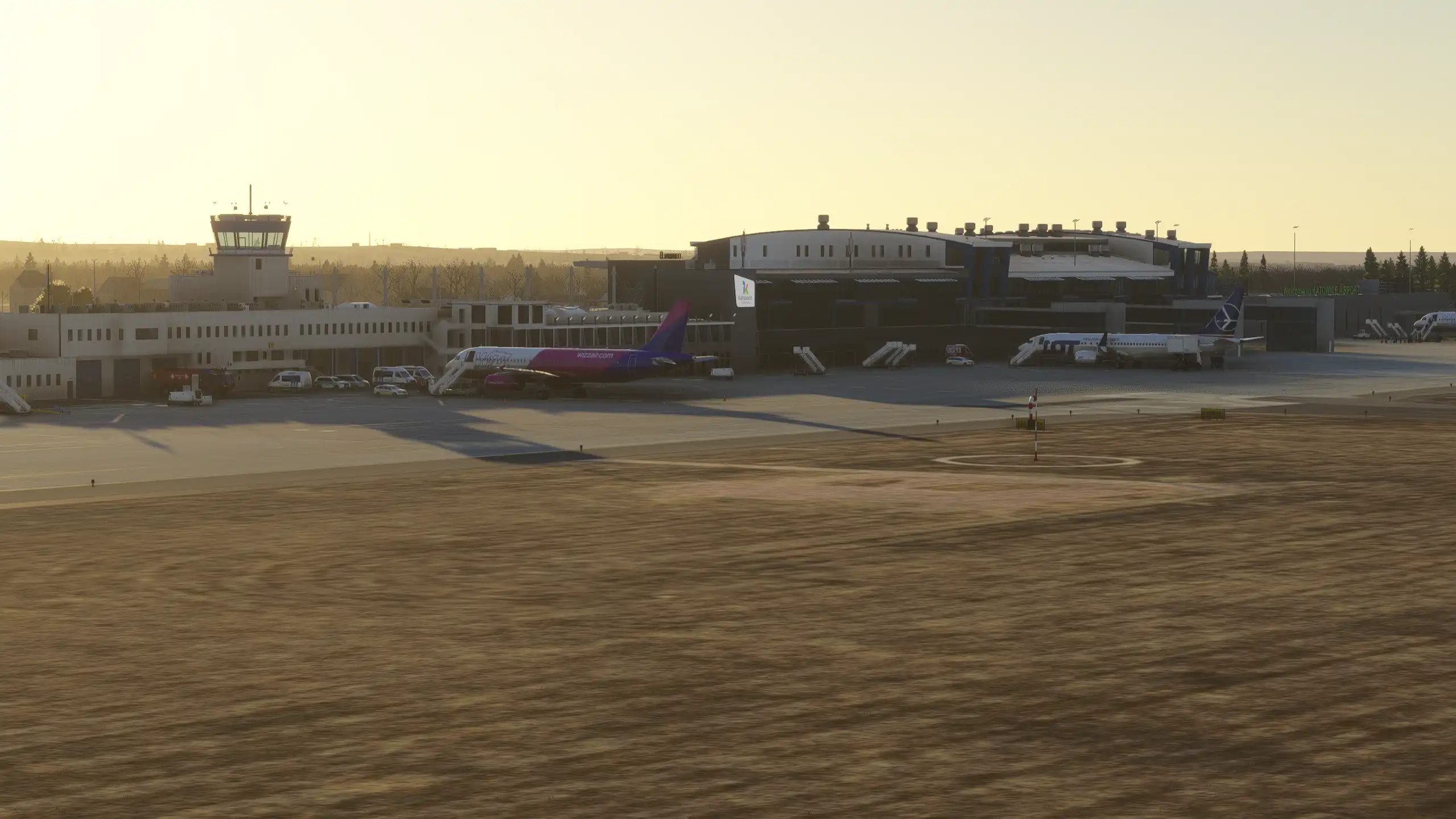
The only thing I could see properly upon vacating was the ground textures, which look extra nice in Microsoft Flight Simulator 2024 thanks to Asobo finally untying it from the terrain LOD. In usual fashion for DD, the ground texture work is splendid.
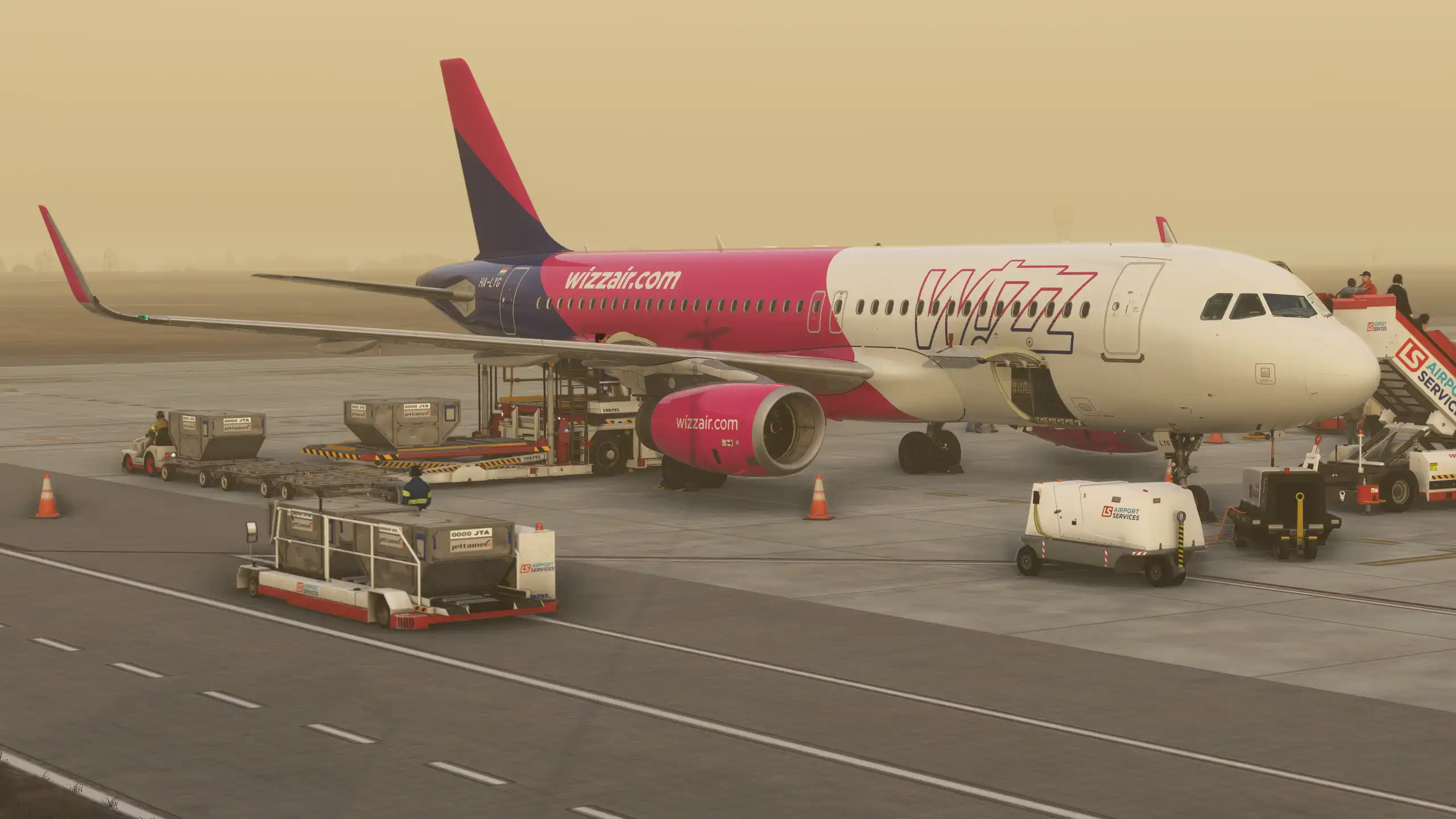
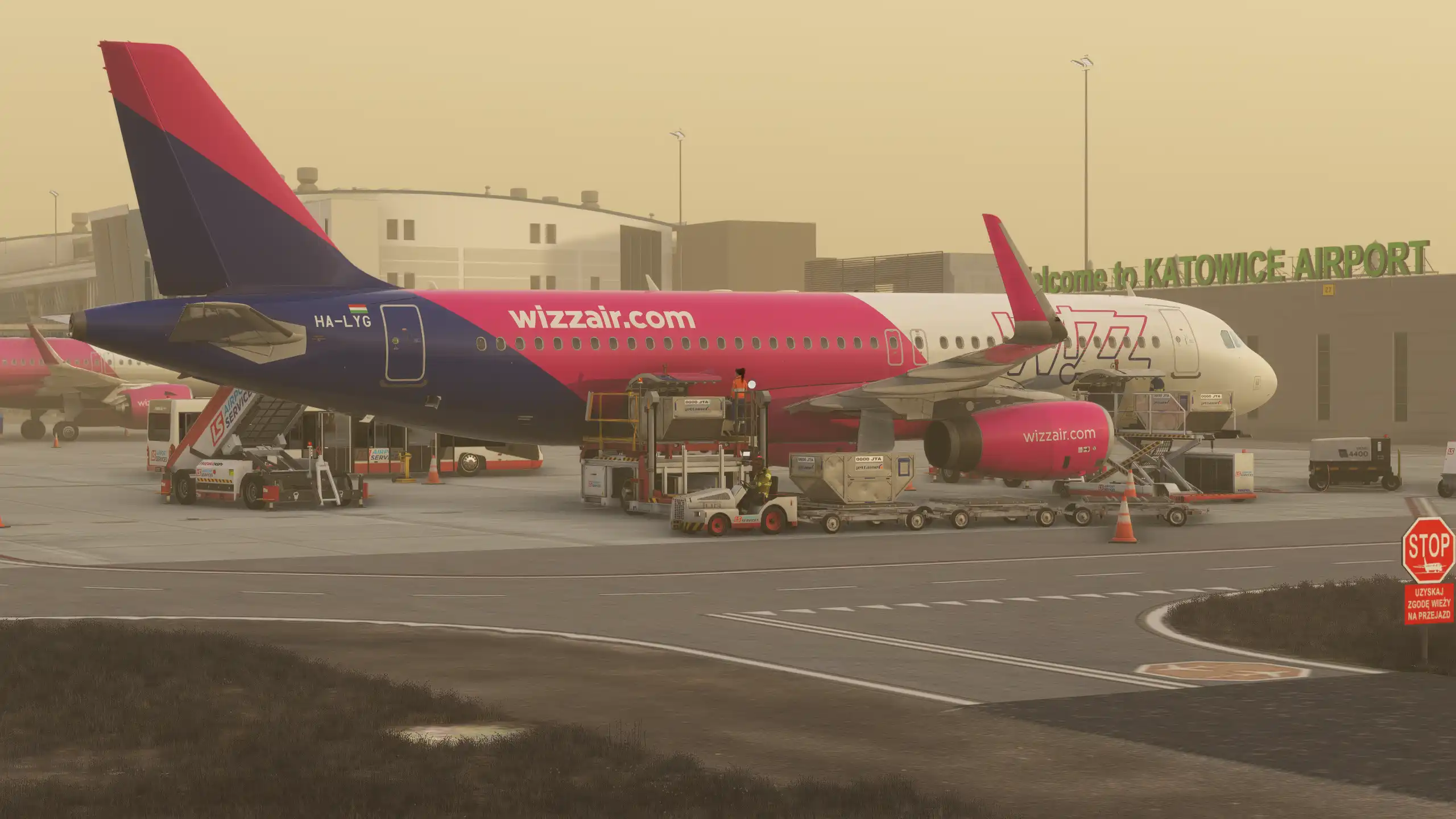
I switched over to the drone camera right after parking to try and snap a couple of pictures, but the lighting didn’t feel right at all (Polish winters in a nutshell), forcing me to go into the weather menu and turn it off entirely. Much better now!
Modeling & Texturing
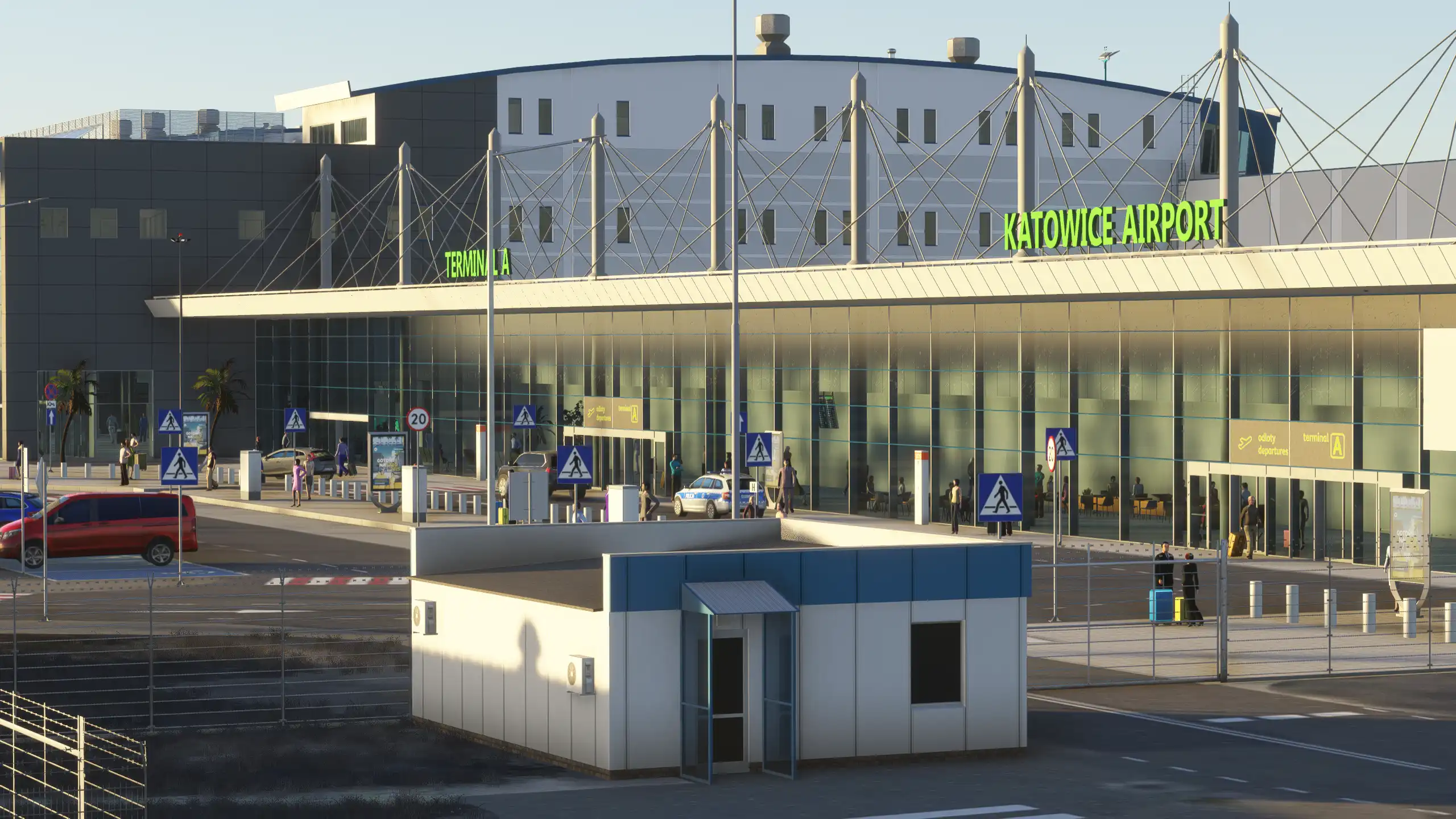
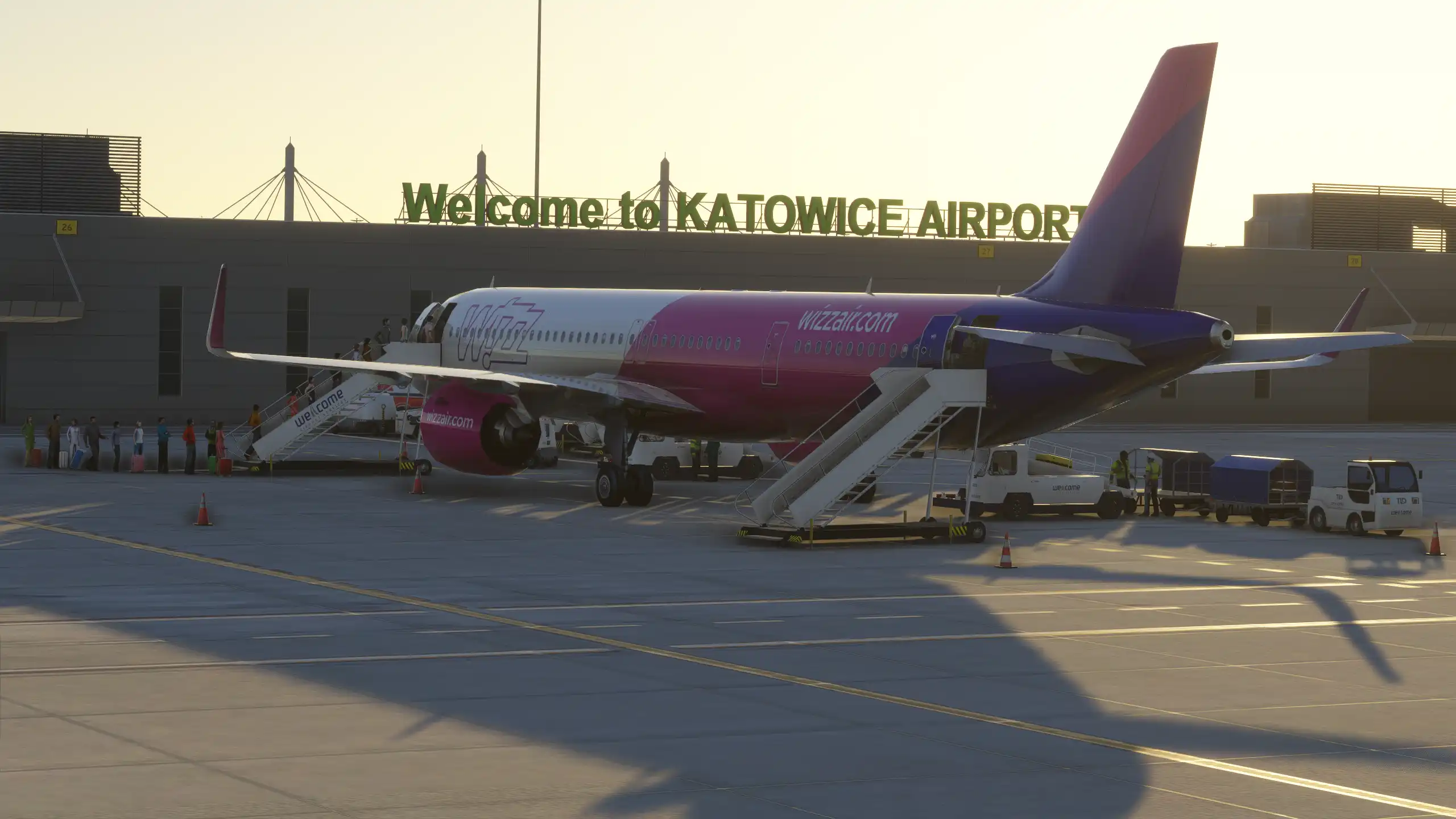
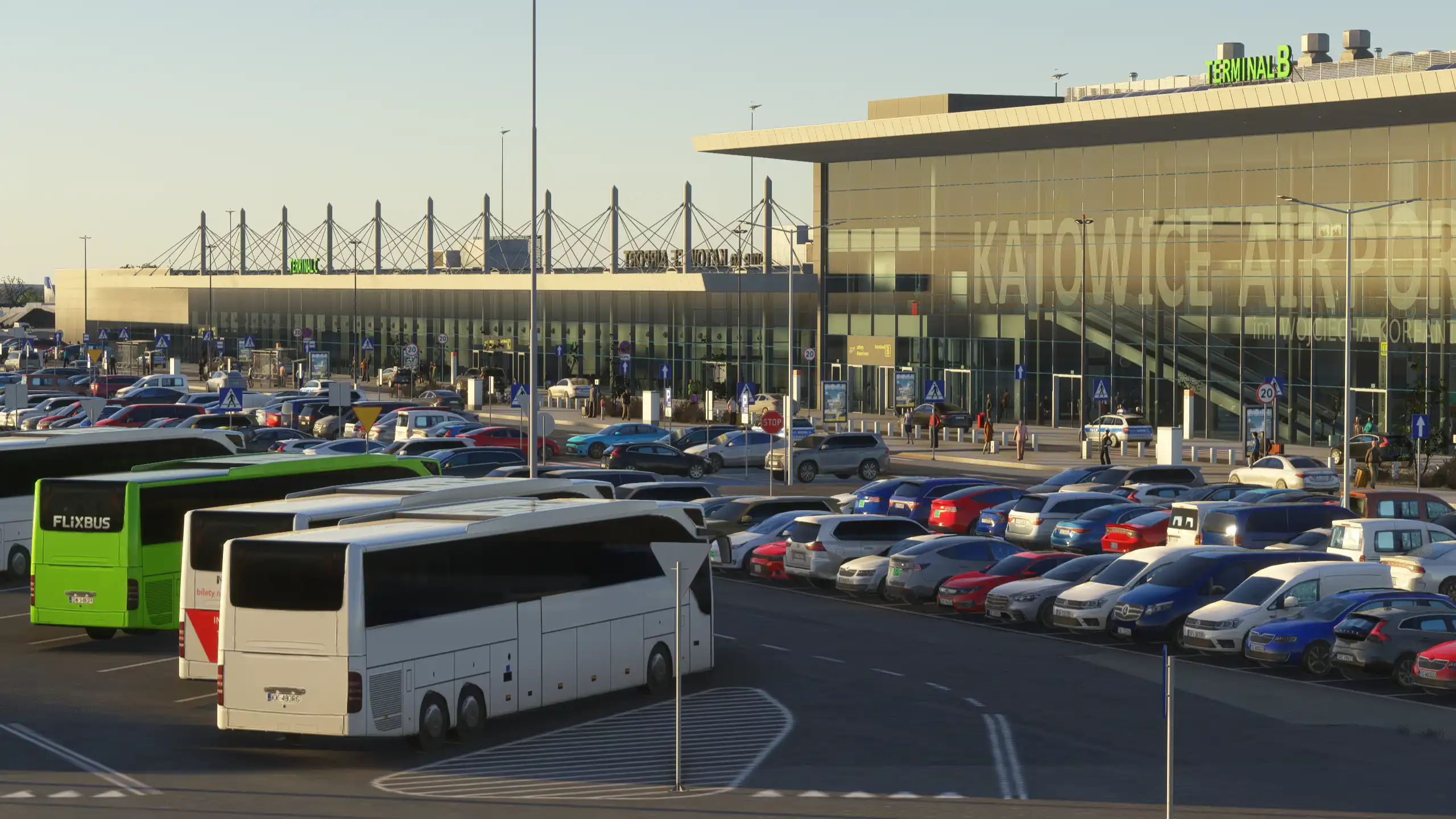
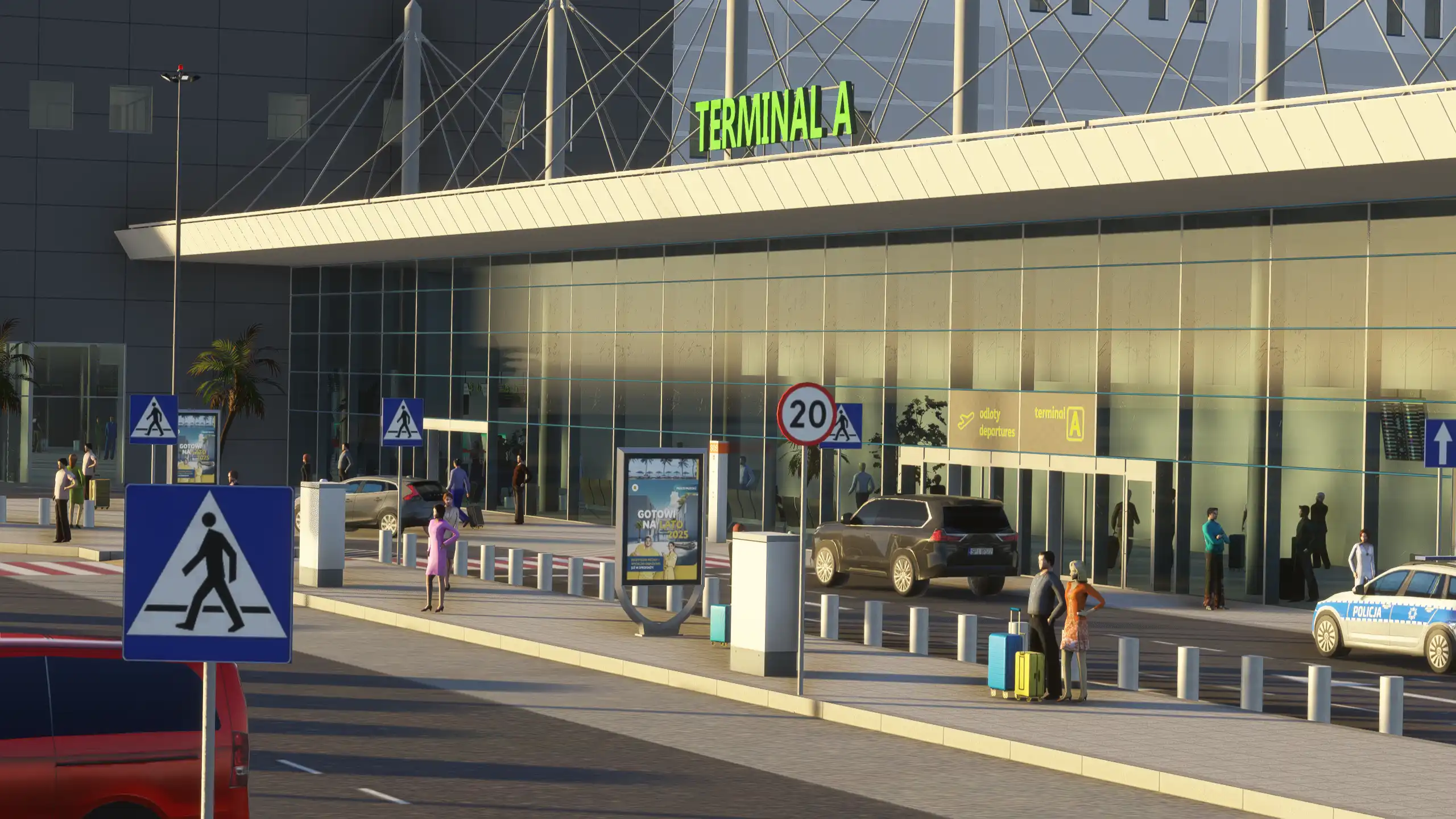
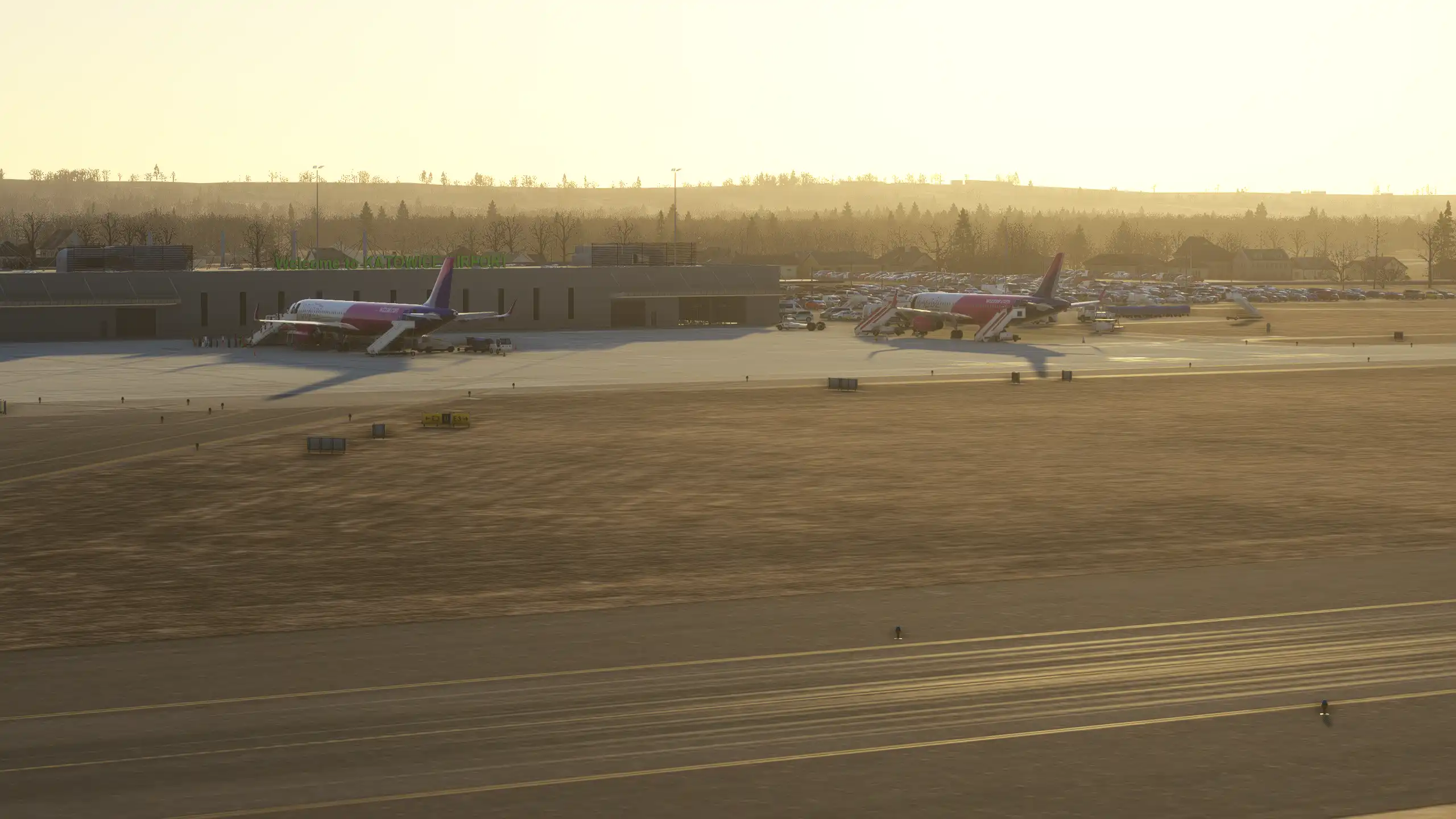
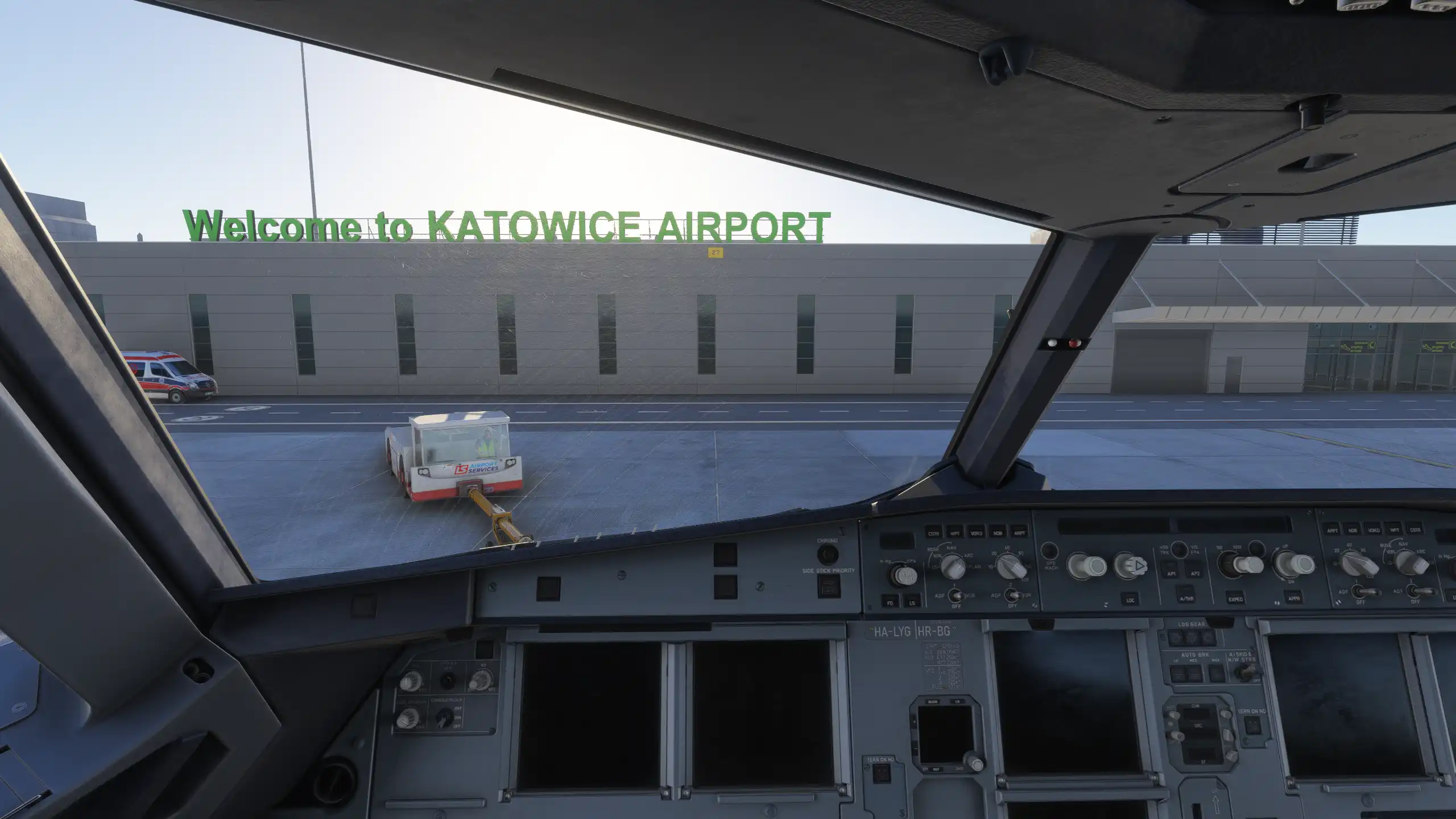
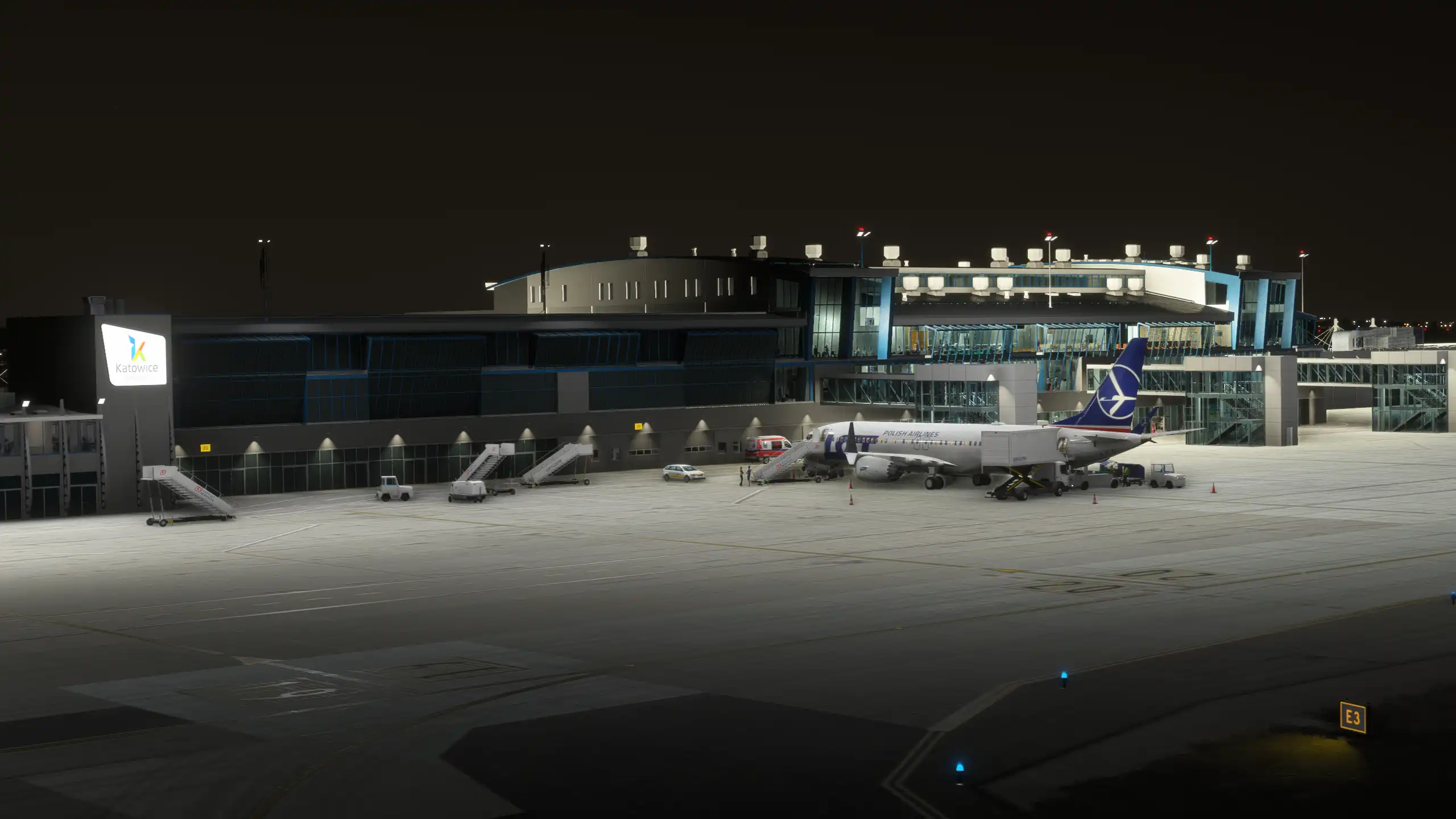
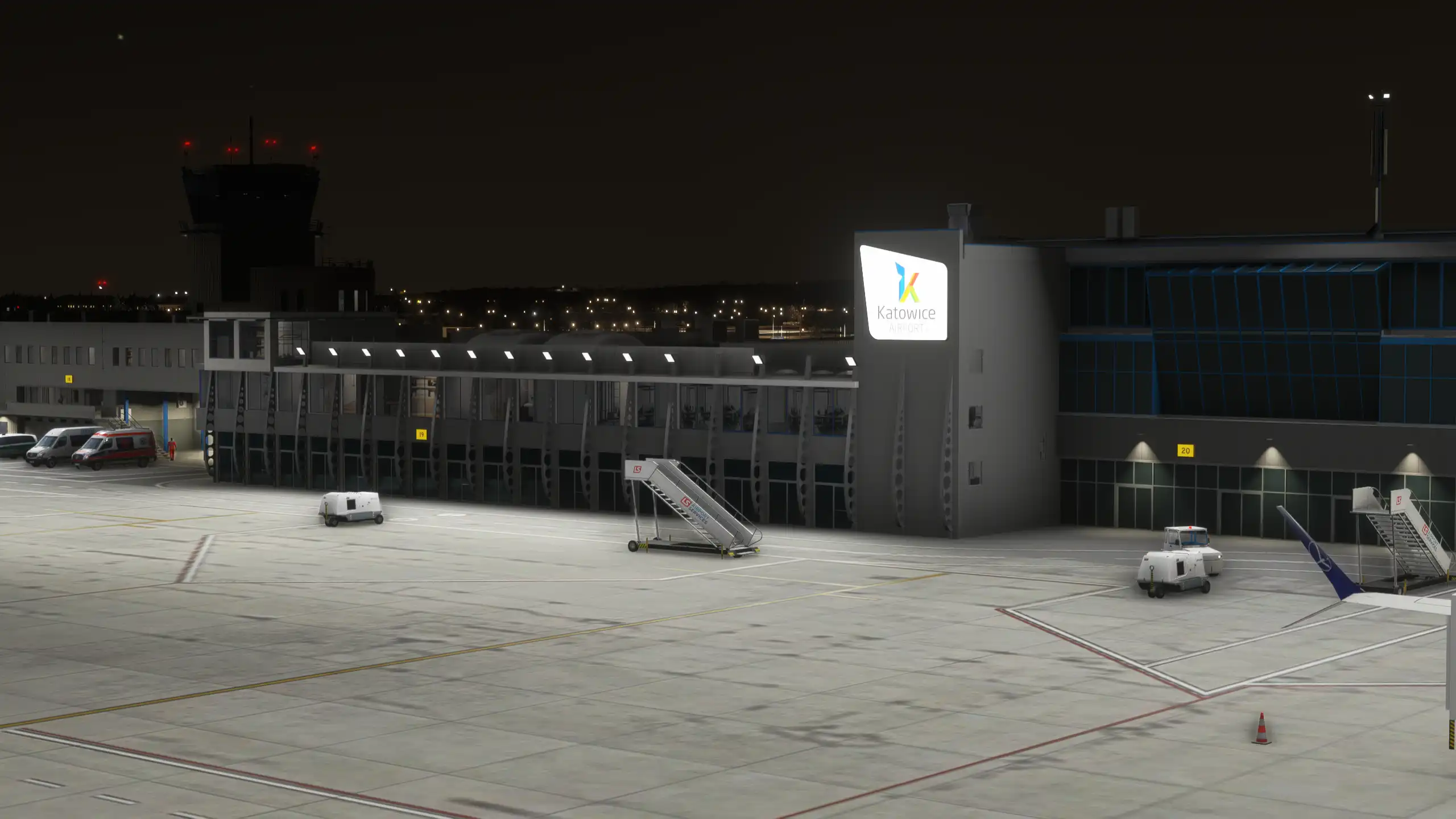
As expected from Drzewiecki Design, the modeling work around the airport is really decent, with high-quality texturing to boot. It looks pretty damn close to its real counterpart, especially when the lighting hits just right on the many terminal windows (Polish airport architects really love transparent terminals, huh?).
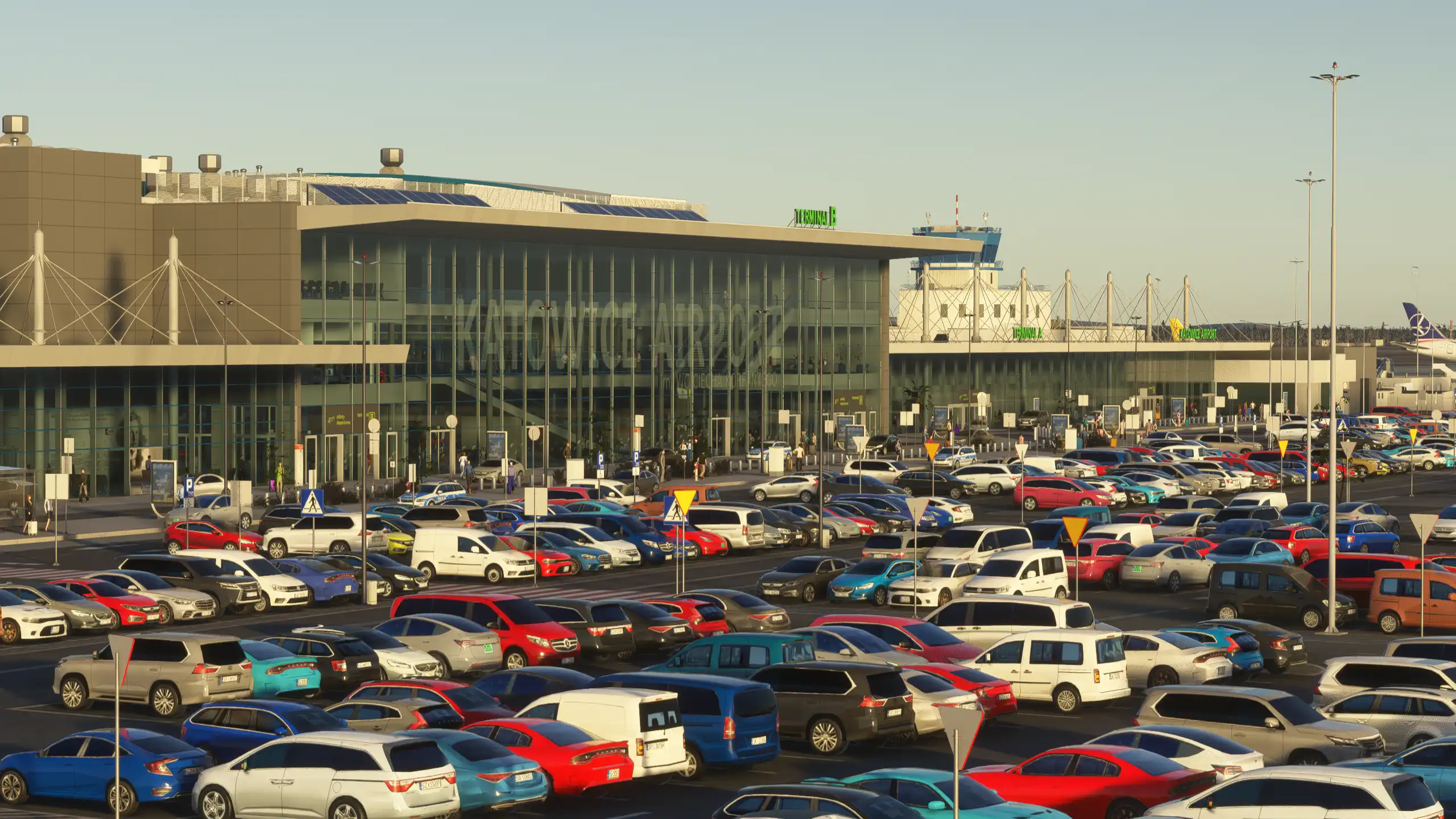
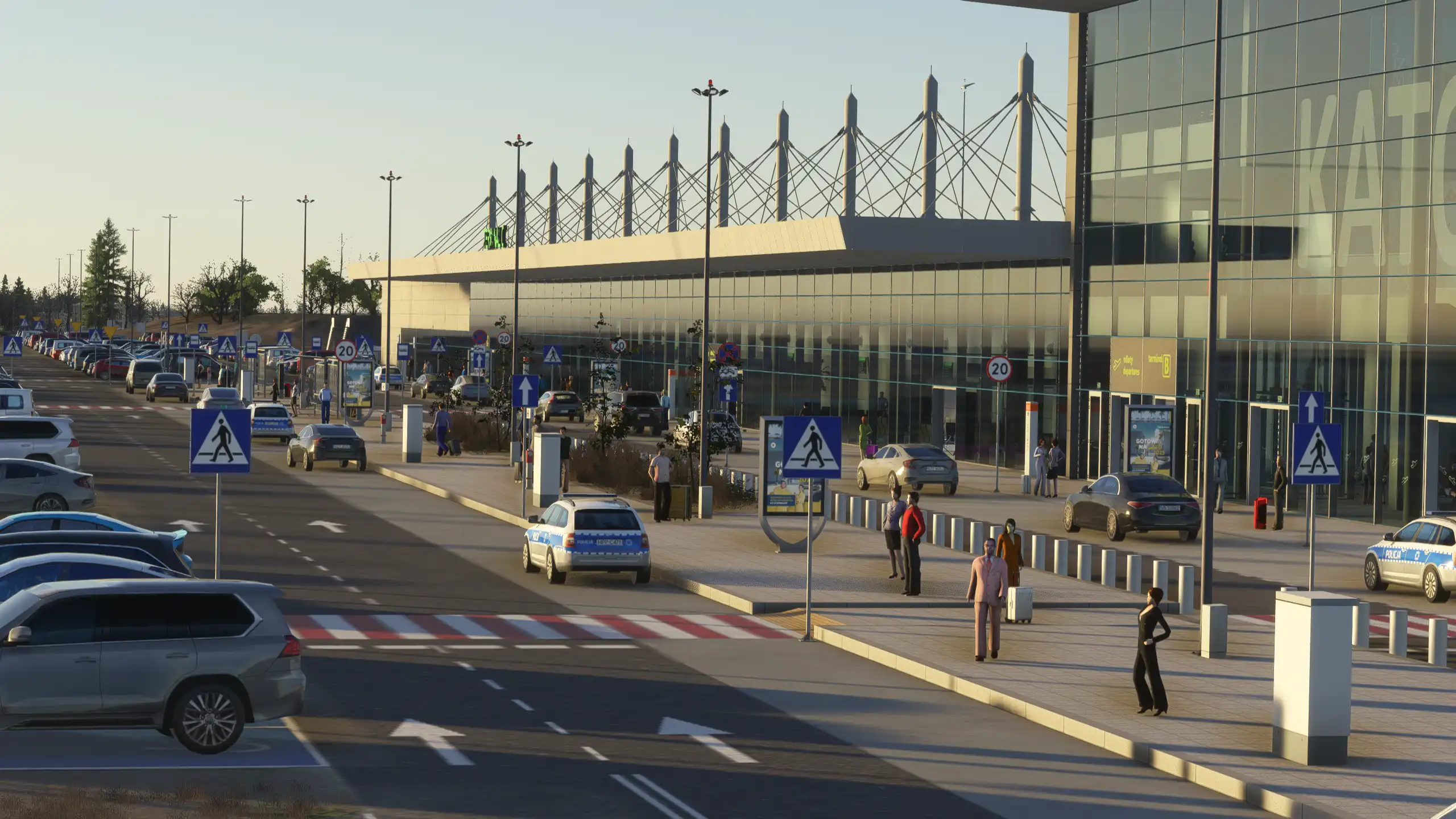
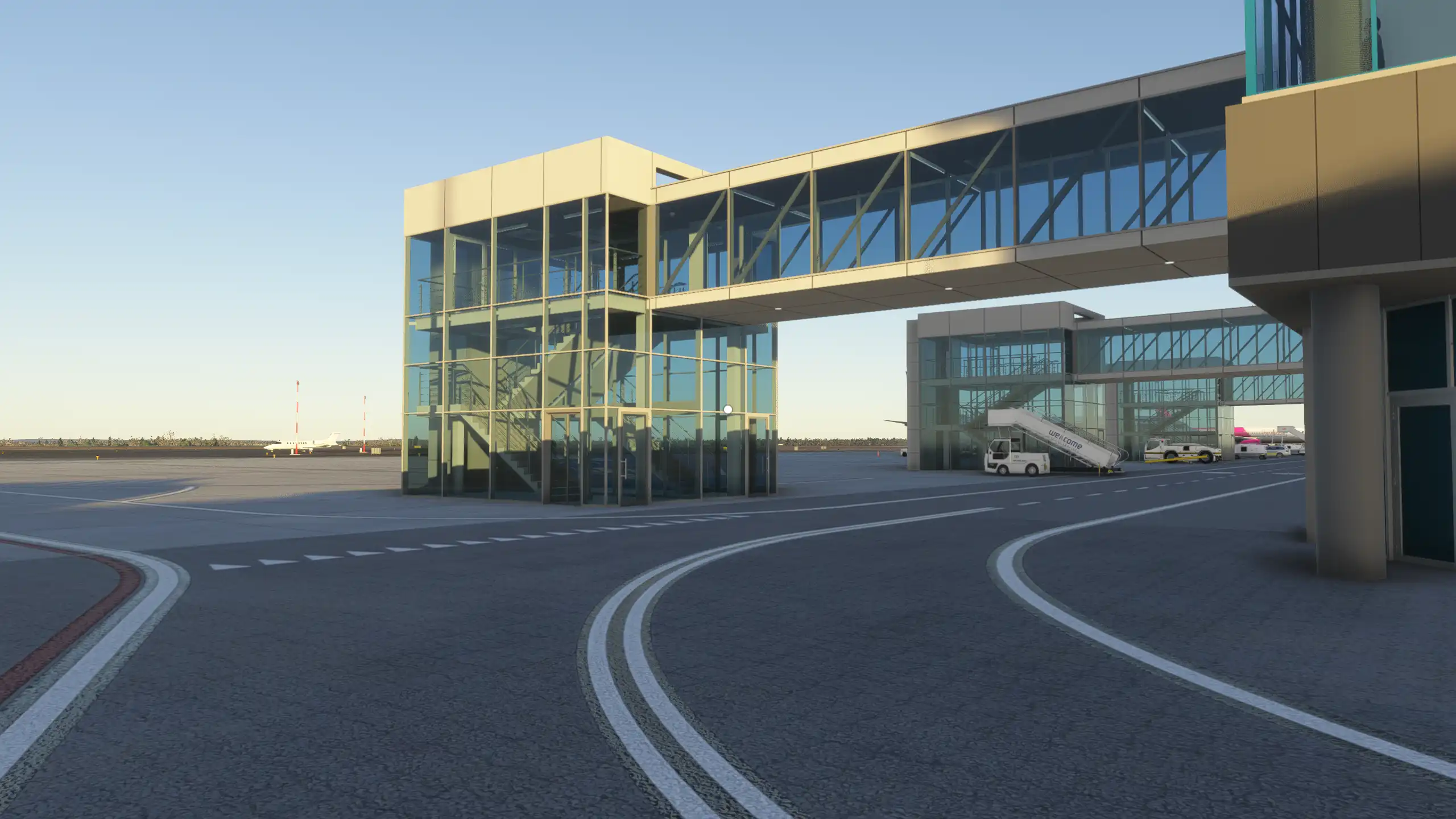
The work on the ground clutter is really convincing, making it look like a properly busy airport without overdoing it, with baggage carts here and there, stairs, ground power units, and so on. It’s all spread very naturally, while also ensuring that it doesn't conflict with FSDT’s Ground Services X’s own equipment.
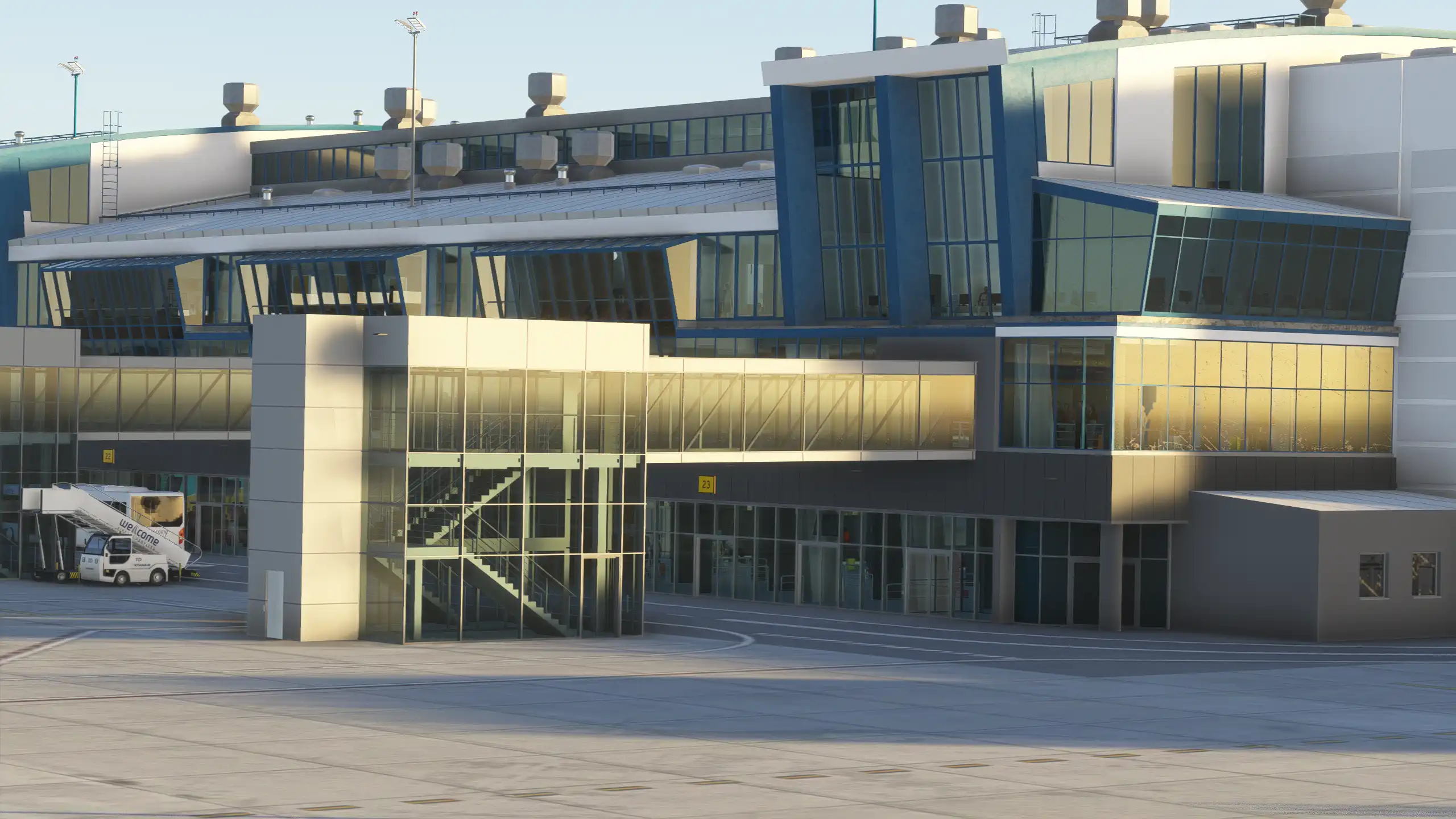
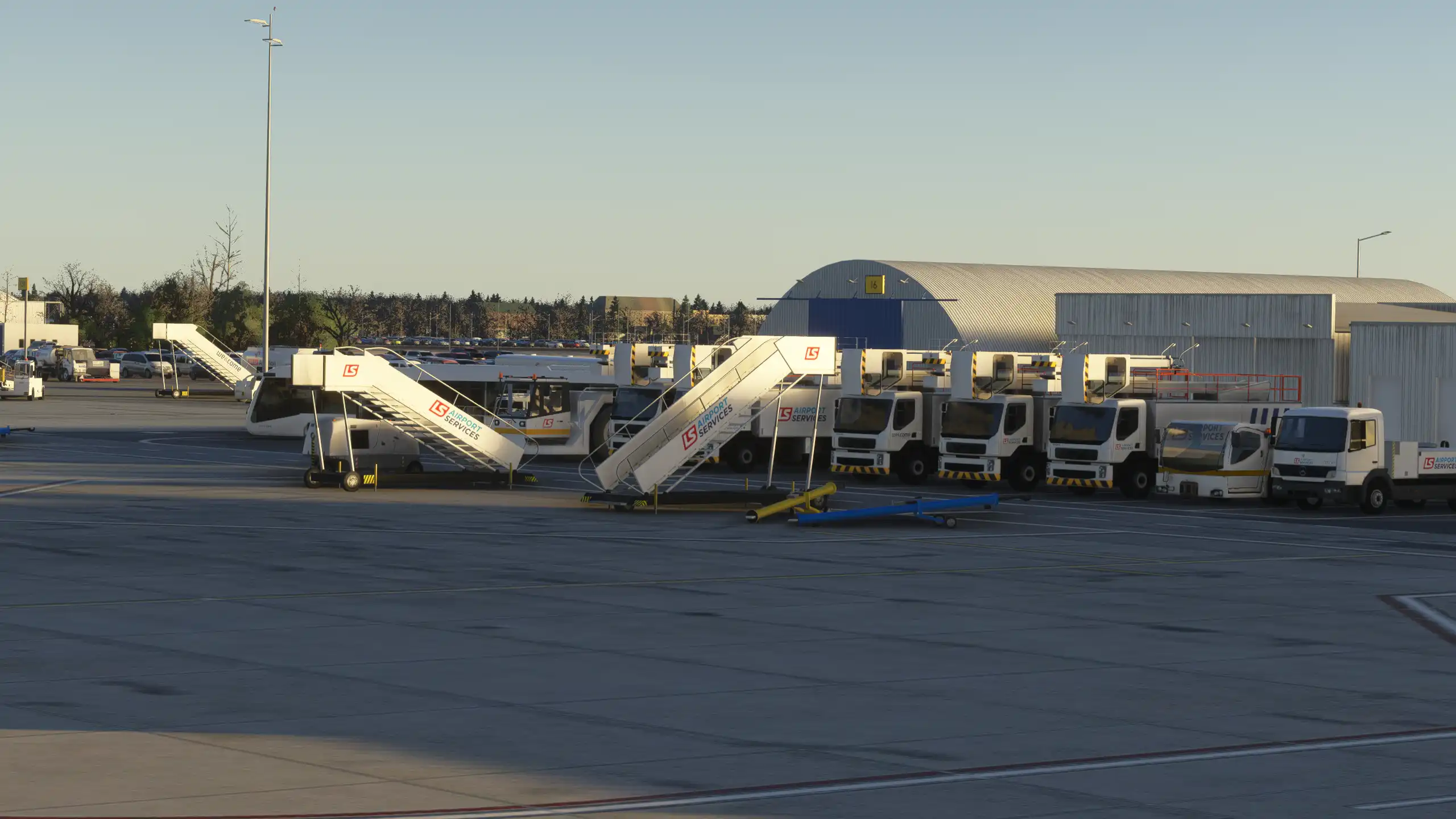
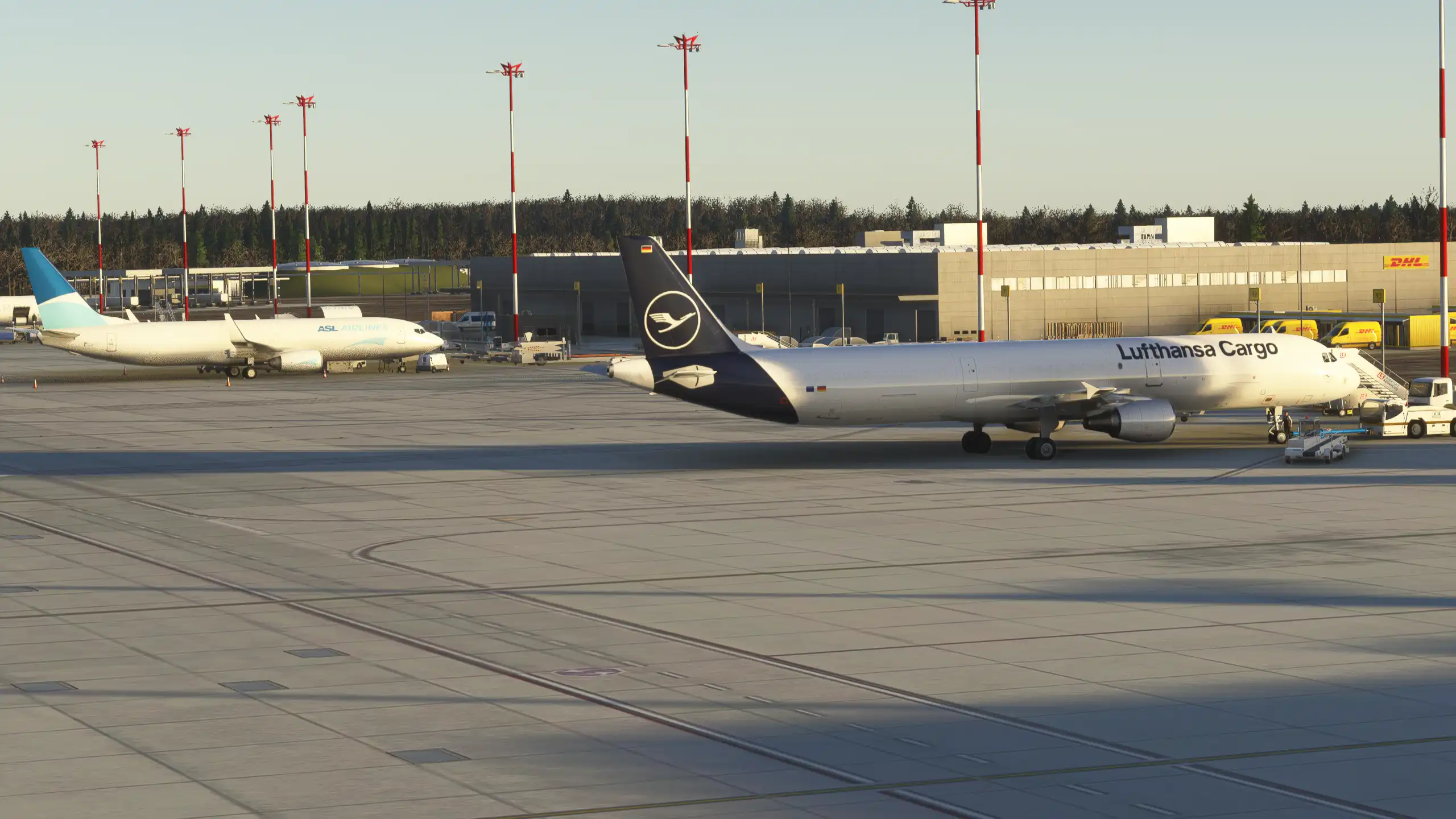
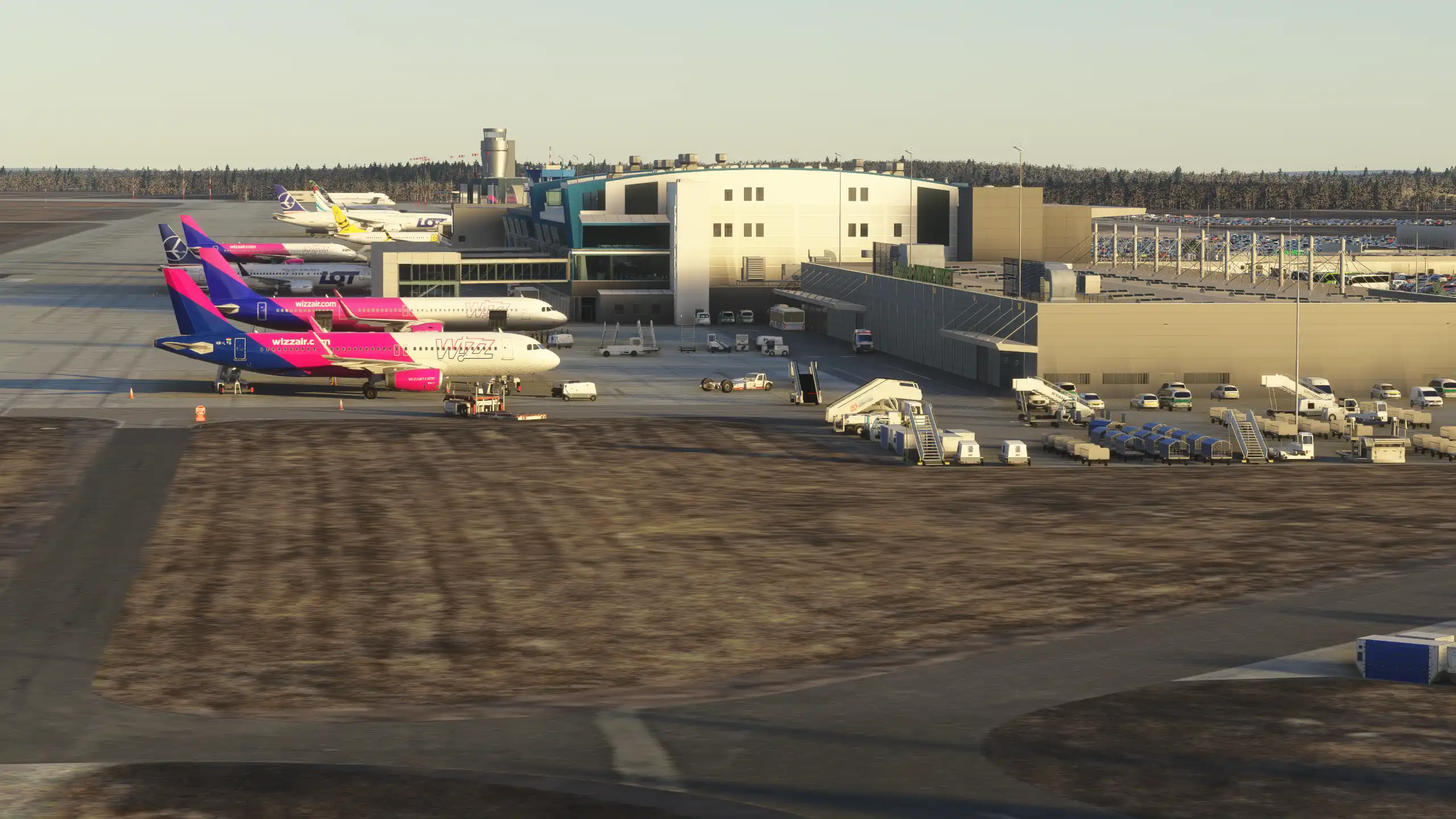
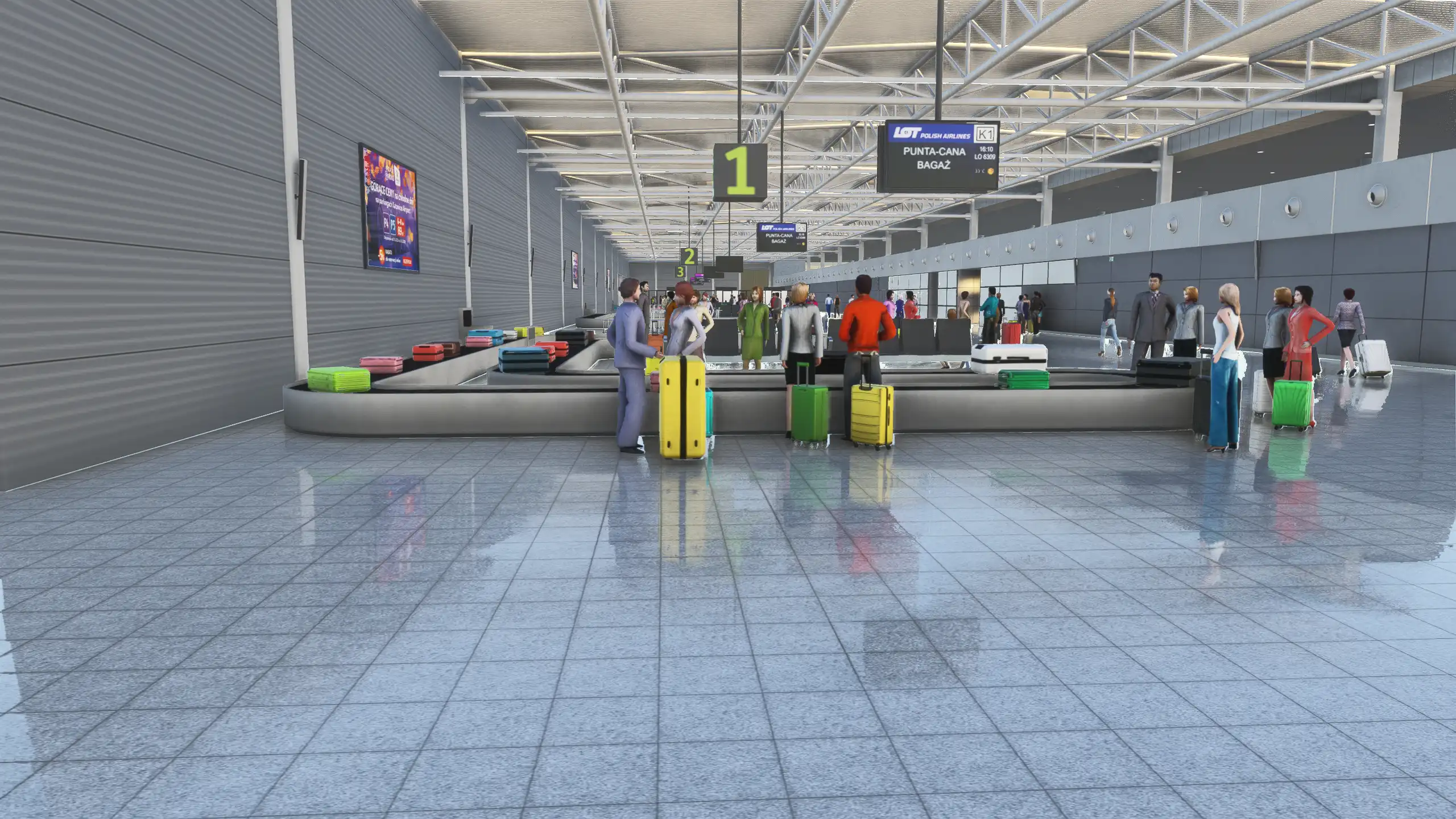
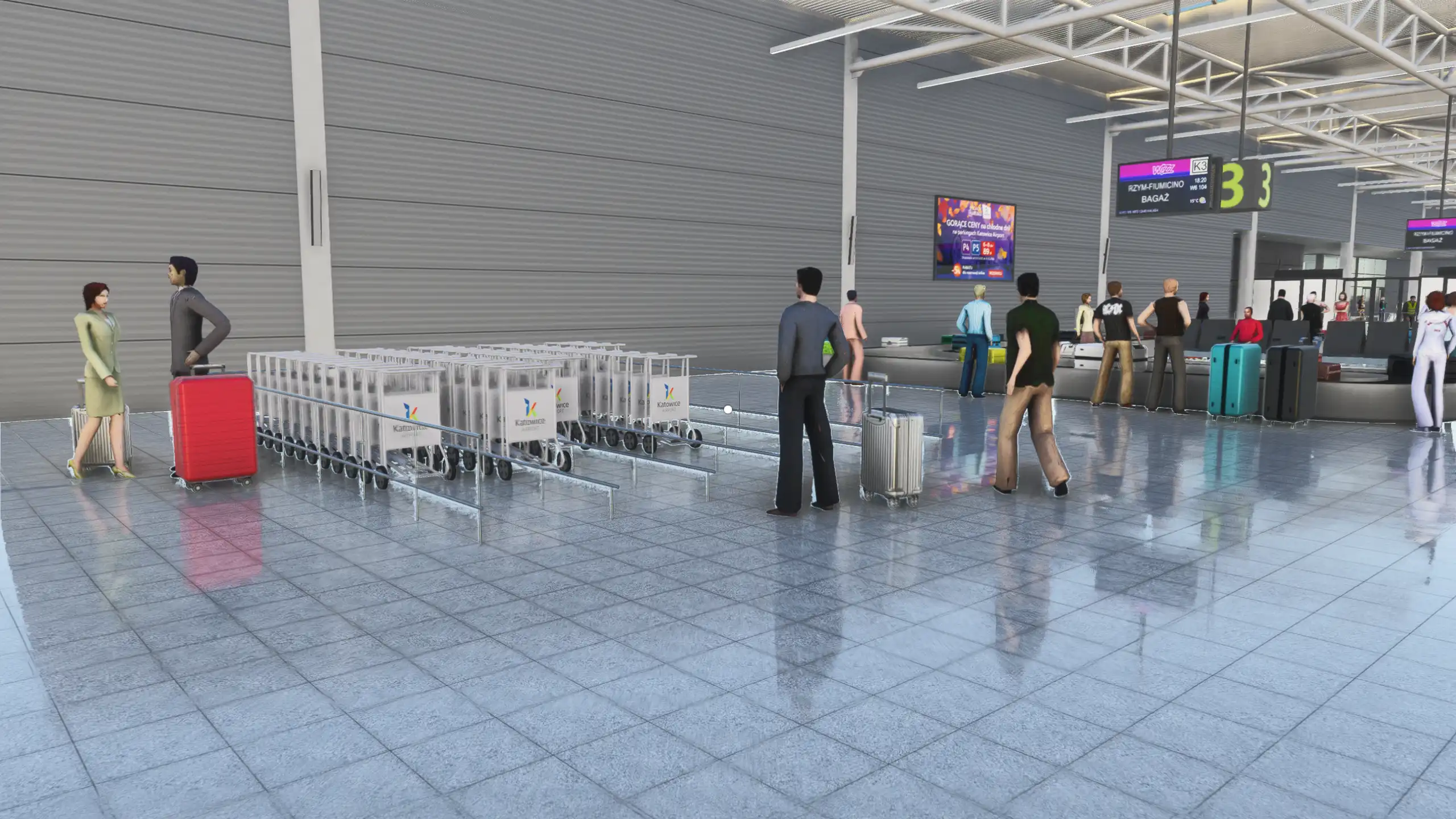
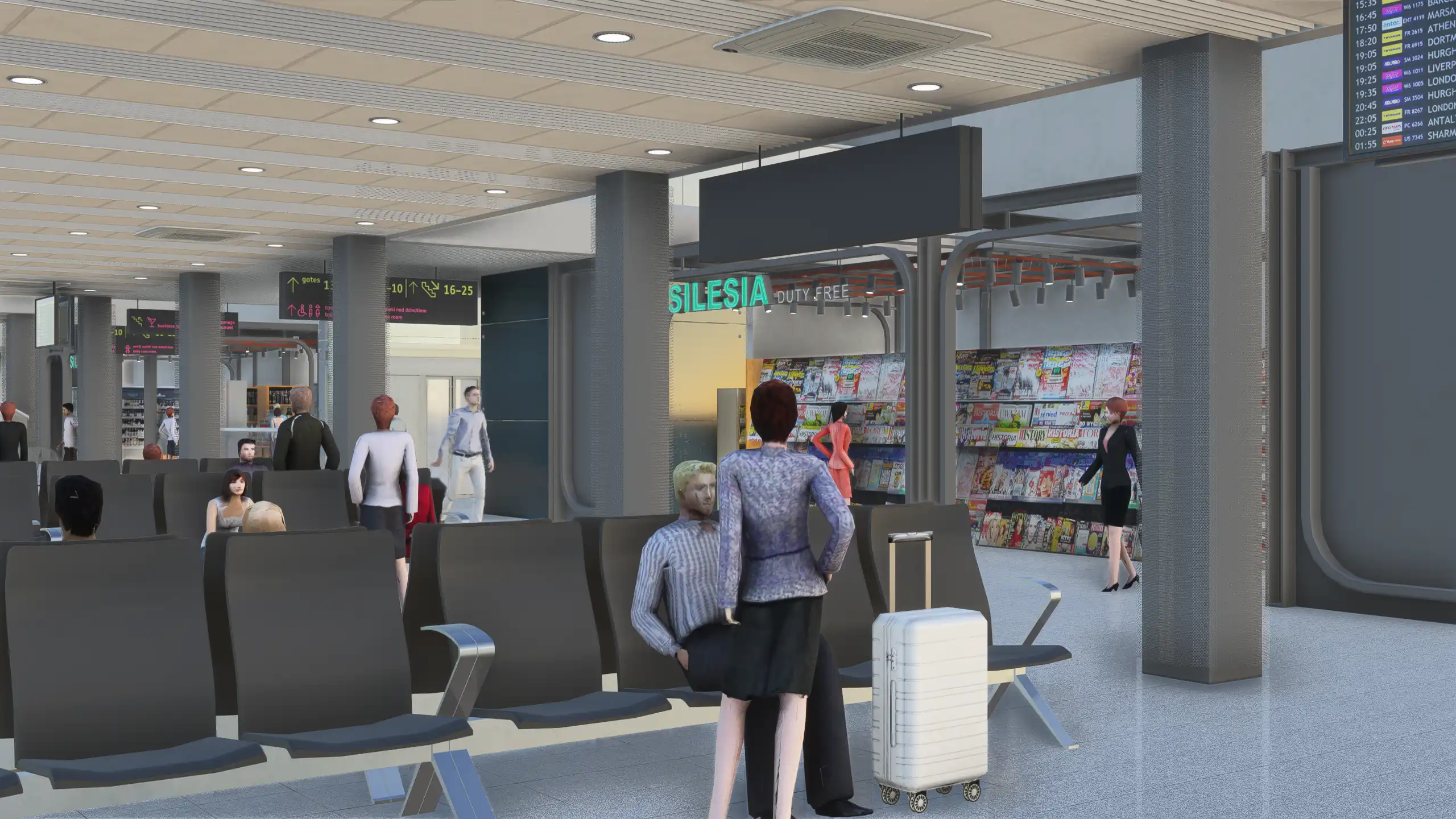
The terminal interiors have performance-friendliness in mind - more so than some of their previous releases -while retaining most of the quality, striking a really good balance between detail and framerates. From the airside, you can hardly tell the difference anyway, but you can surely feel it (more frames).

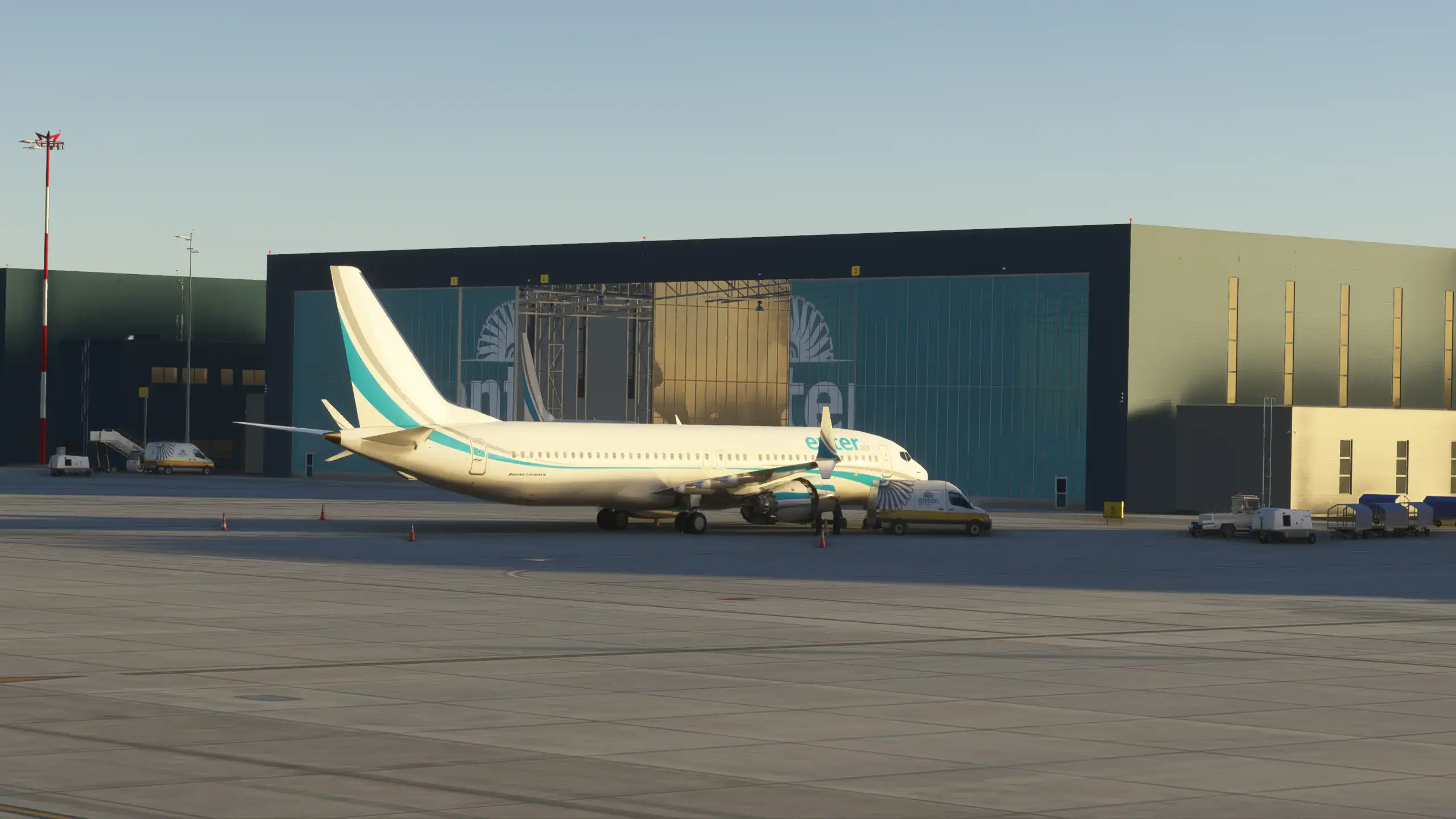
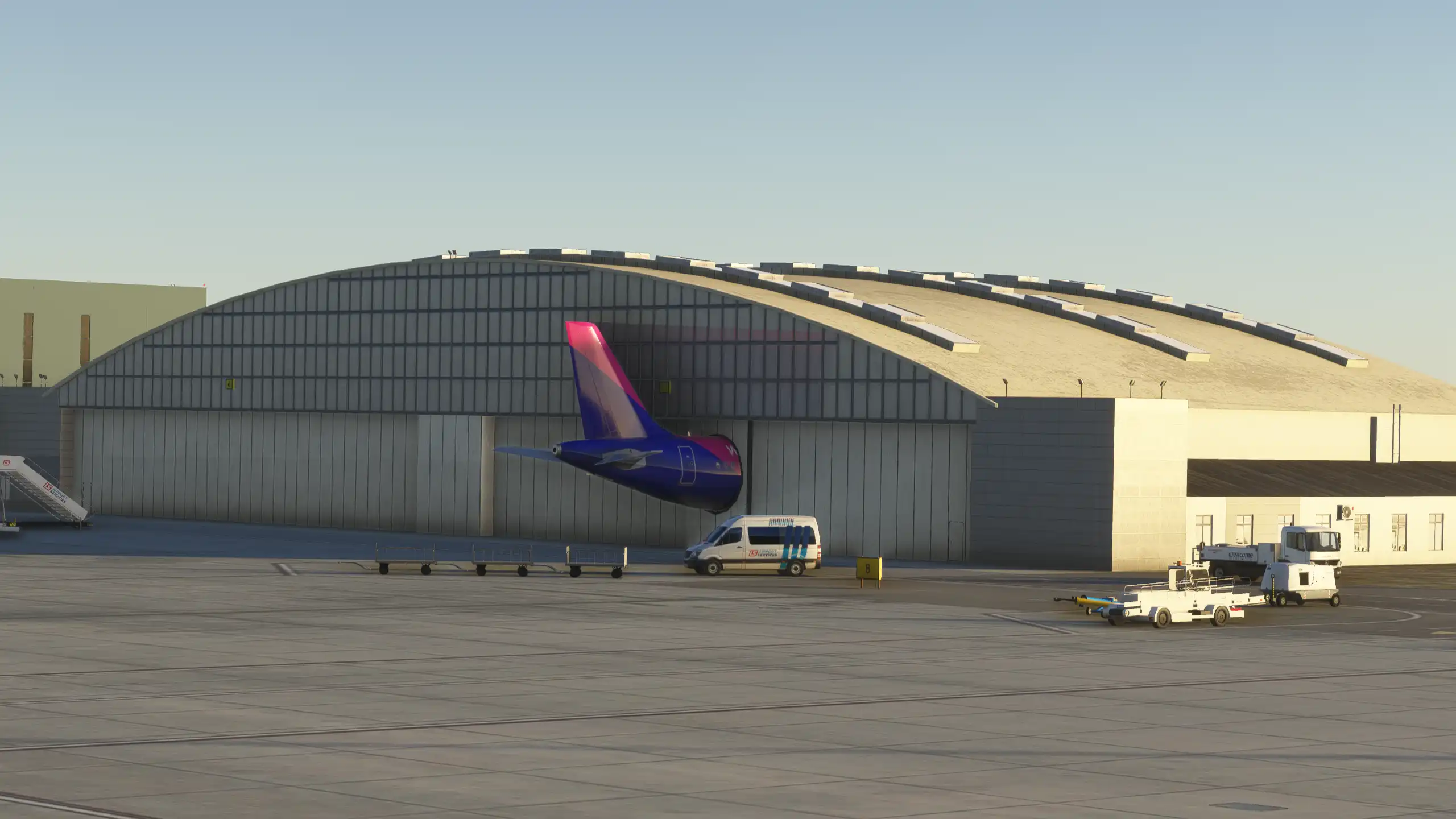
The many hangars around the airport also look really good - especially the maintenance-oriented ones - with a lot of hangar-specific clutter and other items. Plus, loads of non-disruptive static airplanes here and there (which you can disable).
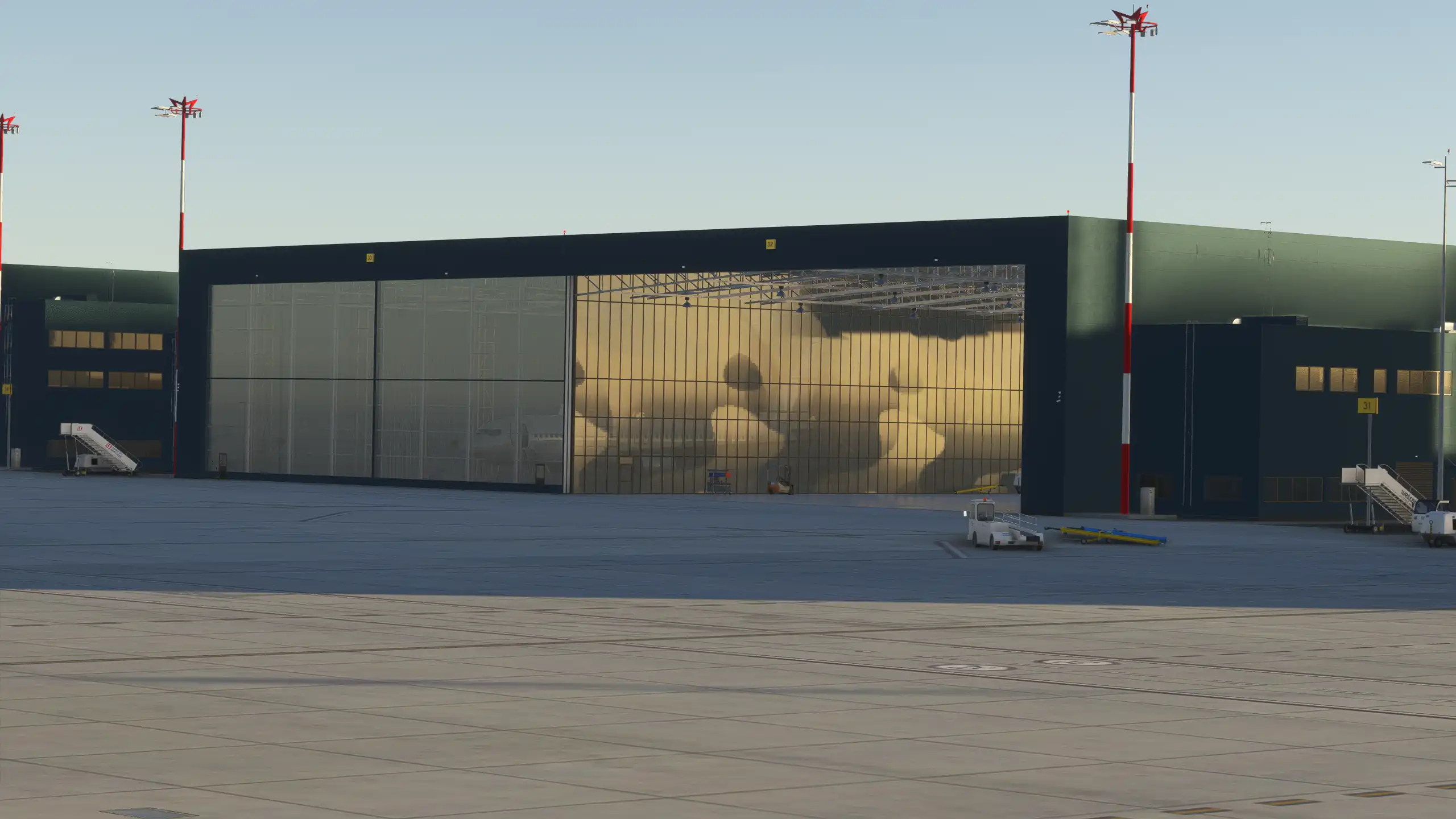
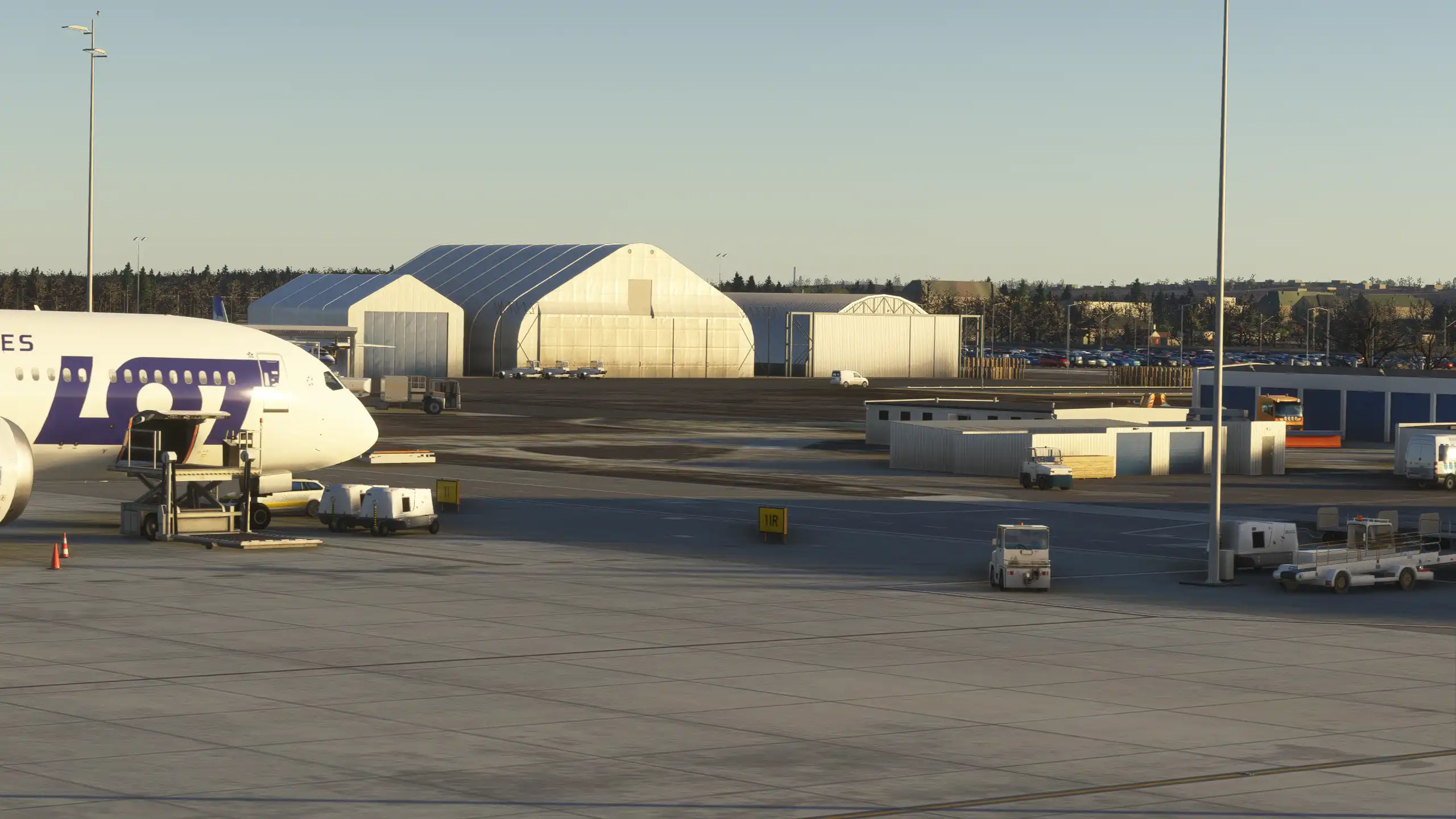
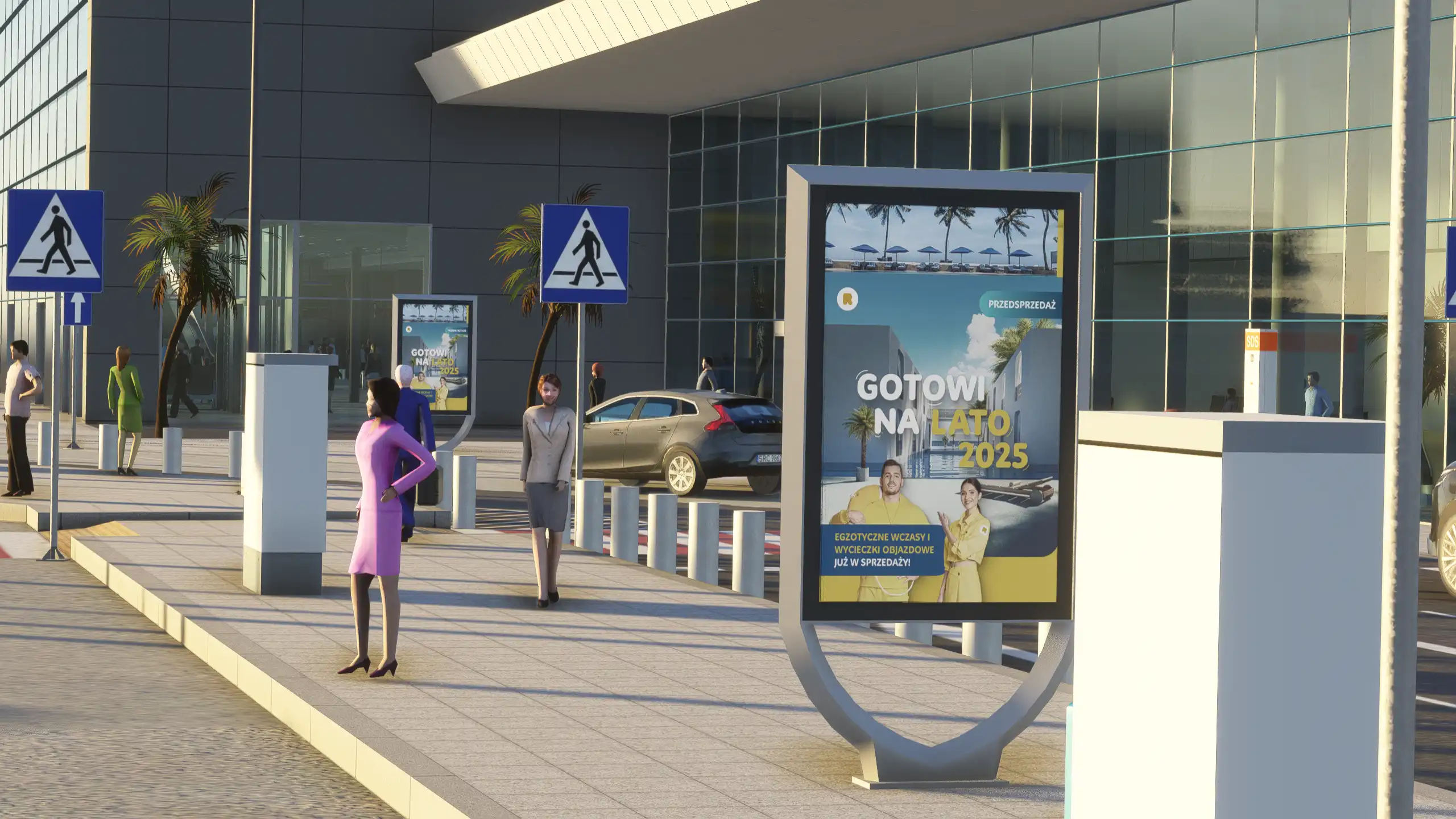
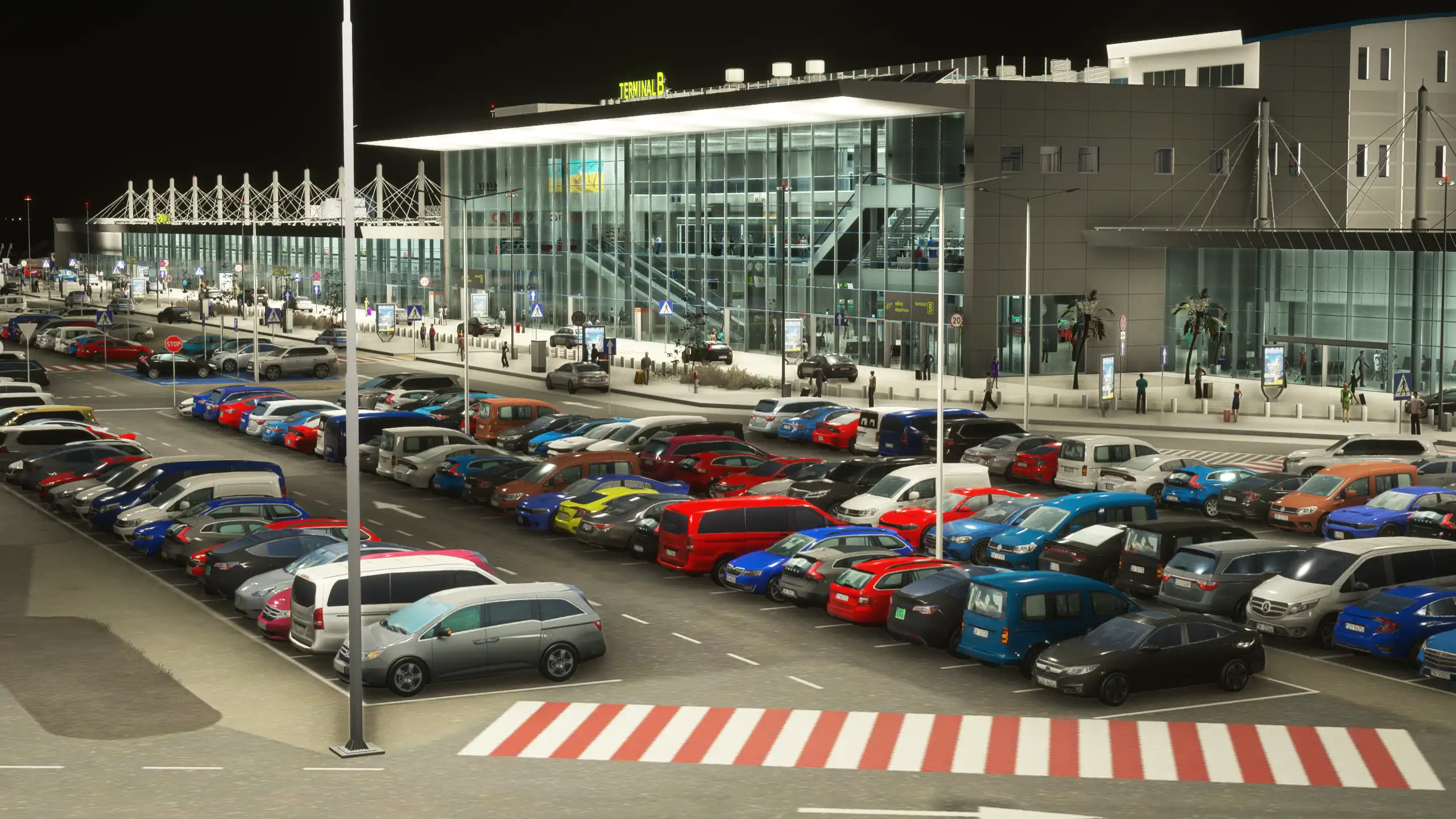
The landside is pretty in line with their previous works, featuring loads of real-life vehicles in the parking lots, high-quality road signage, and the occasional bit of greenery sprinkled around.
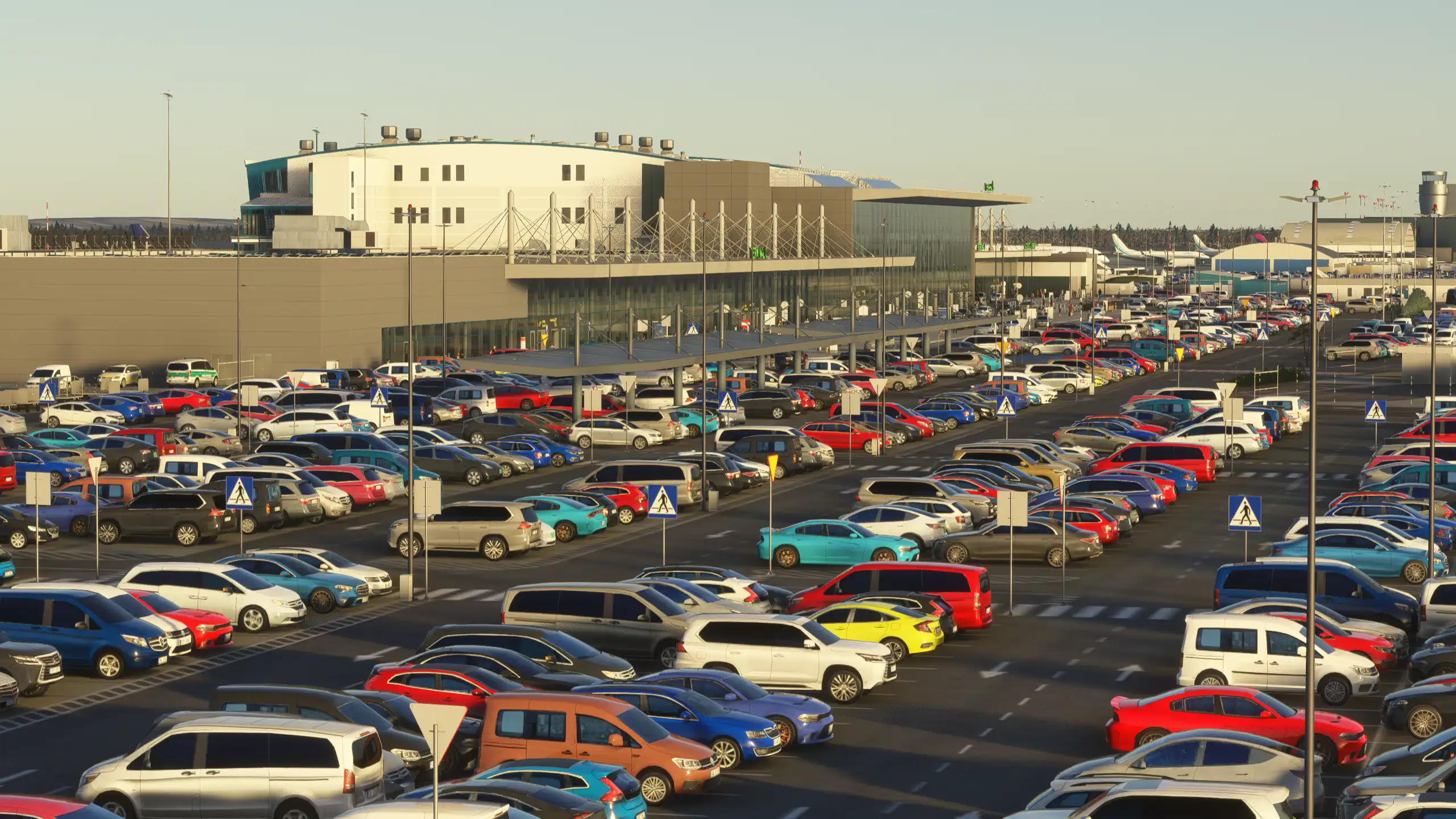
As previously mentioned, the ground textures are superb, with no notable drawbacks.
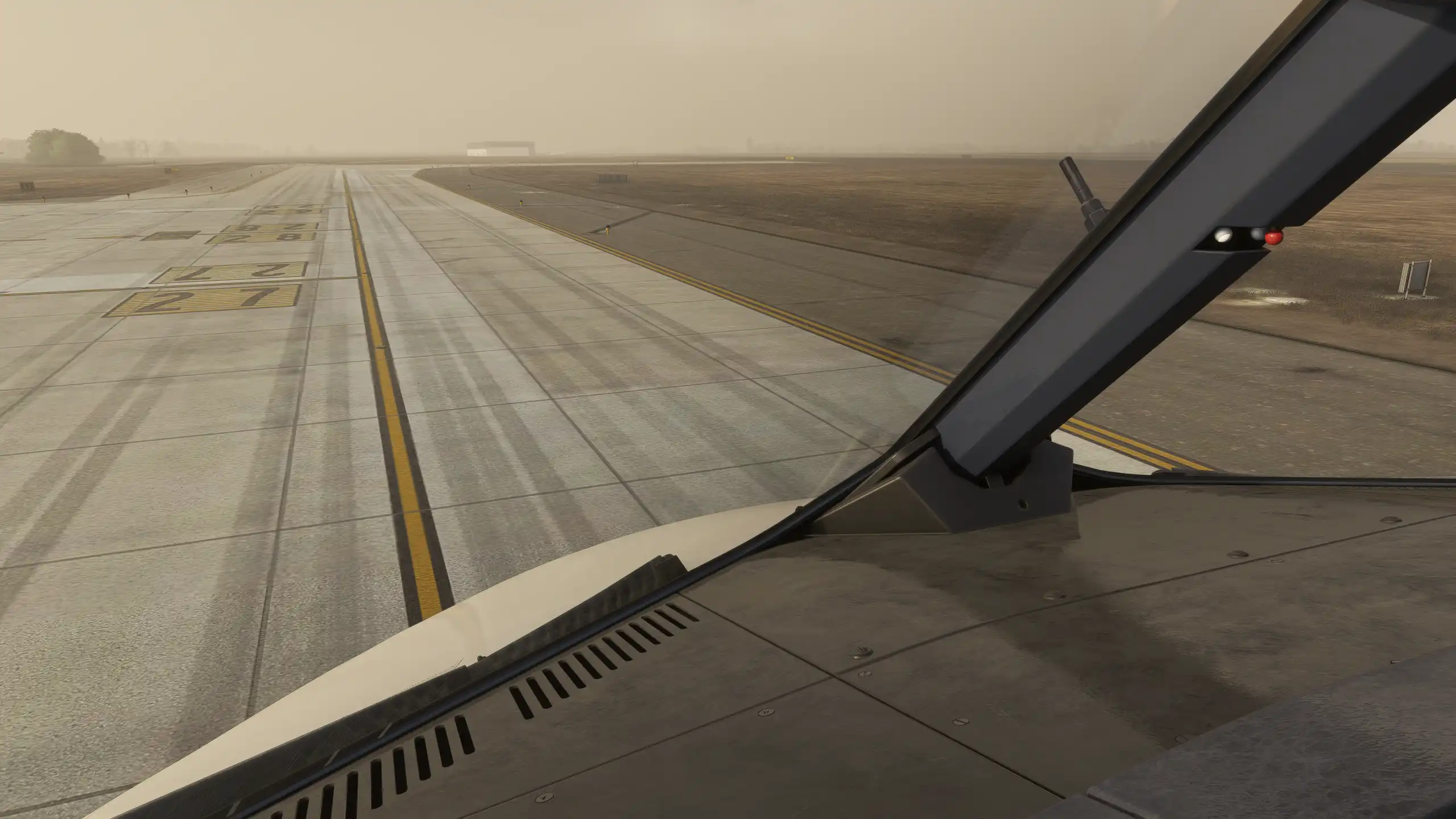
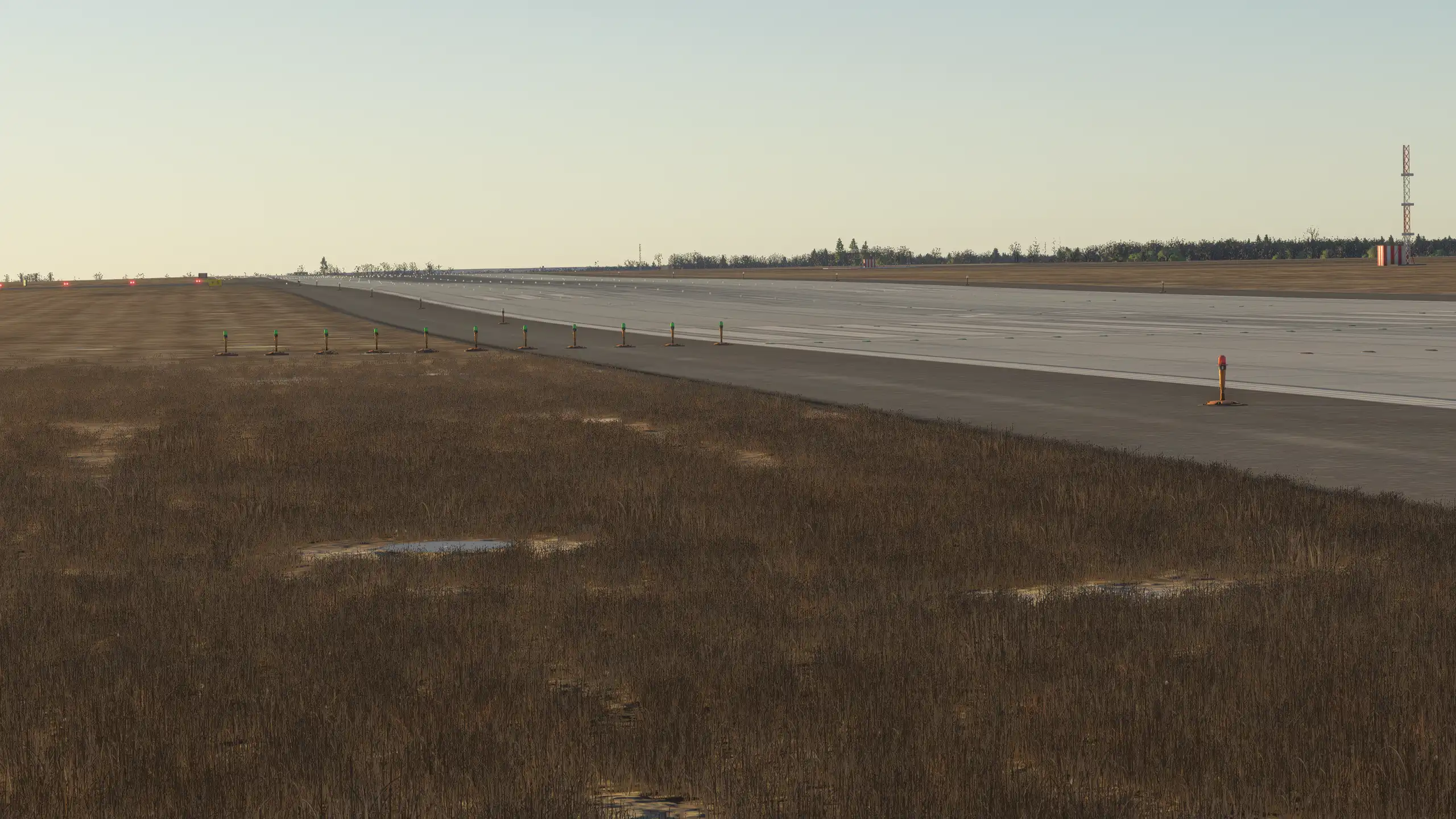

All in all, the work on Katowice is very consistent, bringing special attention to performance without compromising the overall quality of the product. The VRAM usage was consistently low throughout all of the testing, which is always a plus when it comes to such a VRAM-hungry platform (we used Microsoft Flight Simulator 2024 for the review).
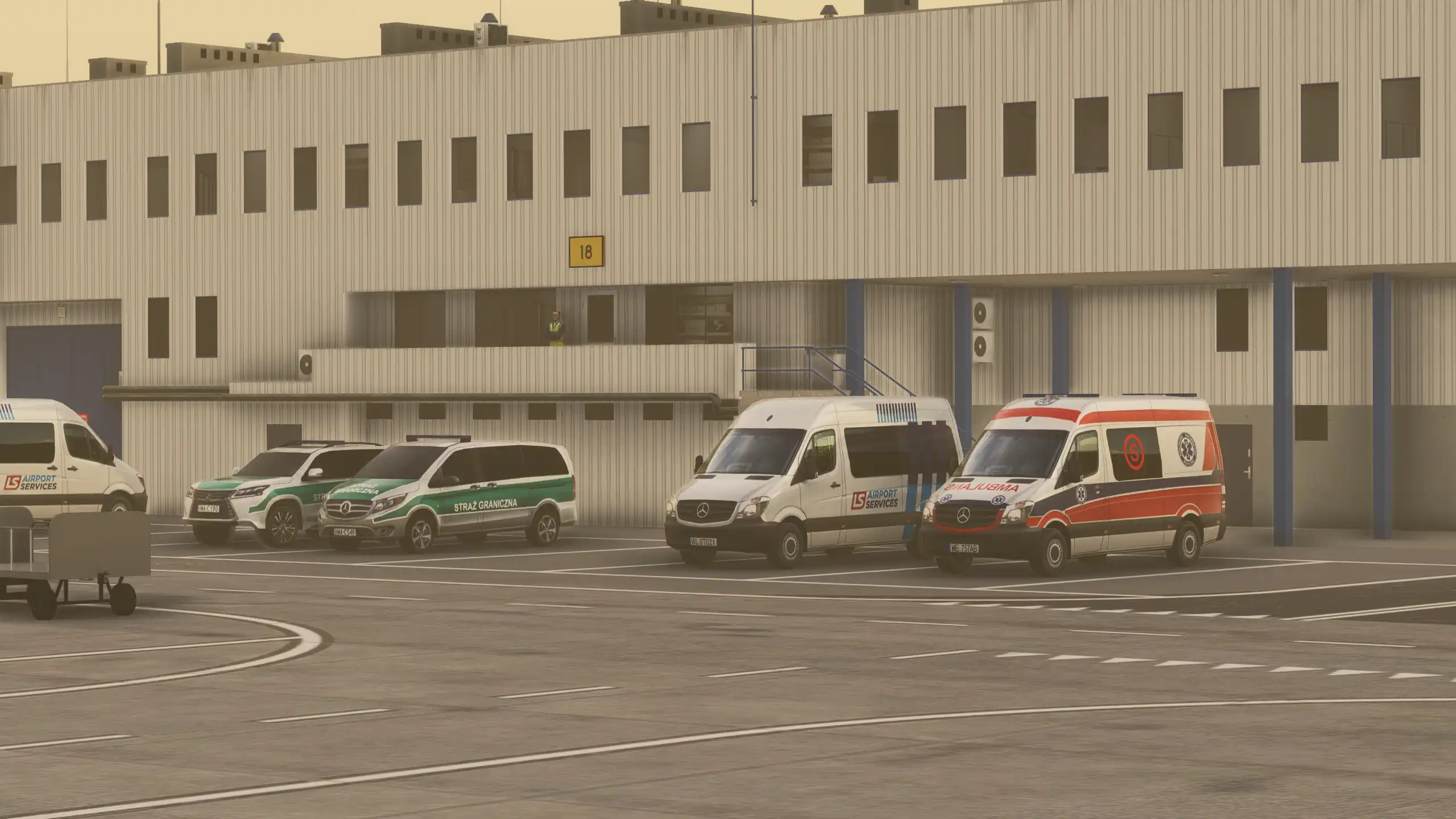
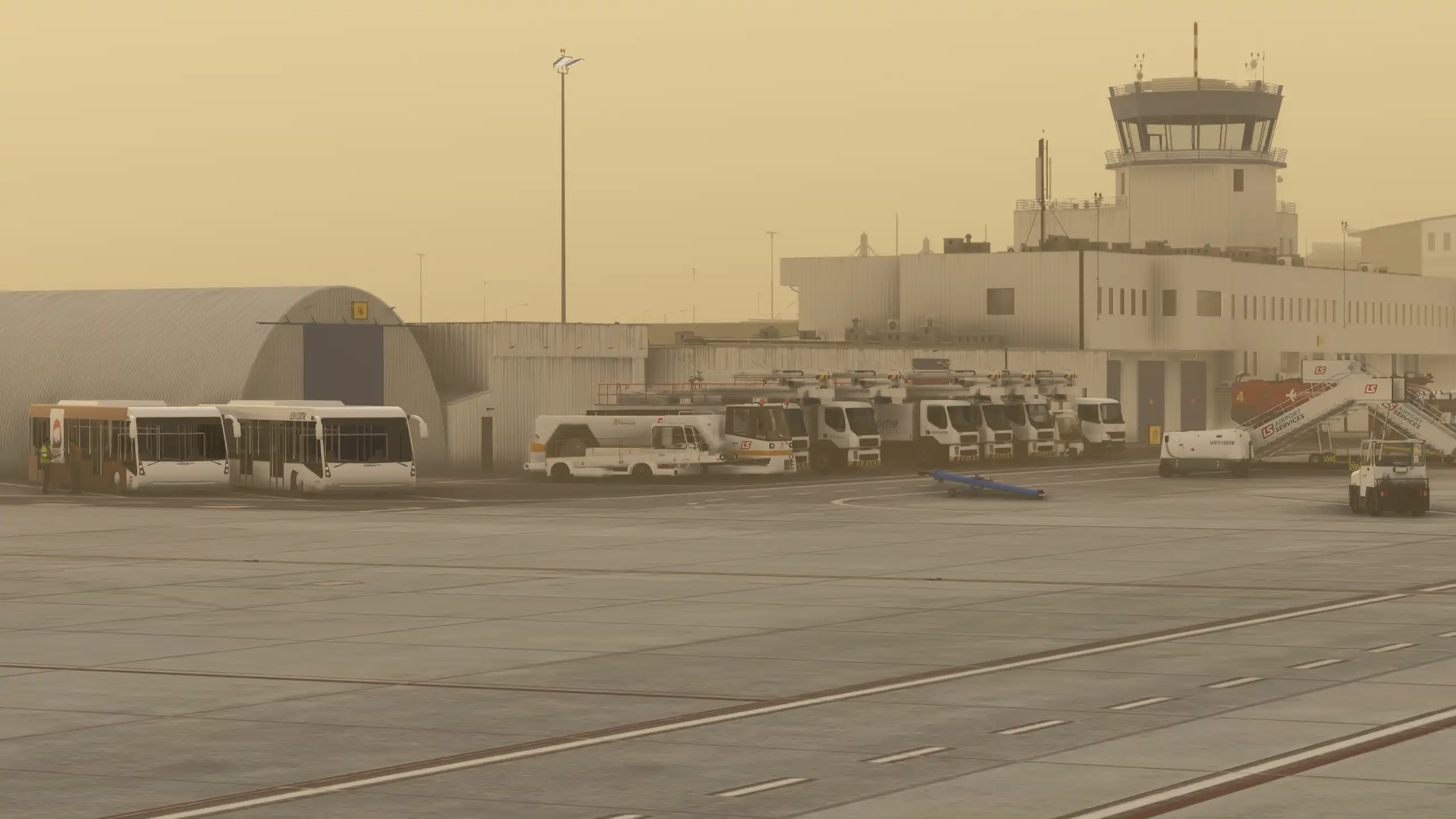
Night Lighting
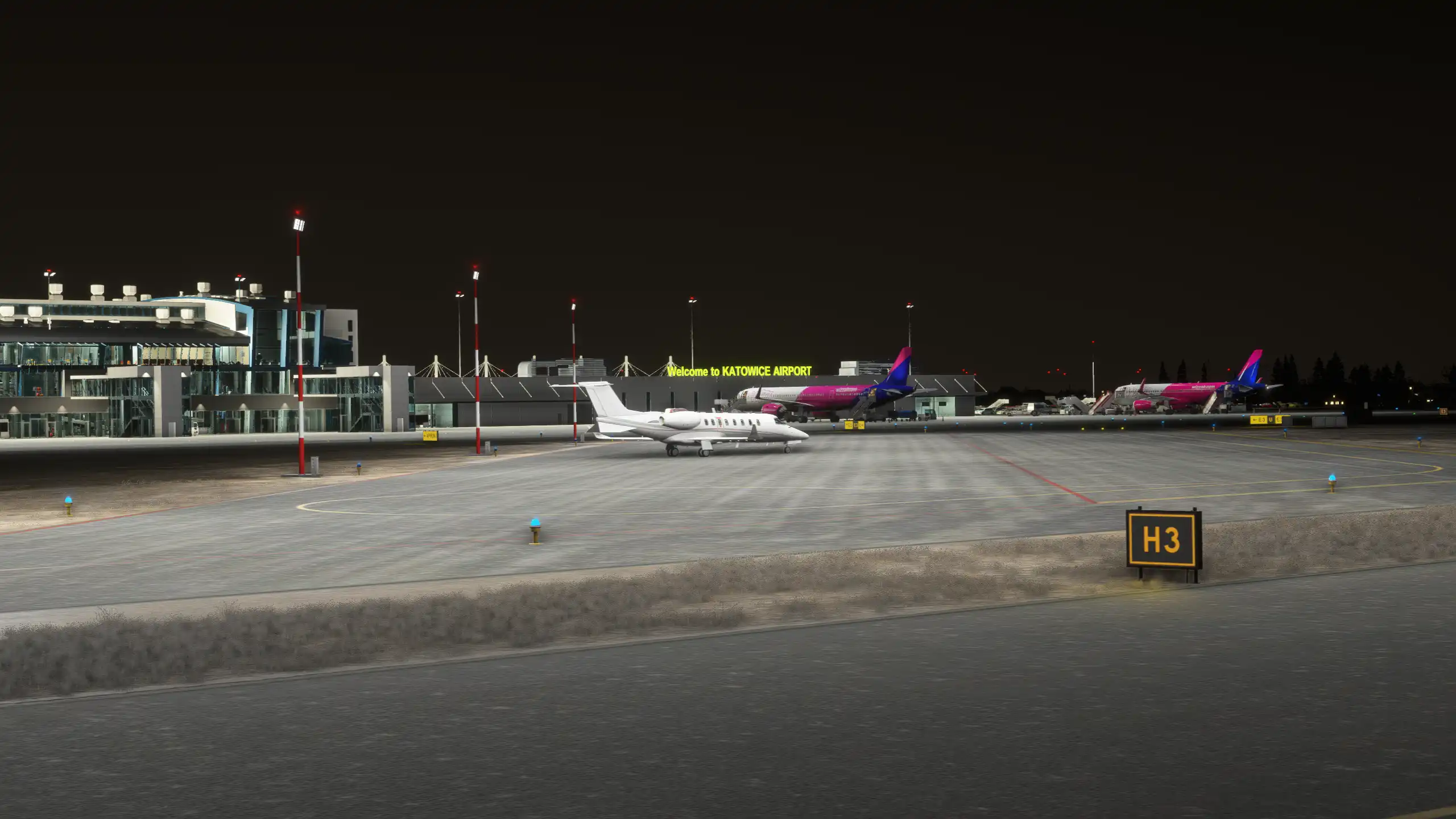
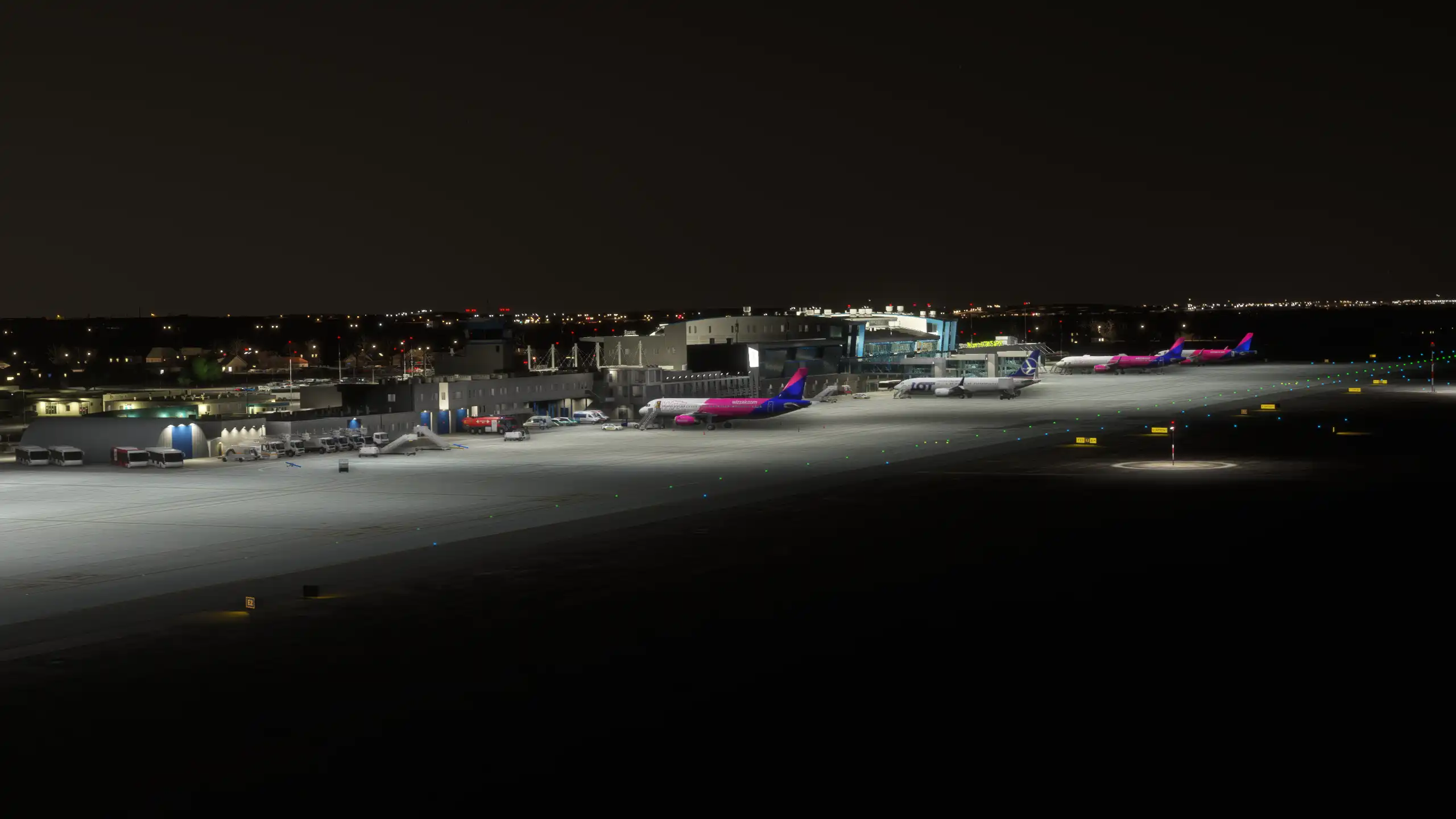
The night lighting execution is neatly done, bringing very natural light tones, without being overly bright or dark. It looks as natural as you’d expect it to look in real life. The same applies to the interior lighting.
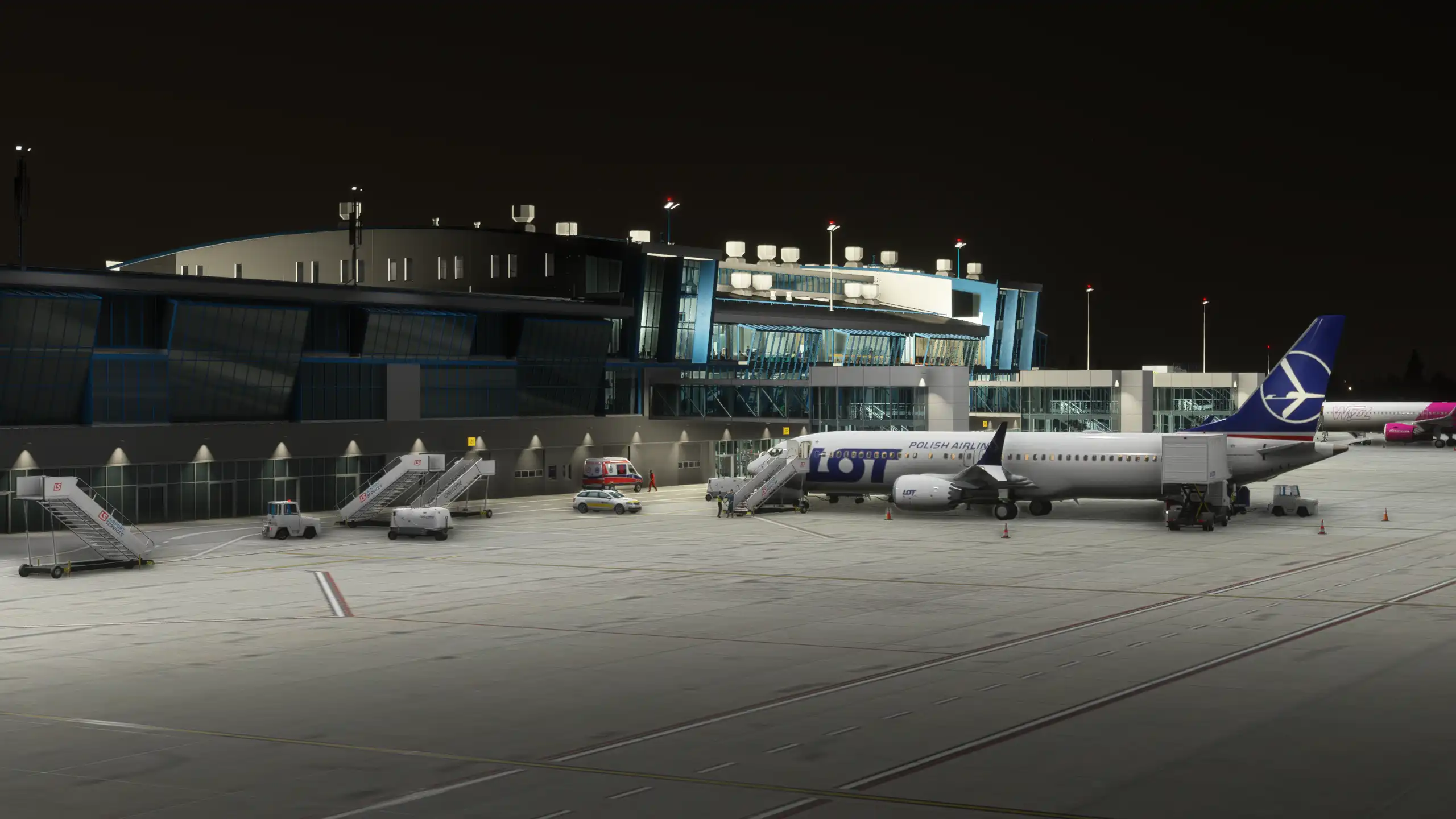
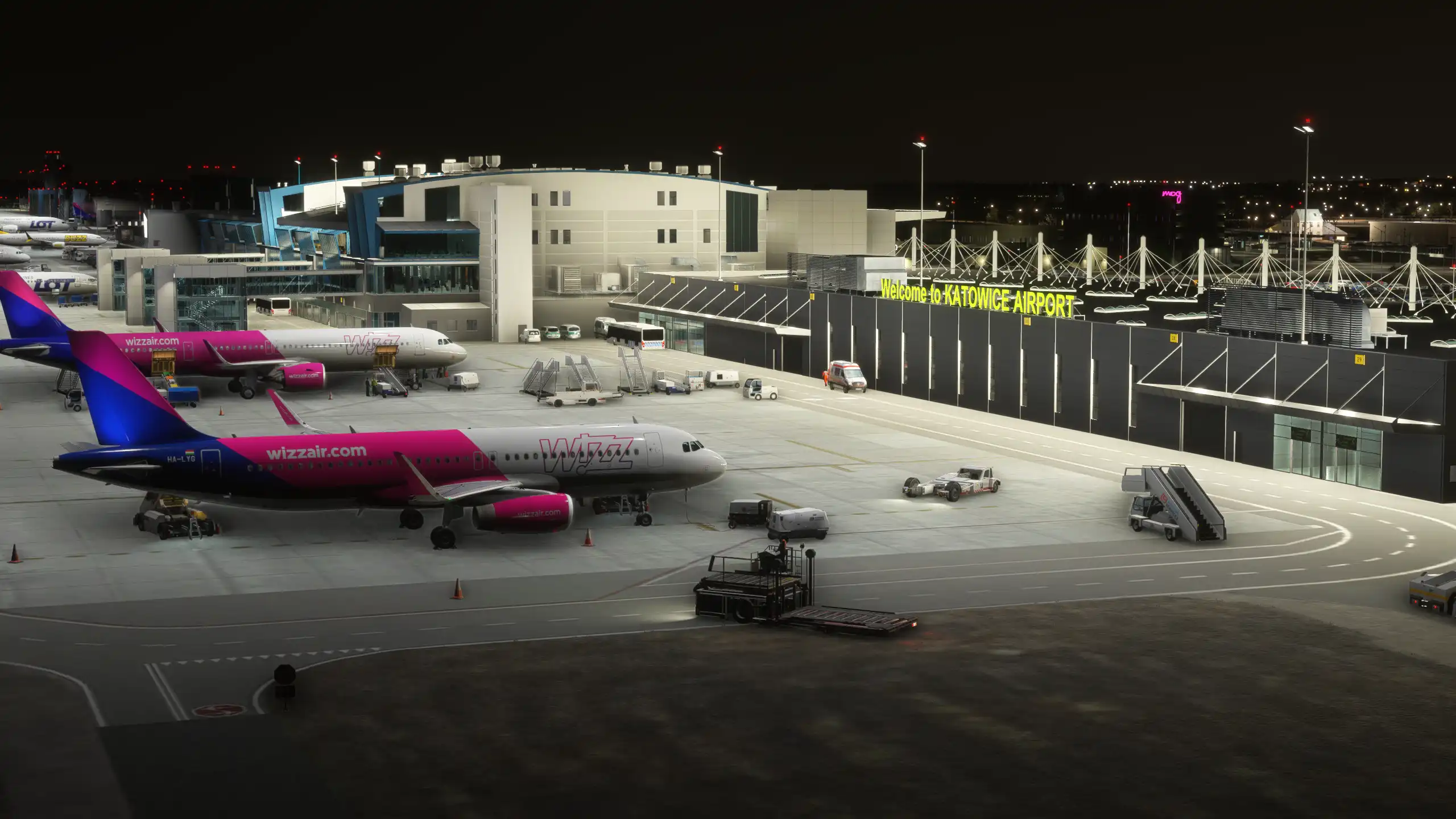
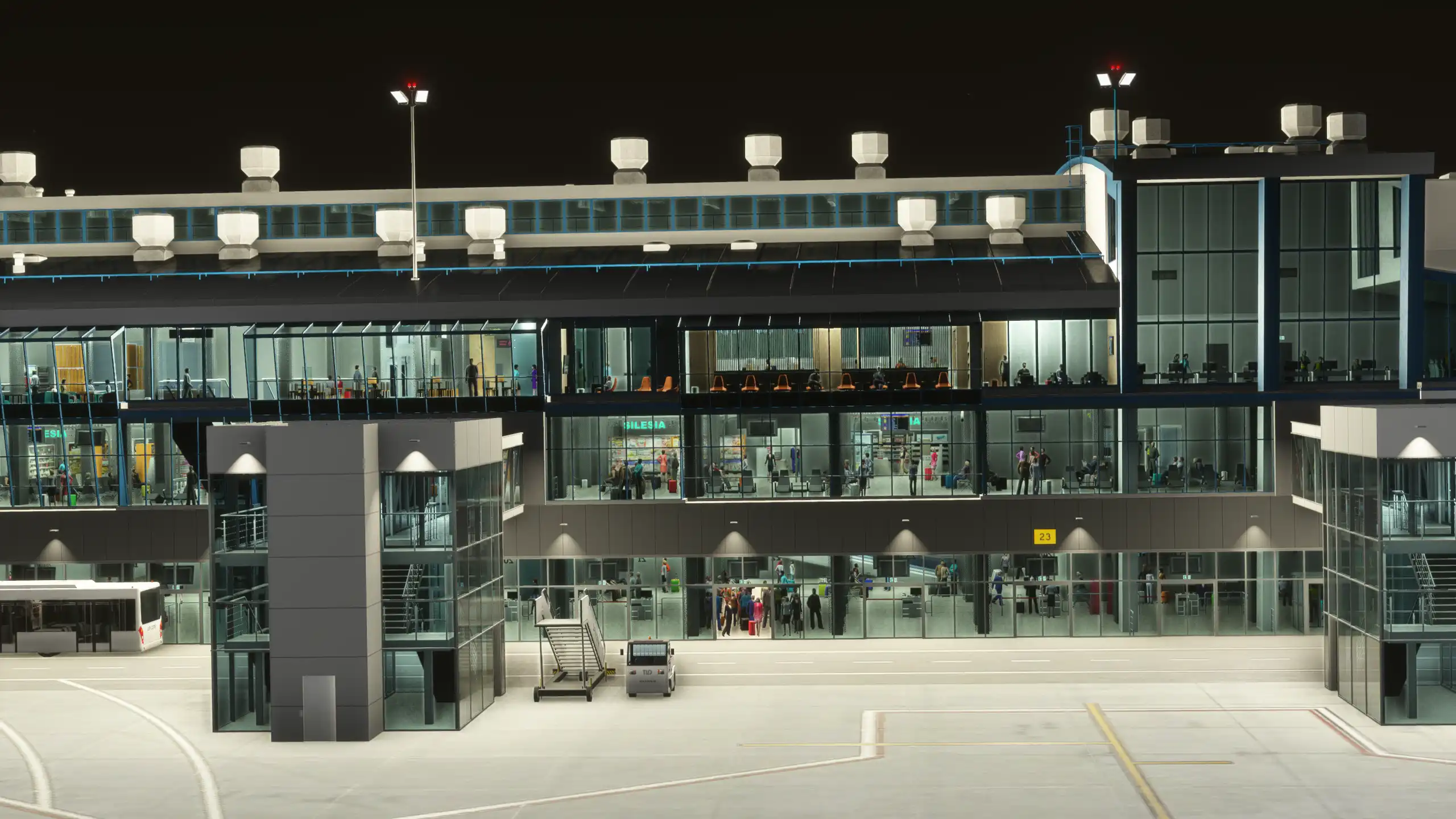
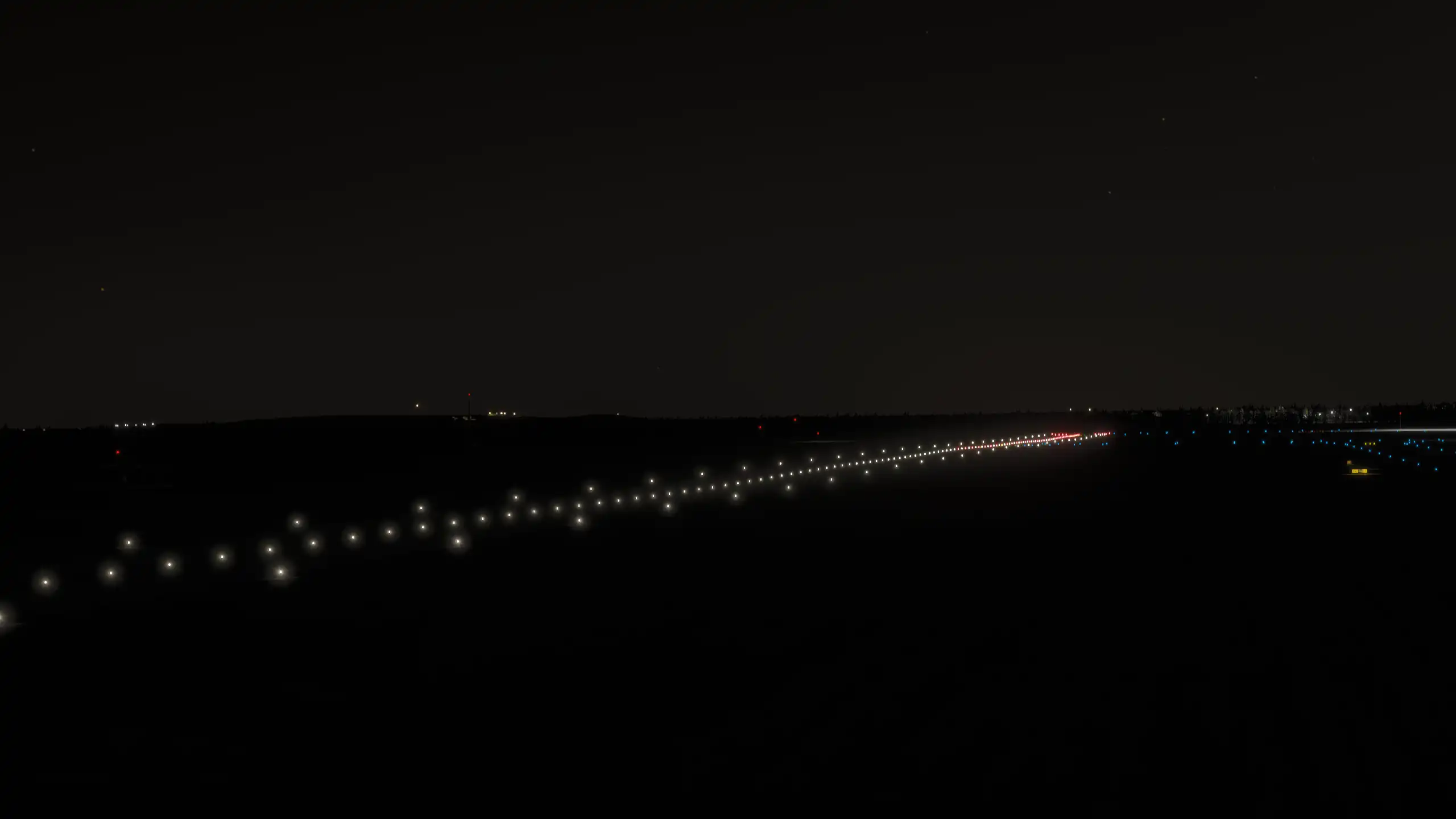
As for the taxiway lighting, it has also been done very well and has proven very useful during my first flight, since visibility was awful and I had to rely heavily on the runway lights.
Performance
My Setup: 32 GB RAM DDR5 6200 MHz, Ryzen 7 9800X3D 5.2GHz, Nvidia GeForce RTX 5070 Ti 16 GB, 2 TB SSD NVMe 6000 MB/s R&W
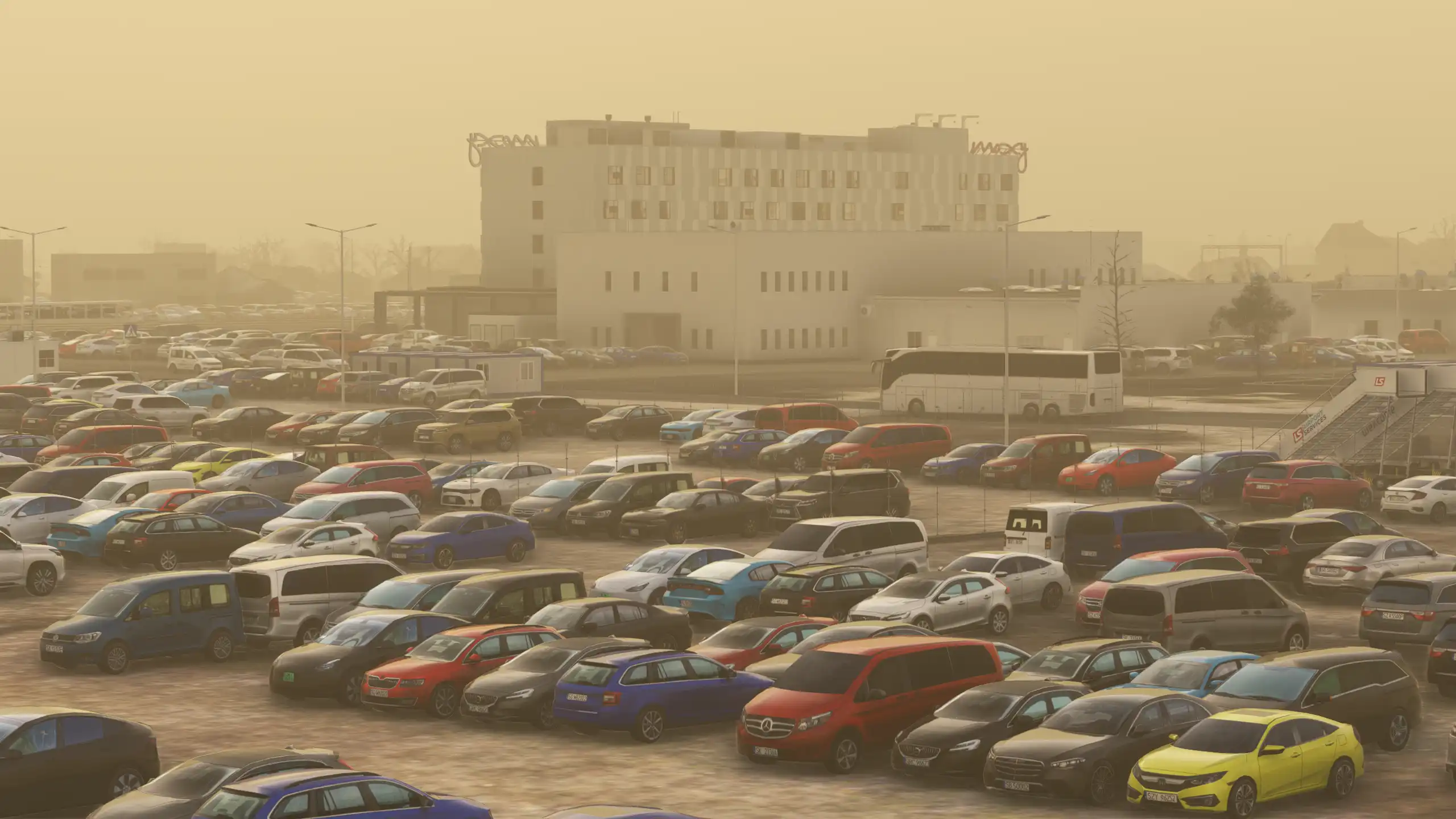
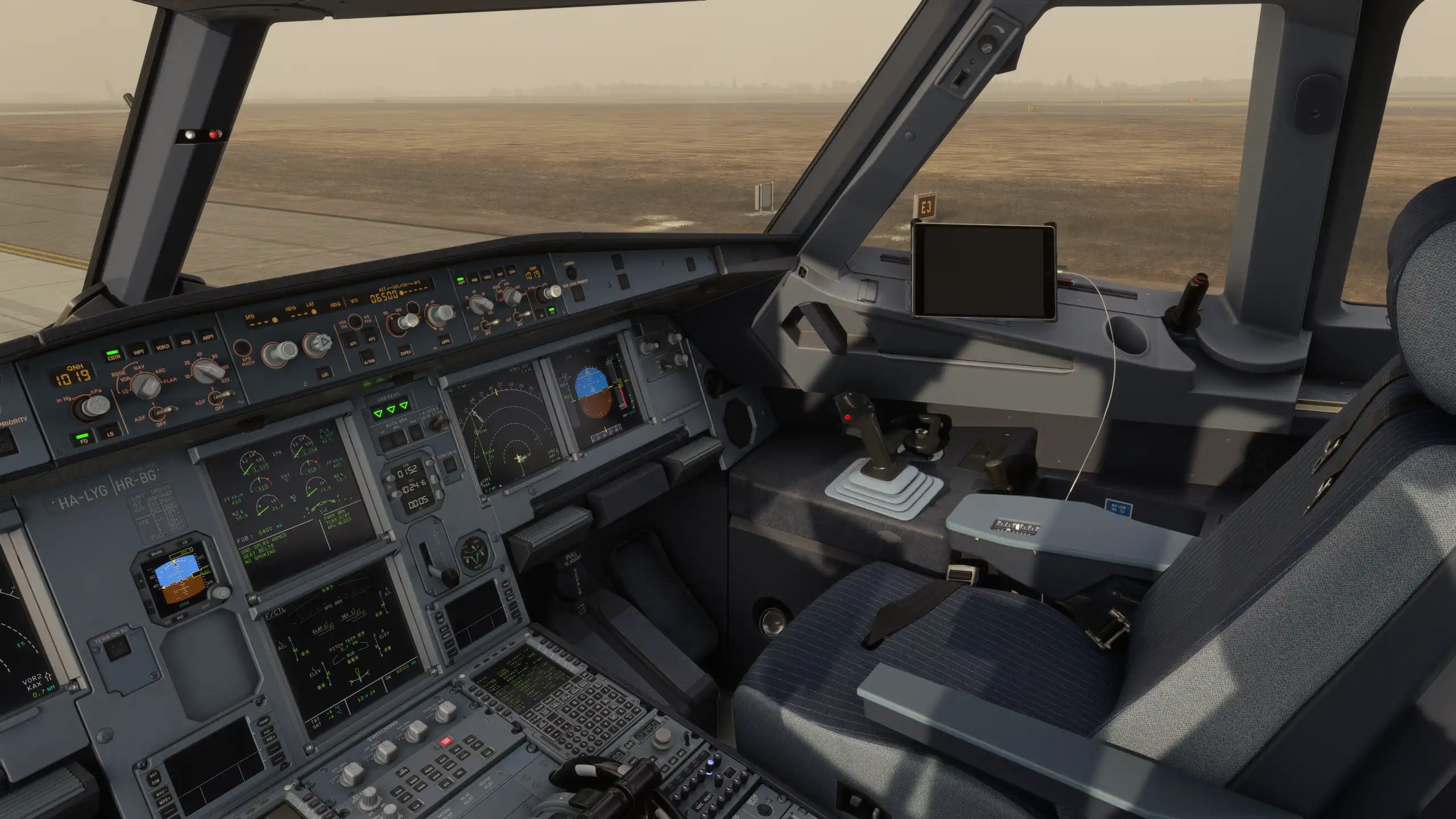
The performance remained consistent throughout the entire approach, landing, taxi, and deboarding at the stand. My Microsoft Flight Simulator 2024 is configured to target 30 fps with a mix of Ultra and High (textures only) settings, with frame generation enabled (2x FG) and ray-traced shadows. The 30 fps target was met and maintained throughout without issue, and the VRAM usage did not exceed 13 GB at any point.
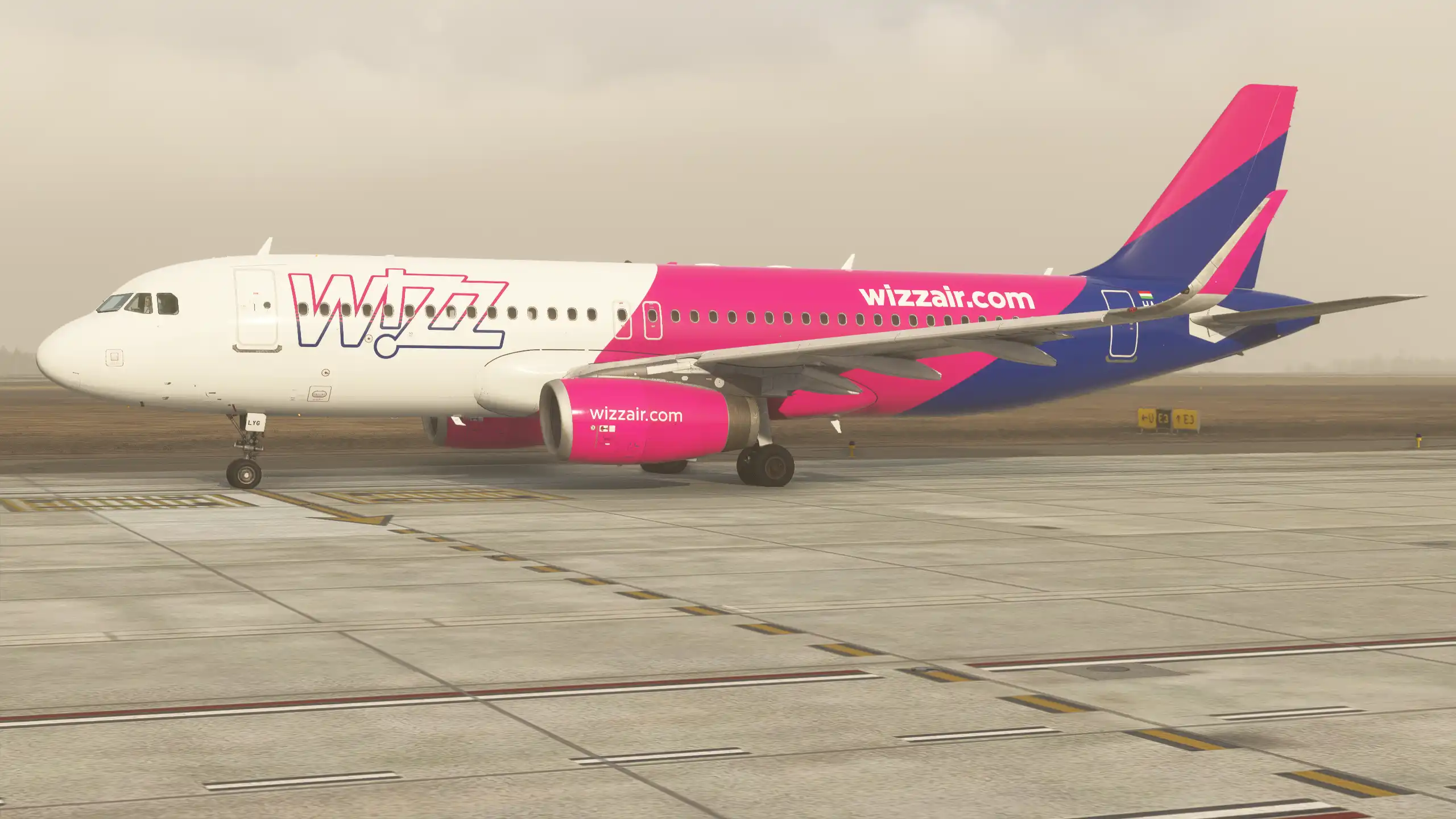
The usage figures are very much in line with other similarly sized airports, and the LODDding appears to be done rather well: there are no sudden GPU usage hikes when facing a specific part of the terminal, for example. The opposite behavior would point toward an unoptimized terminal model, which is not the case here.
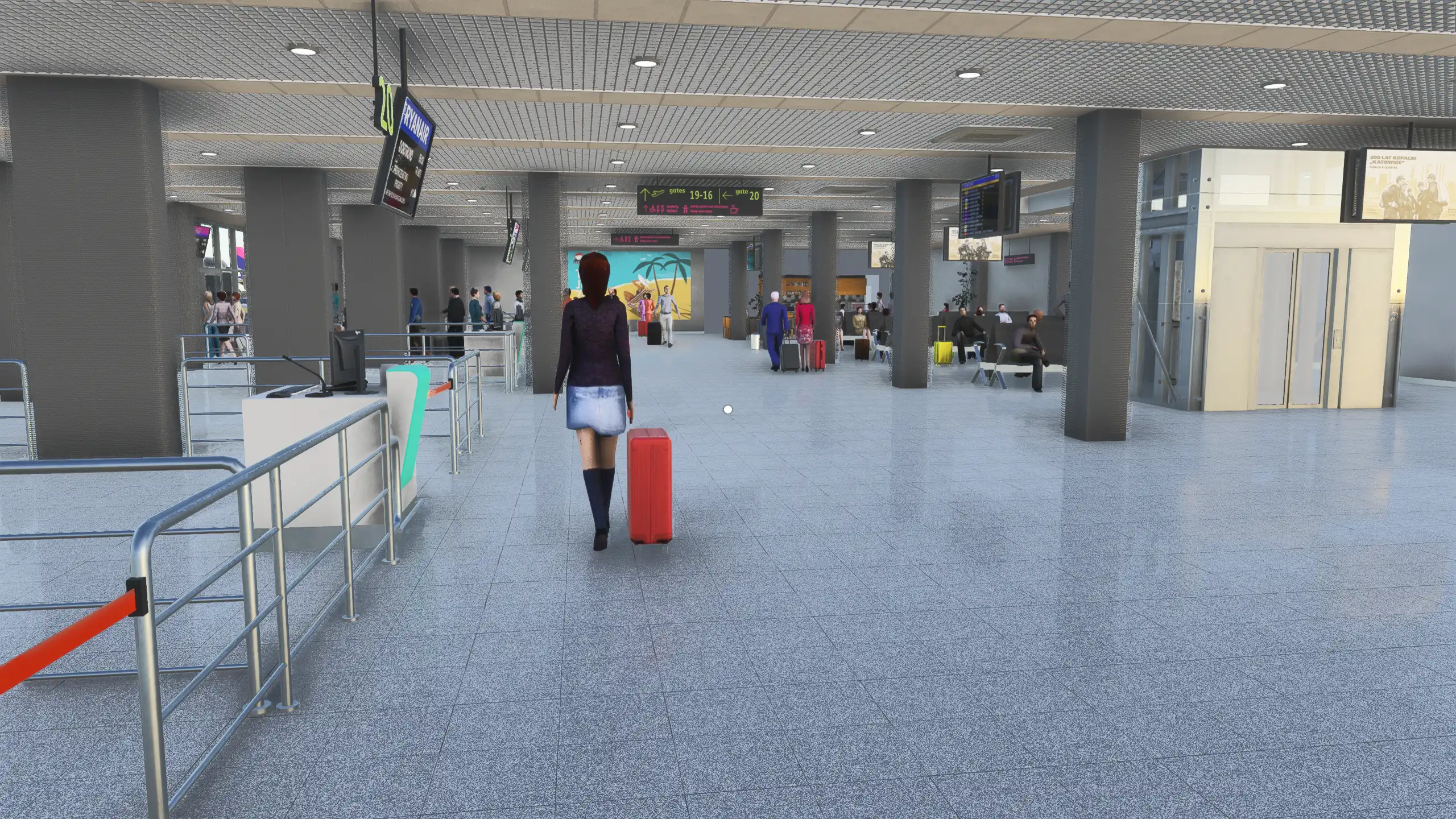
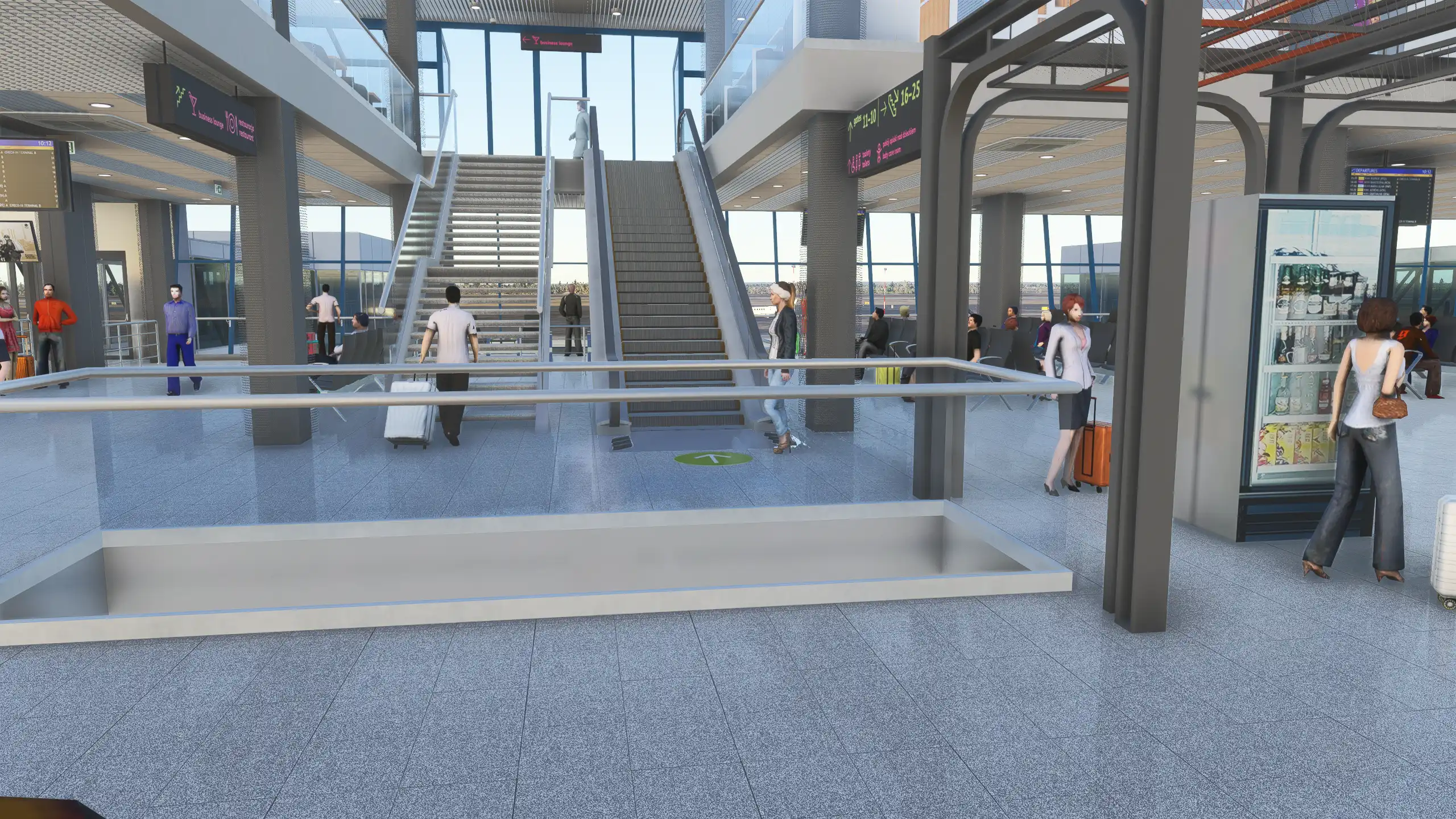
Furthermore, the configurator (within Orbx Central) allows you to disable static aircraft, 3D people, and parked vehicles to squeeze out a few more frames if need be.
Conclusion
For roughly $23.28, you get the best rendition of Katowice Airport to date, regardless of platform. Drzewiecki Design went above and beyond with the detail whilst keeping it very performant, extremely important in this new phase of flight simulation where MSFS 2024 is DirectX 12 only and requires so much VRAM to run properly (I could run MSFS 2020 better with a 3080 than I do 2024 now with a 5070 Ti, at least settings-wise. If that isn’t super telling I don’t know what is).
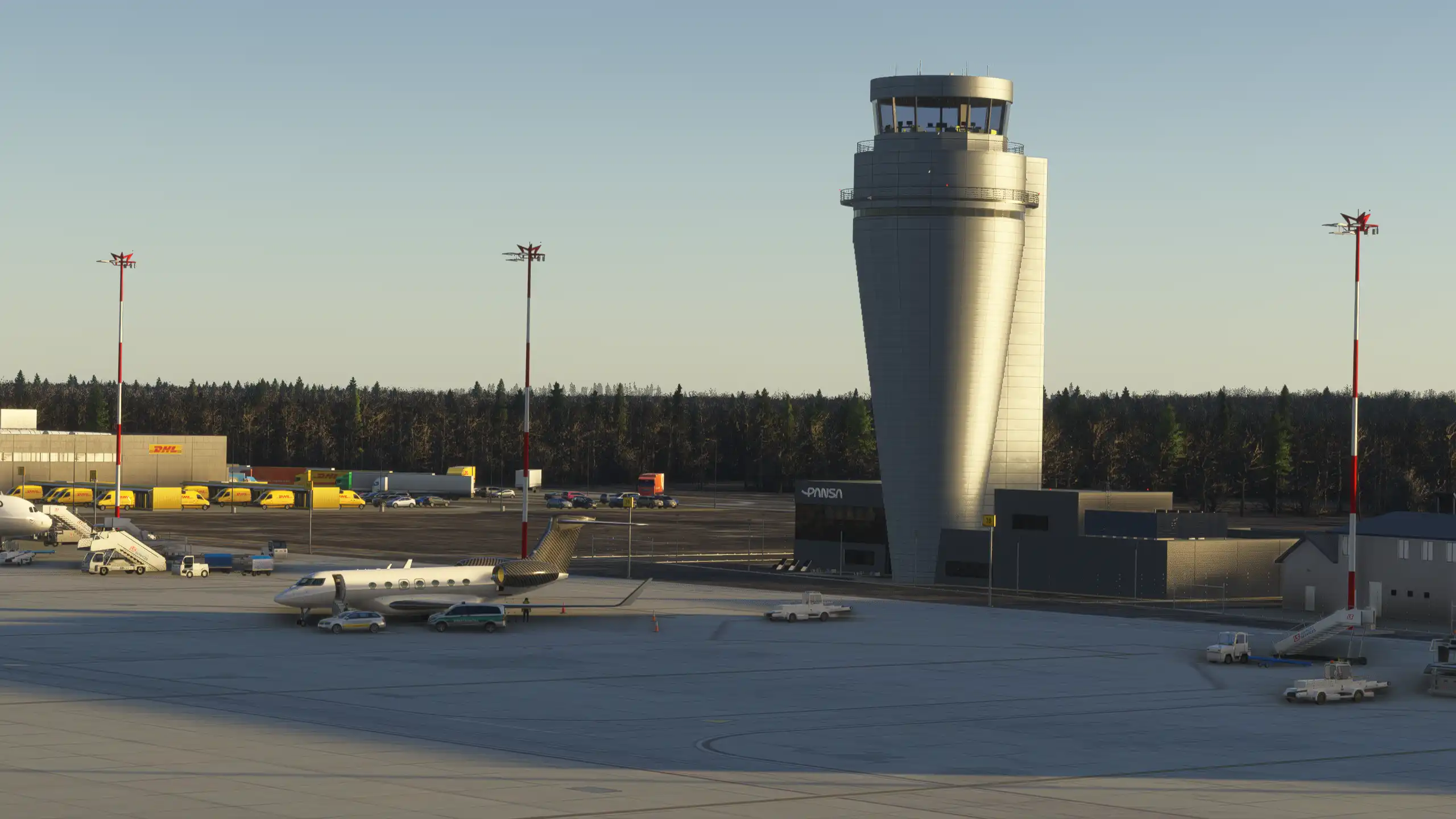
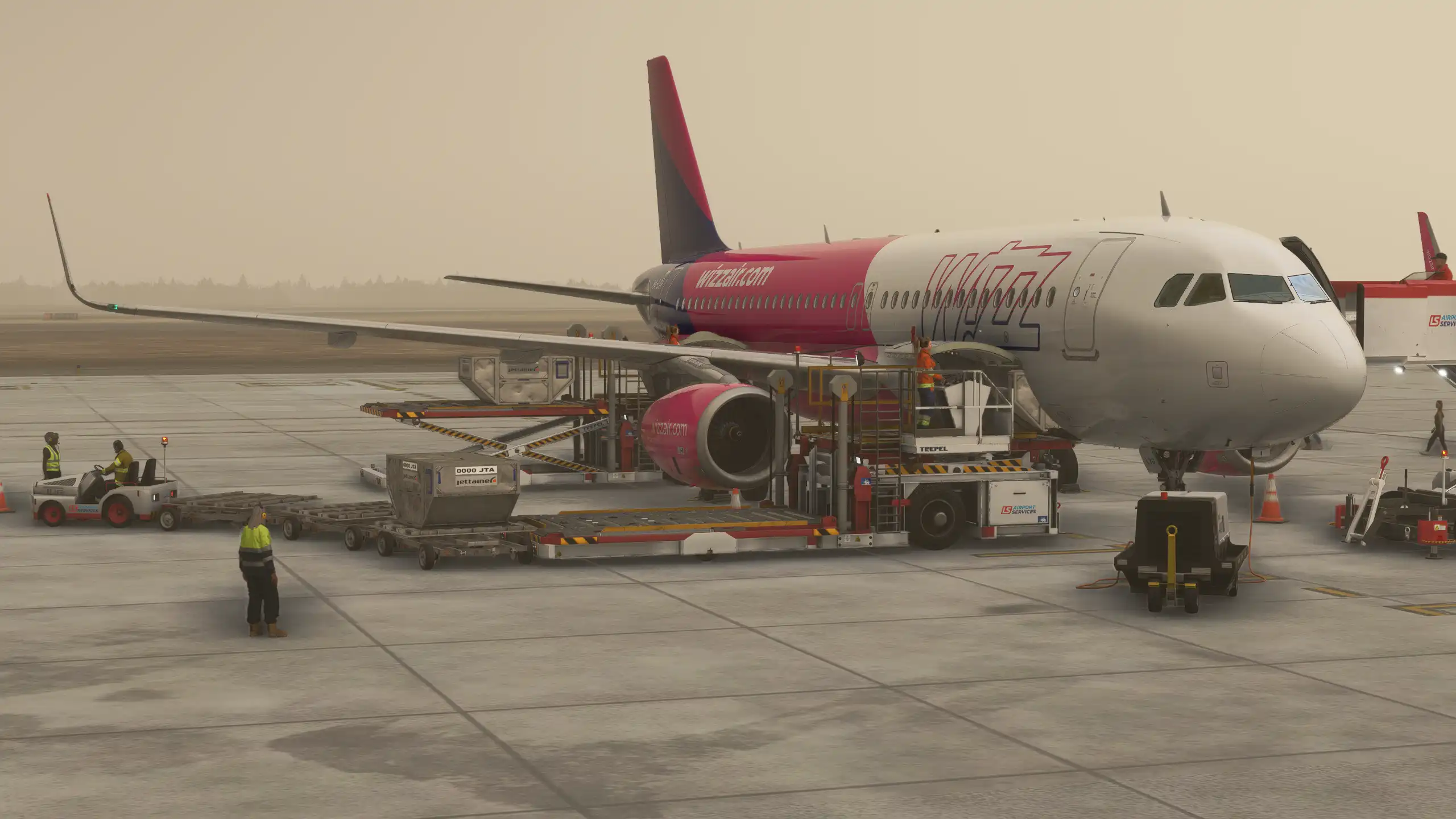
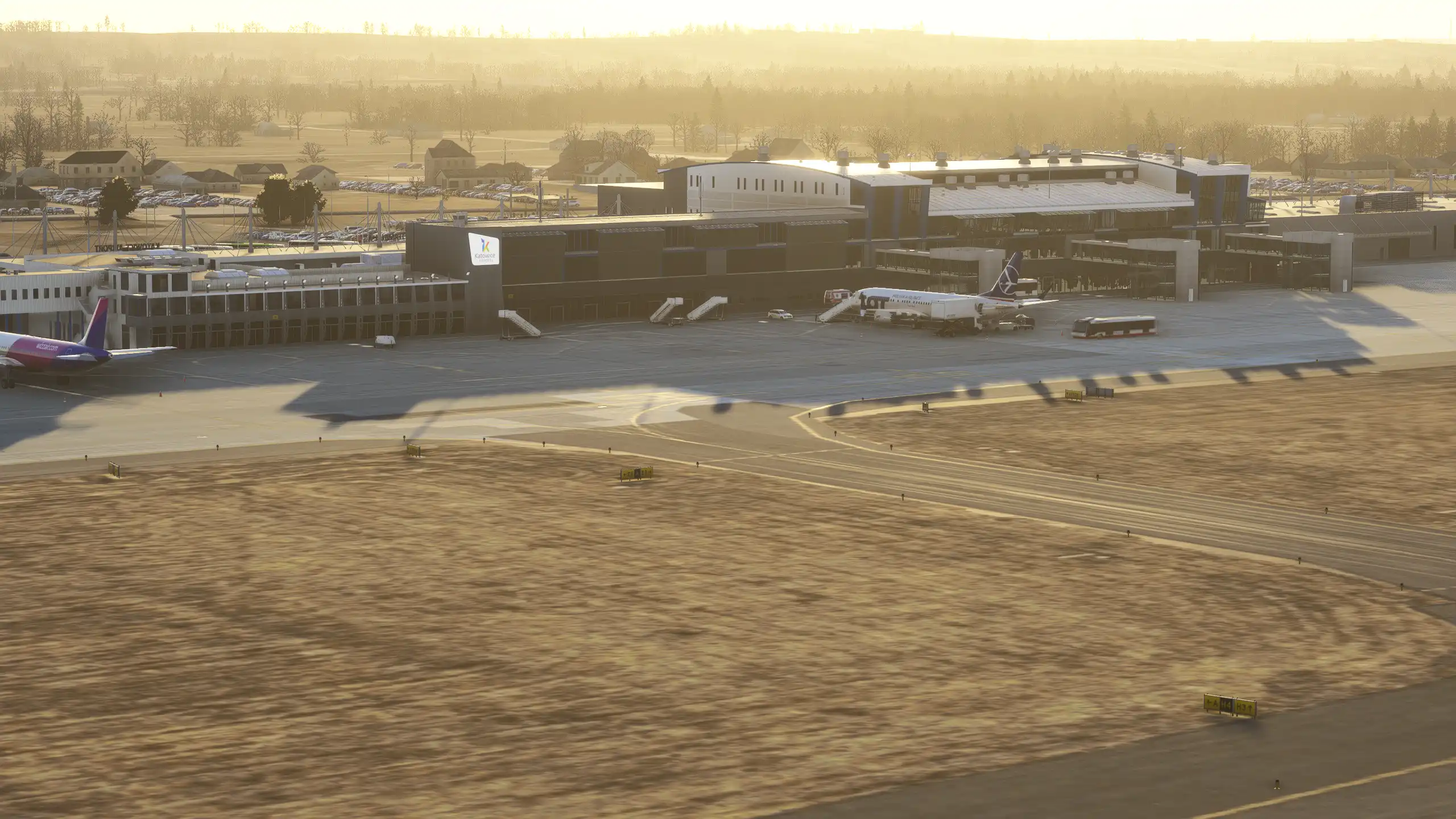
With FSLabs’ PW update for the A321Neo right around the corner, Katowice is soon to become a very competent A21N hub thanks to how many of them are used by Wizz Air, one of the most prevalent operators in the airport, with routes covering most of Europe. 738 operators are also eating good since Ryanair, Enter Air, and Smartwings also have a very strong presence with many daily routes.
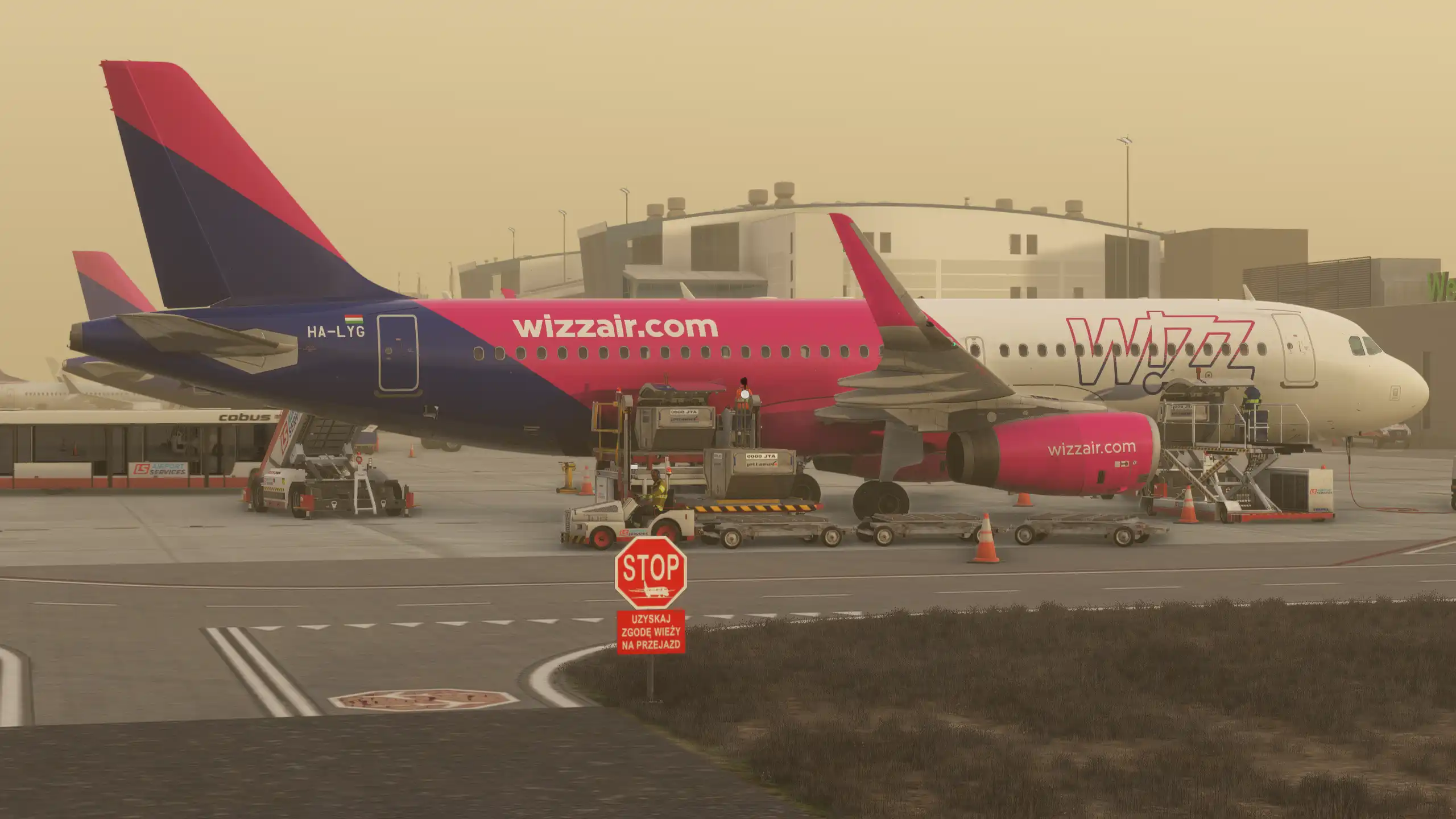
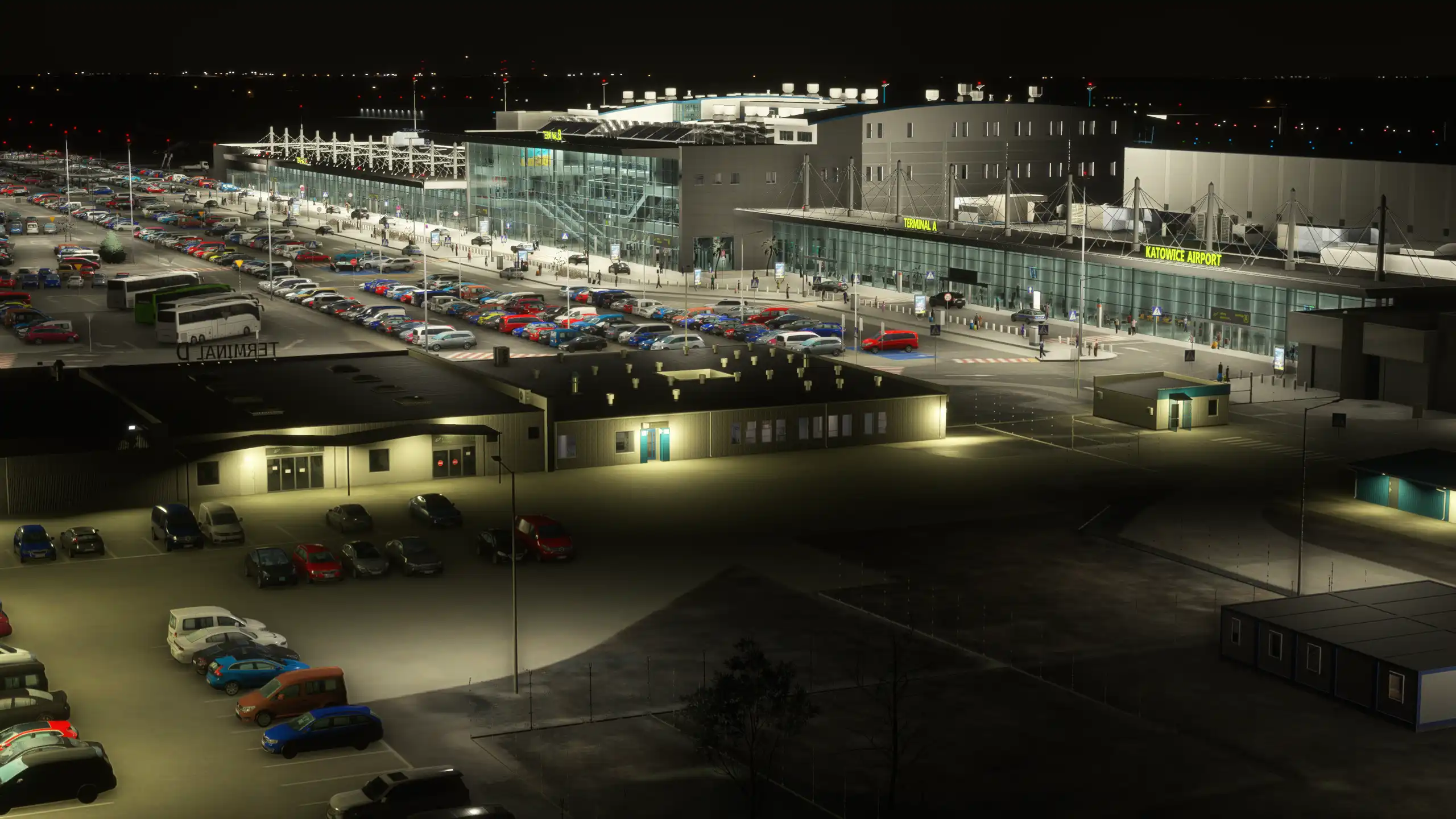
All in all, DD has delivered yet another highly consistent product to further complement their already very high regional coverage in Poland.
A huge thank you to Drzewiecki Design for providing us with a review copy!
If you enjoy our content and want to support Threshold, consider joining us on Patreon!
Share this page

COMMENT ADVISORY:
Threshold encourages informed discussion and debate - though this can only happen if all commenters remain civil when voicing their opinions.