Threshold Review: Winwing Orion Rudder Pedals
November 20, 2025
In this review:
Winwing Orion Rudder pedals with damper
$338.56
Introduction
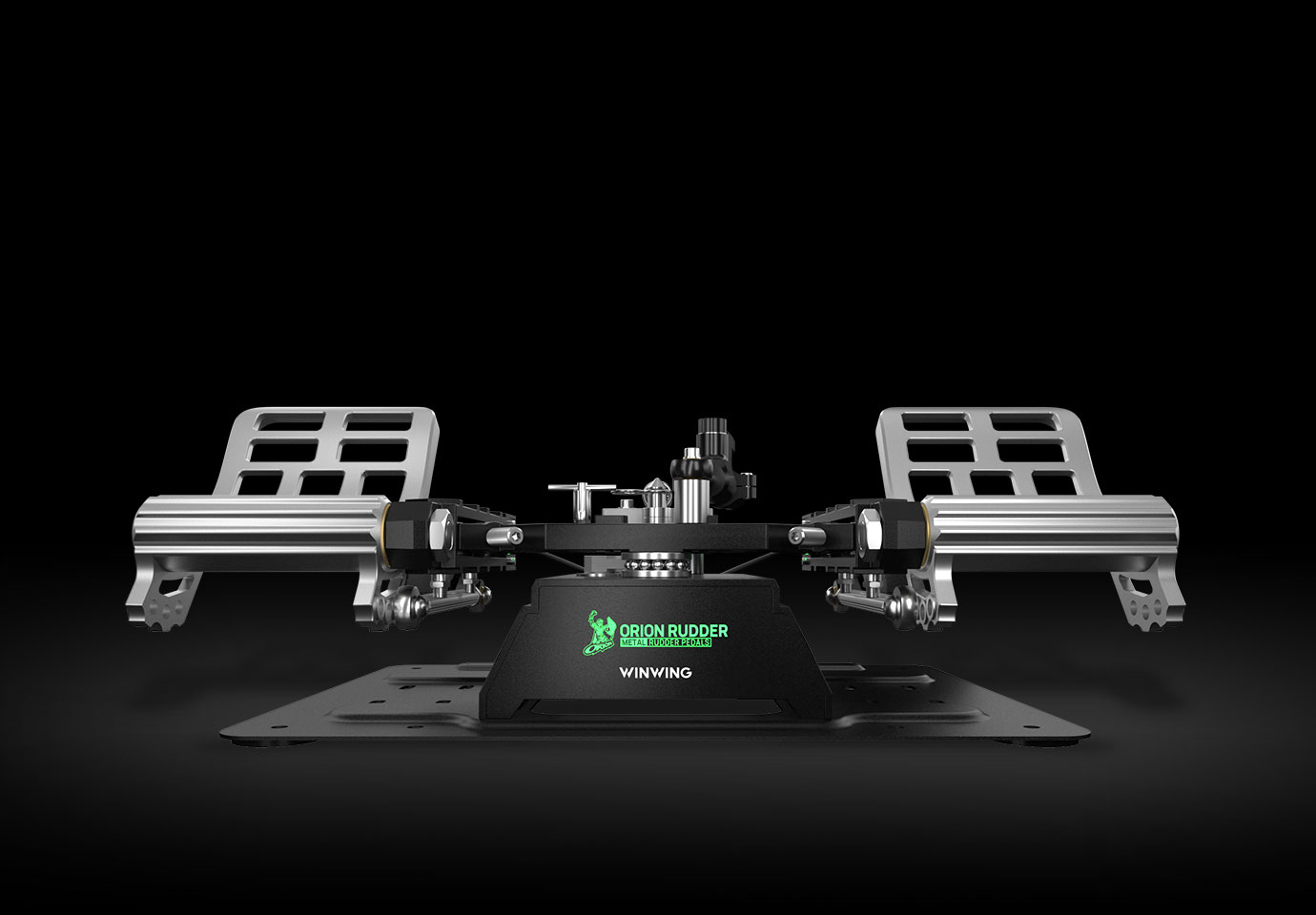
I have been using the MFG Crosswind V2 for many years, and they have set a very high standard for me. Replacing them would require something genuinely interesting. Seeing the Orion pedals at FlightSimExpo in Providence earlier this year, is what brought them to my attention because the core layout is similar. Both are pivoting pedals that hang from two arms, with a central mechanism behind them that manages the return spring, sensor, and optional damping.
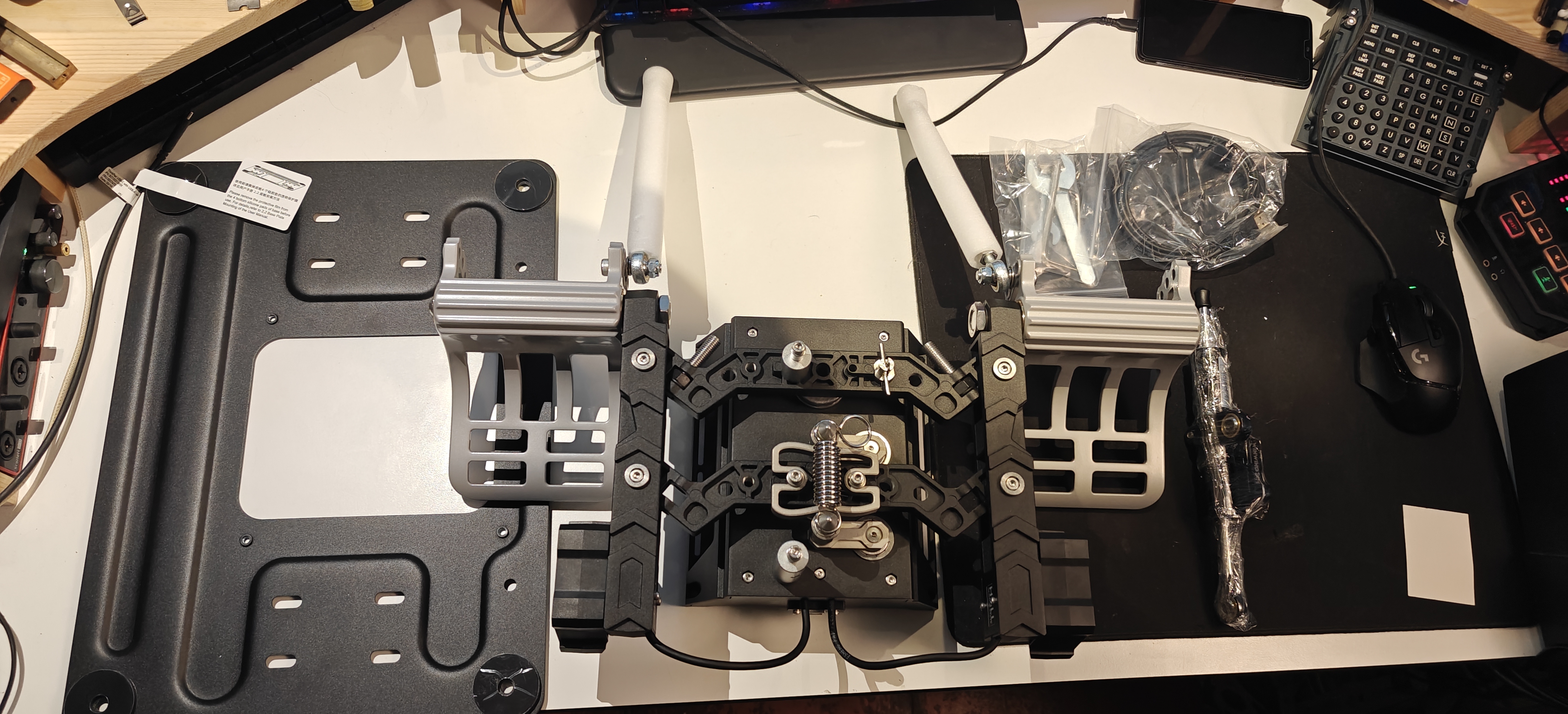
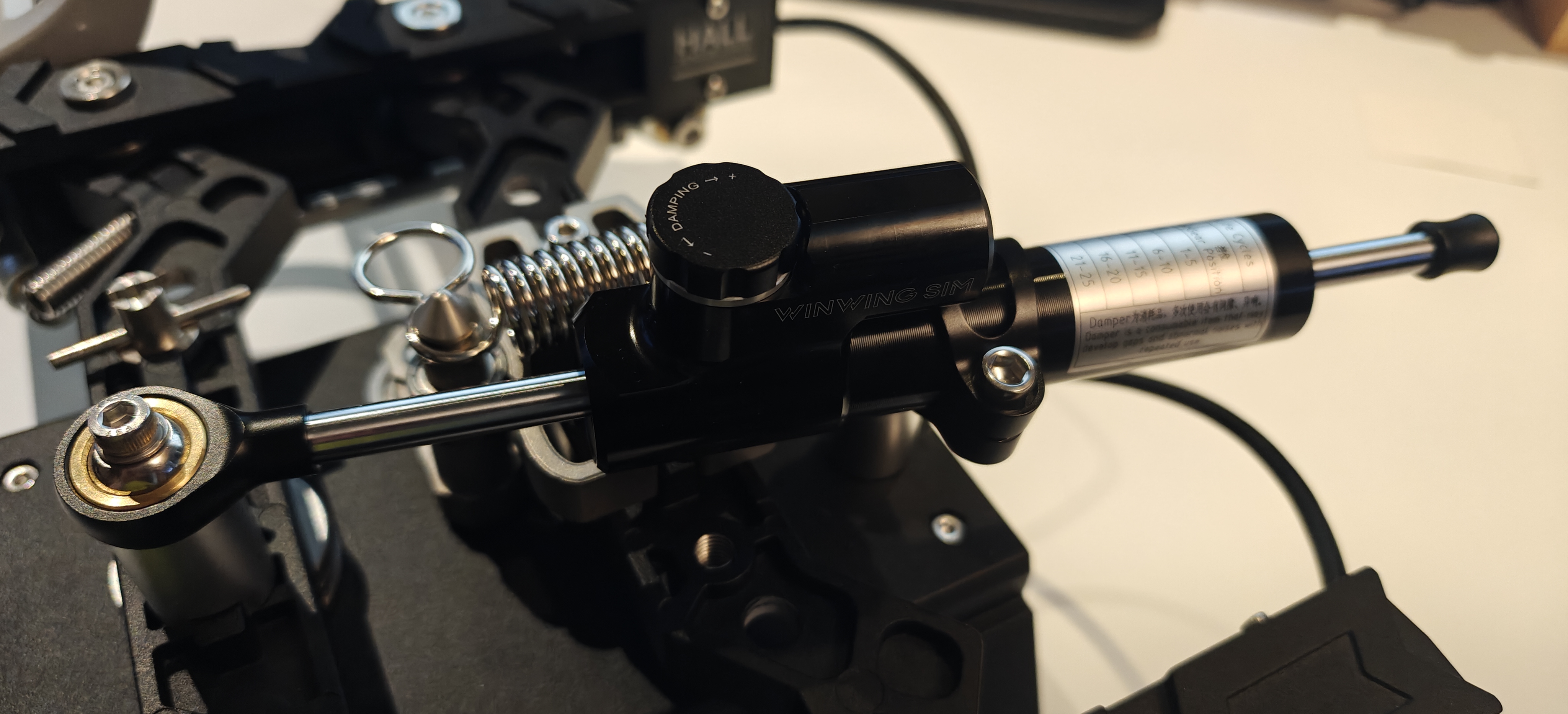
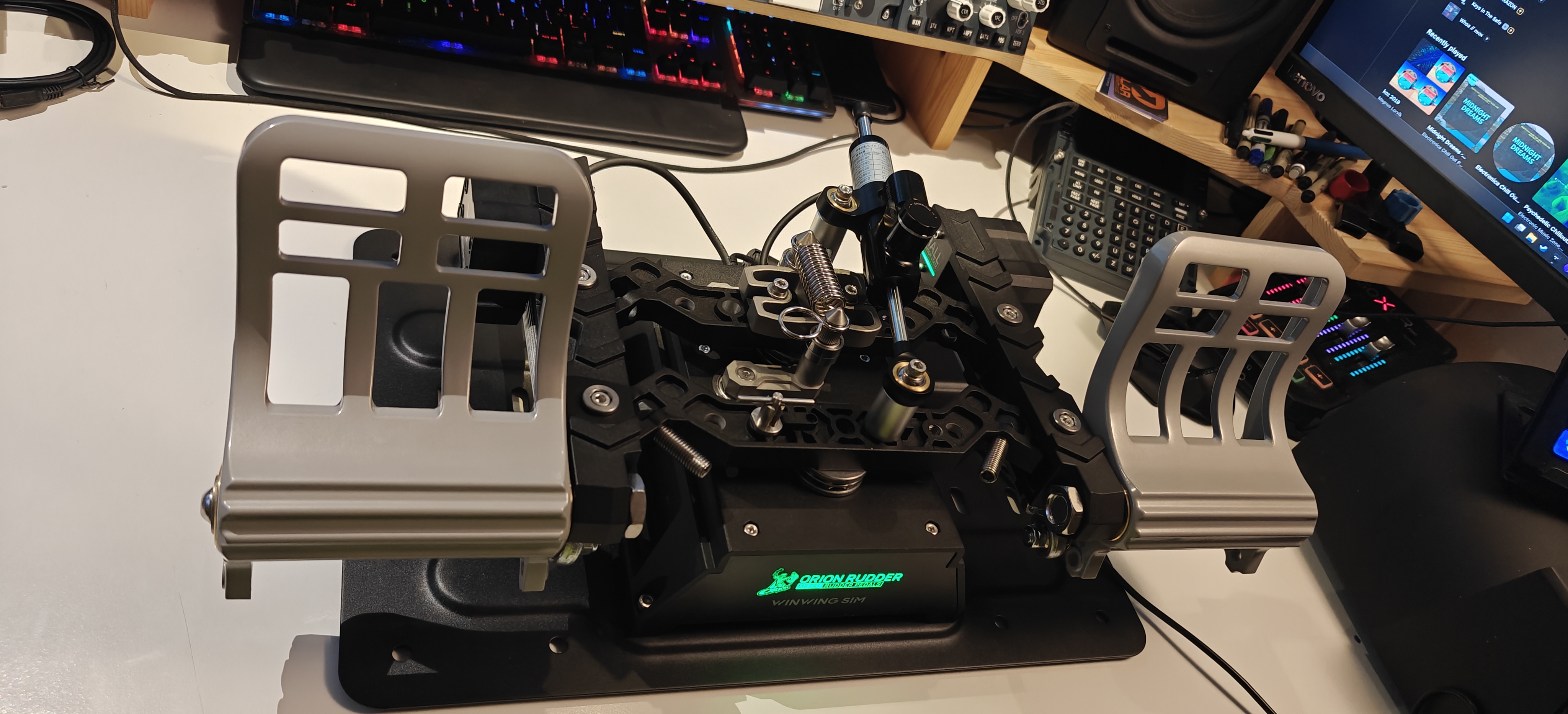
Viewing the Orion from above clarifies its design. Each pedal is attached to a tall vertical arm that extends down to a parallelogram linkage at the center - two black arms span from left to right, connecting both pedals to the central block. The return spring is positioned directly in the middle of a pair of stainless brackets, pulling the linkage back to the center. The optional damper is mounted on the right side, anchored to the rear block at the bottom and to the upper linkage at the top. When you press a pedal, you are moving this entire parallelogram assembly side to side, with the spring and damper directly influencing that movement.
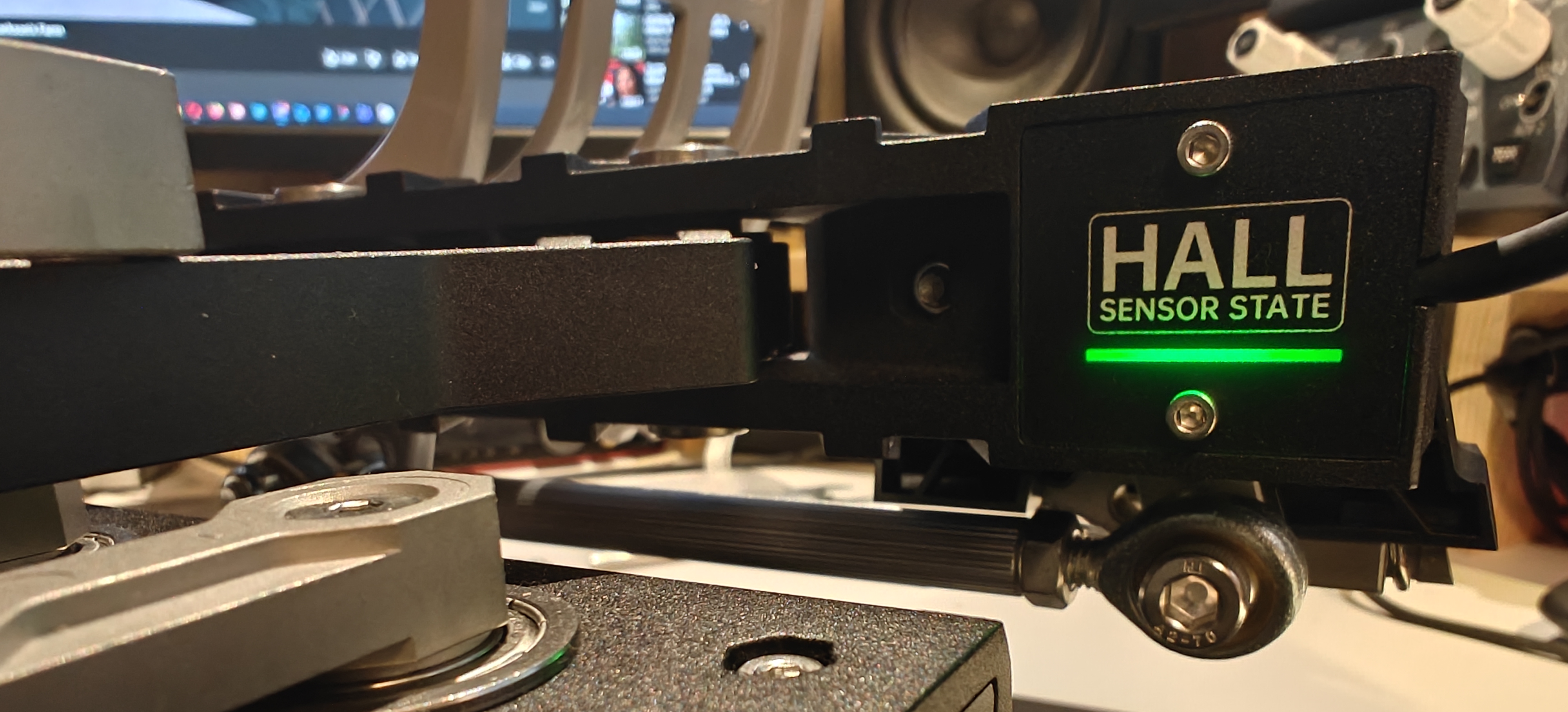
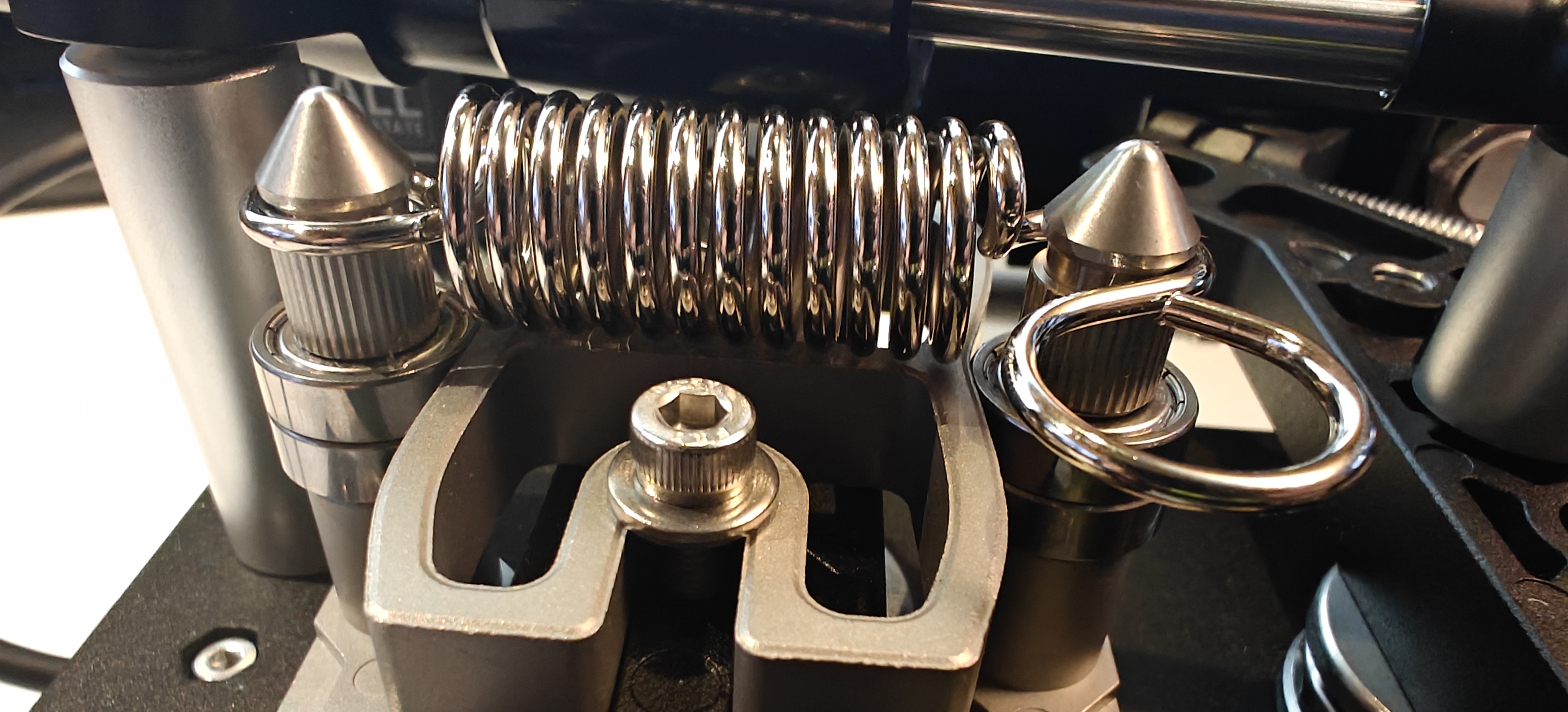
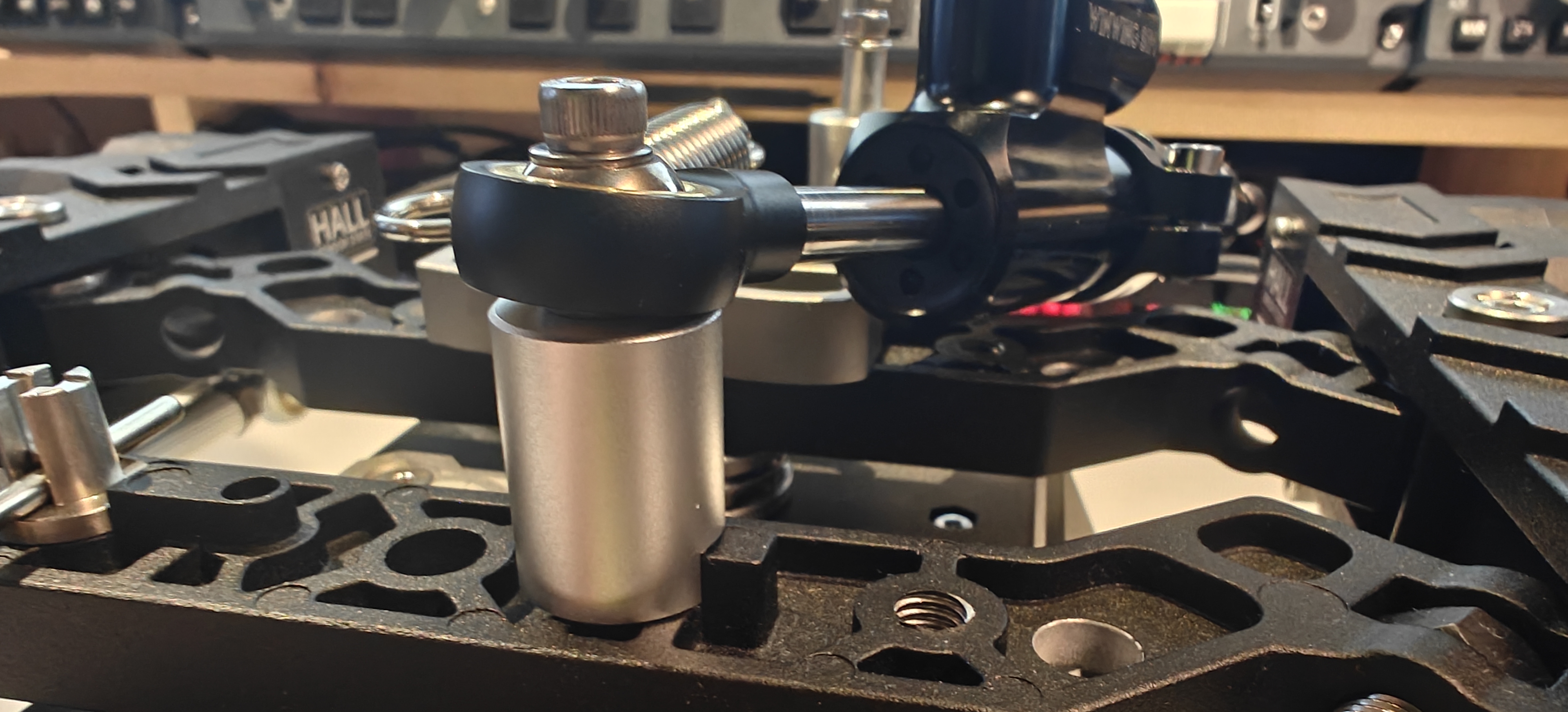
Everything is easily visible and accessible. The damper rod has its own adjustment, and each joint rides on proper bearings instead of plastic rubbing on plastic. The metal base plate is heavy enough that you can almost just drop the pedals on the floor and start flying, or you can bolt it to a rig through the mounting holes if you want a more permanent setup.
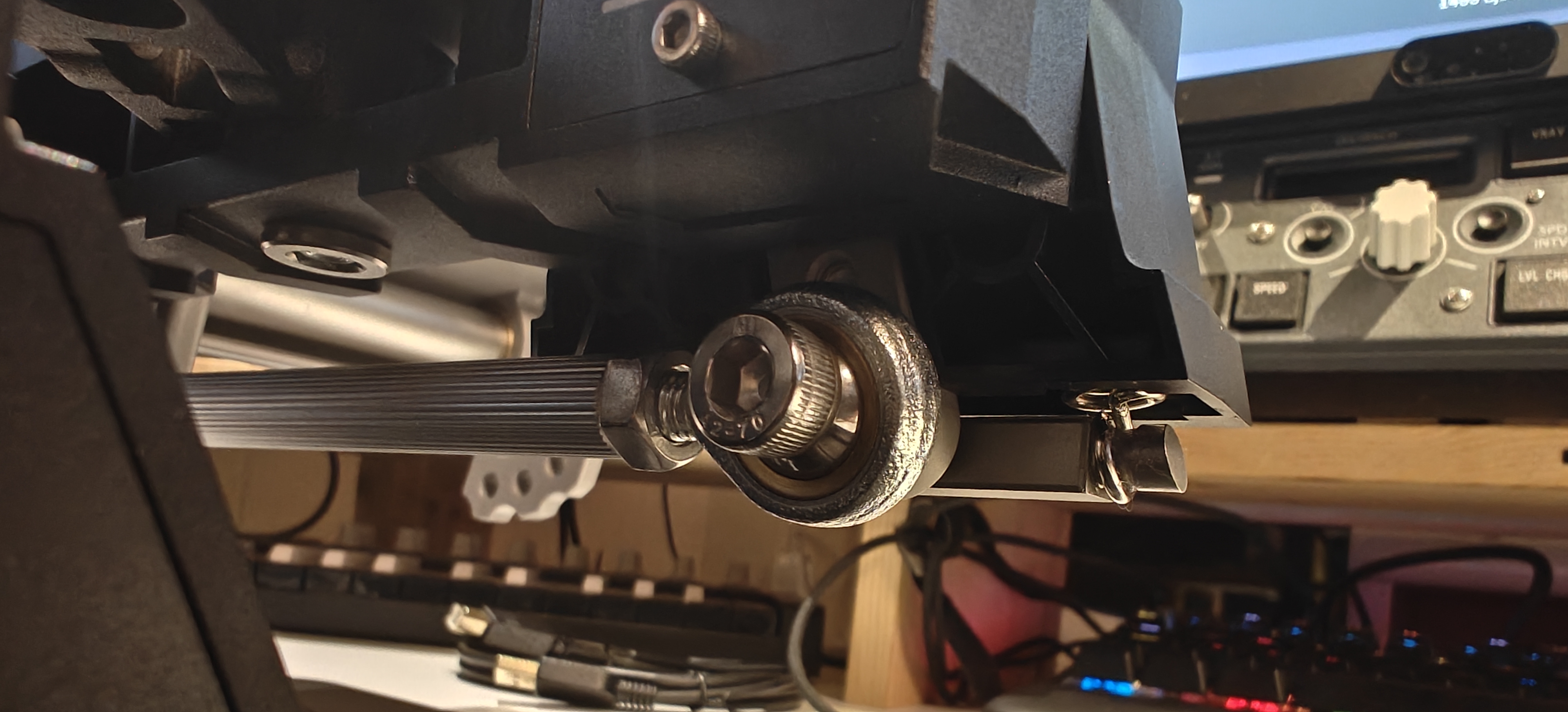

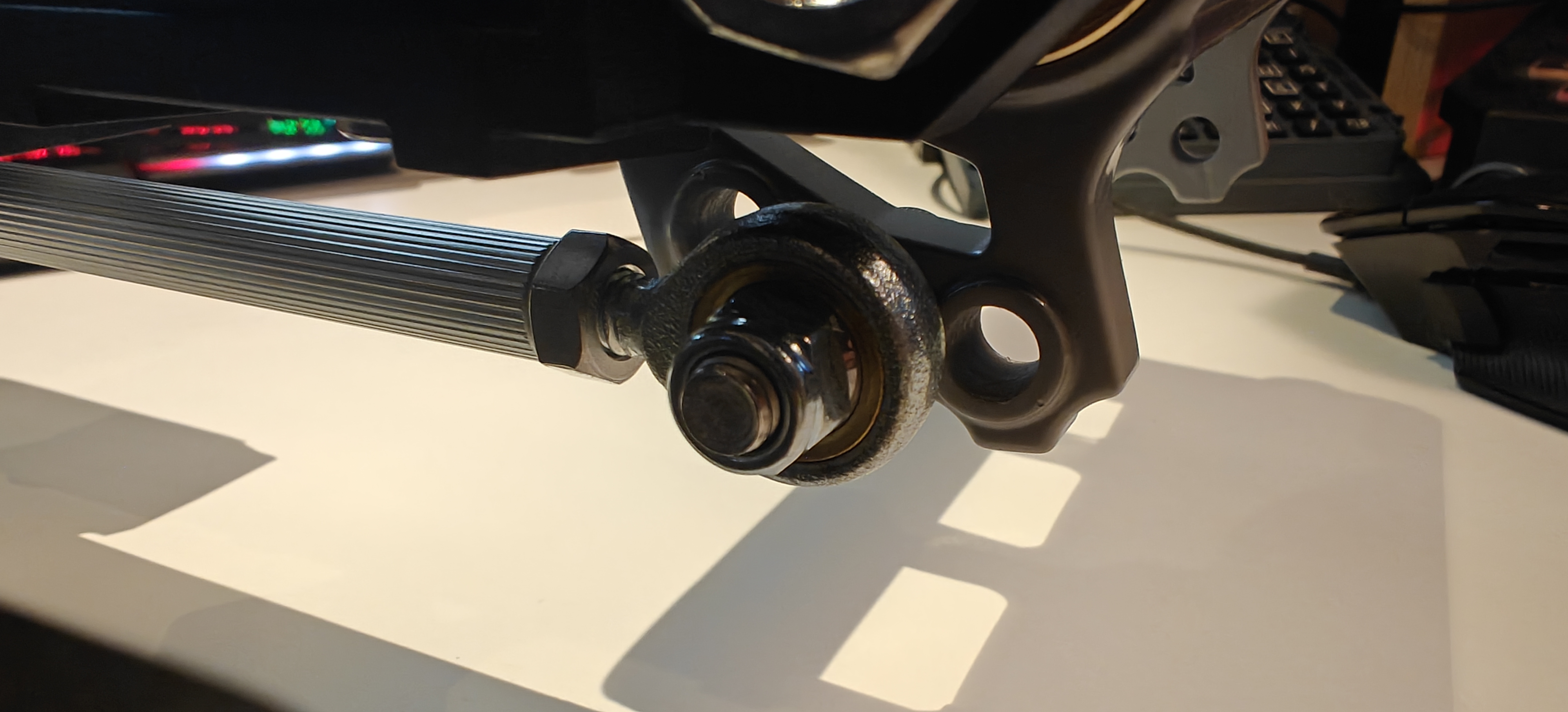
Those two connecting rods you attach during assembly also serve as the only real tuning options. Each rod can be mounted in three different holes on the pedal side. Moving the rod to the forward hole makes the pedal almost 90 degrees straight up. This setting is rarely used unless you are in a nearly flat position, such as on a glider. The middle position is the “normal” setting, and the closest hole will give you a very flat pedal position that, when pressed, becomes completely flat. I am actually rather fond of this position when sitting upright with the pedals closer to my chair.
In short, the Orion pedals have an excellent mechanical layout, similar to the MFG Crosswind, and are executed in a clean and sturdy way.

Initial setup
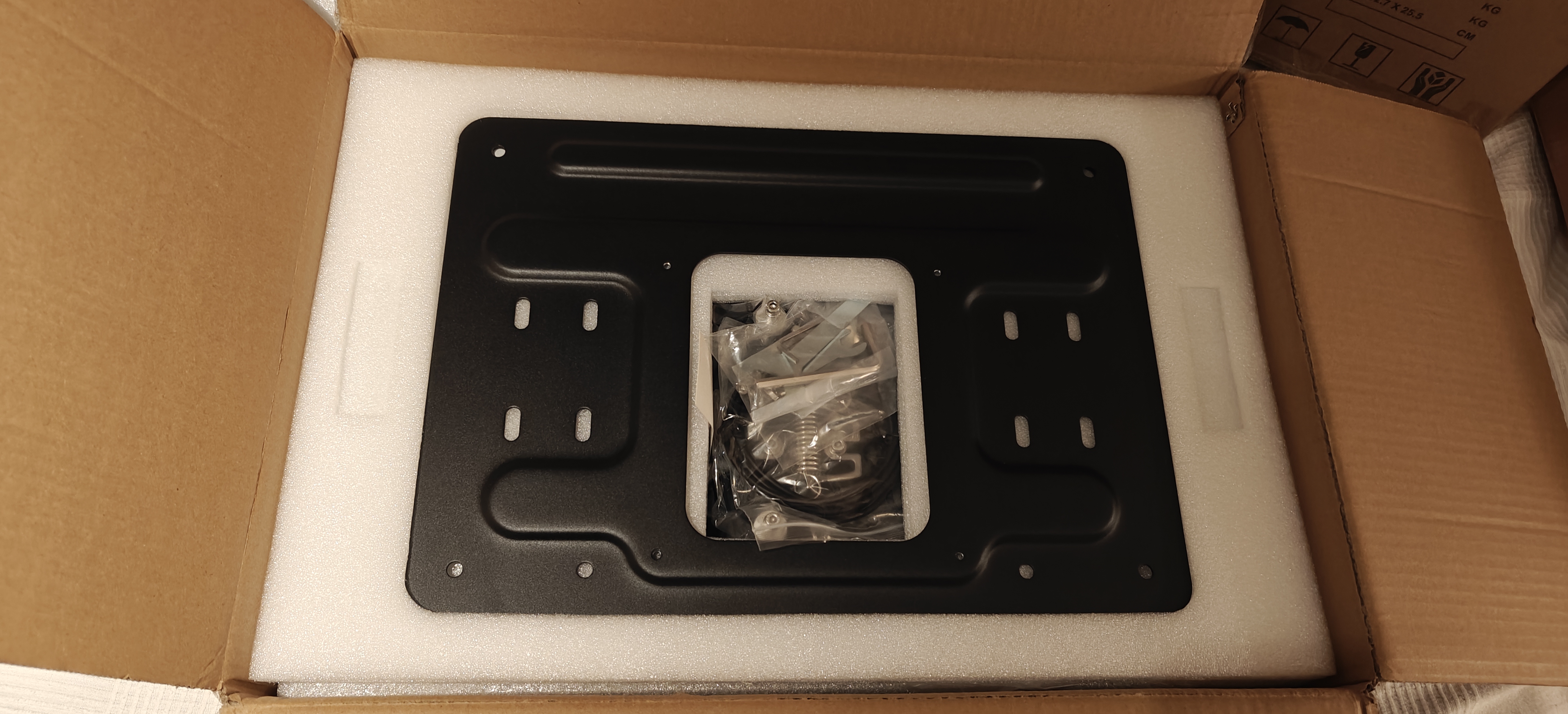
When you first open the box, it seems intimidating, as if everything comes in pieces. In reality, the pedal unit arrives almost fully assembled. It’s just the presentation that is quite industrial, shall we say. All you need to do is attach the two connecting rods between the pedal arms and the center mechanism, and install the optional damper if you ordered it. With ten minutes and the included tools, you're ready to plug it in.
Where the MFG’s had interchangeable centerpoint grooves, where you can choose between different hardnesses in the centerpoint, the Winwing pedals come as they are and would be equal to the light centerpoint groove of the MFG. In fact, the MFG’s offer a lot more customisations. But I am not really missing them. This is perfectly fine to me out of the box. This is probably not anything anyone will fuss about since they never had the option before. However, for those who would like a more defined center point, or different angled foot positions, the Winwings do not offer alternatives.
The unit uses Simapp Pro, as do all of Winwings' products, and there isn’t much you need to do here. But you can adjust the brightness of the lights and calibrate the unit. I have no idea what all the button switches are. But it doesn’t matter. You don’t need to spend time here. The Orion pedals are basically plug-and-play. My unit came with the latest firmware and was ready to go out of the box. No pre-bindings were found in MSFS or X-Plane, but they were completed manually quickly. Setting it up in the sim is as straightforward as you get it, as well as easy, with just three axes to bind.
In Use
I have been very fond of my MFG’s for many years, and changing to Winwing is like continuing the experience but with an even higher confidence. The rudder pedals become an extension of you, and that makes all the difference.
The damper is necessary. It makes the rudder feel more solid, rather than just an axis pivoting on a spring. So be sure to order that. And I can say straight away that I can recommend these. Comparing these with the MFG, they are very similar. Probably because of my MFG’s age and heavy usage, the Winwing rudder pedals do feel more precise. Kind of like I remember my MFG’s being in the beginning. Maybe better.
The pedal spacing is excellent and feels natural right away. Their pivoting motion, which rotates around a center point rather than following a pendular arc, isn't something you'll notice once you start flying. Although a straight linear travel, like on the Thrustmaster TPR, is theoretically ideal, the rotation on the Orion pedals is subtle enough that it never distracts. If anything, it's less noticeable here than on the MFG Crosswinds.
Heel support is an area that could be improved. The footrests are not particularly comfortable for longer sessions, especially if you like to keep your feet rested during cruise. I usually lift my feet off the pedals once the aircraft is on autopilot, so it isn't a major issue for me, but a set of alternative footrests similar to what MFG offers would be a welcome addition.

Conclusion
Winwing’s Orion pedals take an already proven mechanical concept and refine it with industrial precision. If you’re coming from entry-level pedals, like Logitech or others, this is a galaxy apart. If you’re an MFG user, it’s a familiar experience with a heavier, tighter, and more premium character. These are rudder pedals you will have for many years, and you’ll enjoy every second of using them.
Comparing the Orion pedals to the MFG Crosswind is inevitable because both products are based on the same core concept. The MFG remains a top-notch set of pedals and has earned its reputation for a reason. They are lighter, provide more detailed adjustability of the footrests, and the center detent can be tuned in several ways. They also generally cost a little less. But with the damper, which in practice is essential, Winwing's offering is actually cheaper.
The metal frame is heavier, the tolerances feel tighter, and the movement has a more solid character, which is further improved by the damper. The bearings and linkage are built for durability, and the feel through the axis stays steady throughout the travel. There’s a sense of refinement here that the MFG design holds, but I’d give the edge to the Winwing Orion. The Orion has a slightly more robust mechanical build.
In comparison to the broader market, the Orion pedals occupy a comfortable middle ground. They are far more capable than entry-level units like the Thrustmaster TPR or Logitech offerings, and they avoid the quirks of single-axis solutions like VKB’s T-Rudder. What you get here is a complete mechanical assembly, proper bearings, a long travel, and a configuration that works equally well for helicopters, fixed-wing, and even ground vehicles.
Taken as a whole, the Orion pedals feel reasonably priced for what they deliver. They offer a premium construction, an excellent mechanical layout, and a confidence in use that makes them disappear under your feet, which is ultimately the highest praise for any set of rudder pedals.
Share this page



COMMENT ADVISORY:
Threshold encourages informed discussion and debate - though this can only happen if all commenters remain civil when voicing their opinions.