Threshold Review: RW Profiles’ Newcastle International Airport for MSFS 2020/2024
August 6, 2025
Introduction
Newcastle International Airport (EGNT) is an International airport serving Newcastle-upon-Tyne and its surrounding areas (North East England, Cumbria, and the Scottish Borders). It averages 5.1 million passengers yearly, making it the busiest airport in Northeastern England at the time of writing.

The idea to build an airport in Newcastle dates back to 1929. However, it wasn't until 1935 that it would be inaugurated because they had 18 locations to consider beforehand, with Woolsington being ultimately the area of choice.
It opened as Woolsington Aerodrome, and it had a clubhouse, a hangar, workshops, a fuel garage, and a grass runway. The administration spent around 35,000 pounds to build it.
It went on to become the base for the Newcastle-upon-Tyne flying club, which was originally based at Cramlington Aerodrome. The club also got to run the airport on behalf of the city council.
World War 2 had the airport host the No. 43 Elementary and Reserve Flying Training School, operated by the aforementioned flying club and featuring a variety of planes such as the de Havilland Tiger Moth, the Miles Magister, and the Hawker Hind. It was one of the largest civil-operated flying schools that were meant to train pilots for the RAF.
In 1940, a Maintenance Unit of the Royal Air Force was formed at Newcastle to recover crashed aircraft and salvage parts deemed operational. It ran for six years, only closing in 1946.
It was handed back to the council in the same year, and the airport remained stagnant for two decades until the construction of a new runway, apron, control tower, and terminal in 1967.
By 1978, it was finally upgraded to regional international hub status in accordance with the UK's White Paper on Airports Policy, paving the way for extra development that would attract governmental investment. Within that same decade, it was finally rebranded Newcastle Airport.
The 1980s brought improvements to the check-in area, better catering, and duty-free shops.
In the early 1990s, the Airport's Metro Station opened, connecting it to the City Centre.
In 2004, the departures terminal was extended and refurbished, gaining a 3000 square meter extension with new shops and many extra seats for the passengers.
In 2006, it reached the 5 million passenger mark for the first time, leading to increased usage of the airport's south side, which was primarily used for general aviation in calmer times.
Emirates started their famous non-stop route to Dubai in 2007, initially with the A330 and now with the 777.
Ten years later, a 3 million pound expansion plan was announced, part of a much more expensive program that was quoted around 20 million pounds at the time. It consisted of a new radar system, digital signage in check-in areas, new flooring, and a terminal extension.
It's a hub for Loganair and a focus city for easyJet, Jet2, Ryanair, and TUI Airways. Aer Lingus, Air France, Blue Islands, British Airways, Corendon Airlines, Emirates, Eurowings, KLM, Lufthansa, Norwegian Air Shuttle, and SunExpress also serve it.
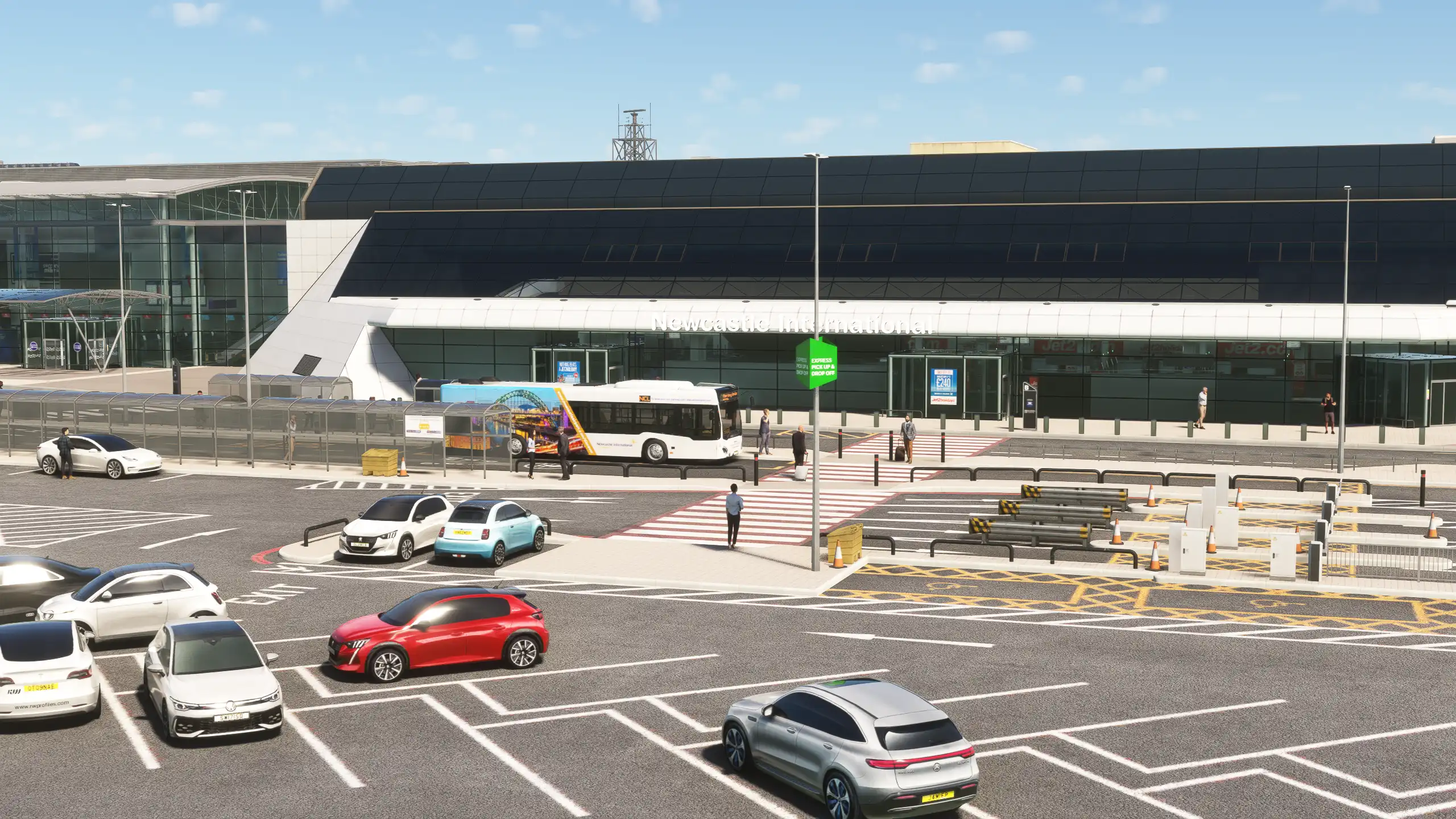
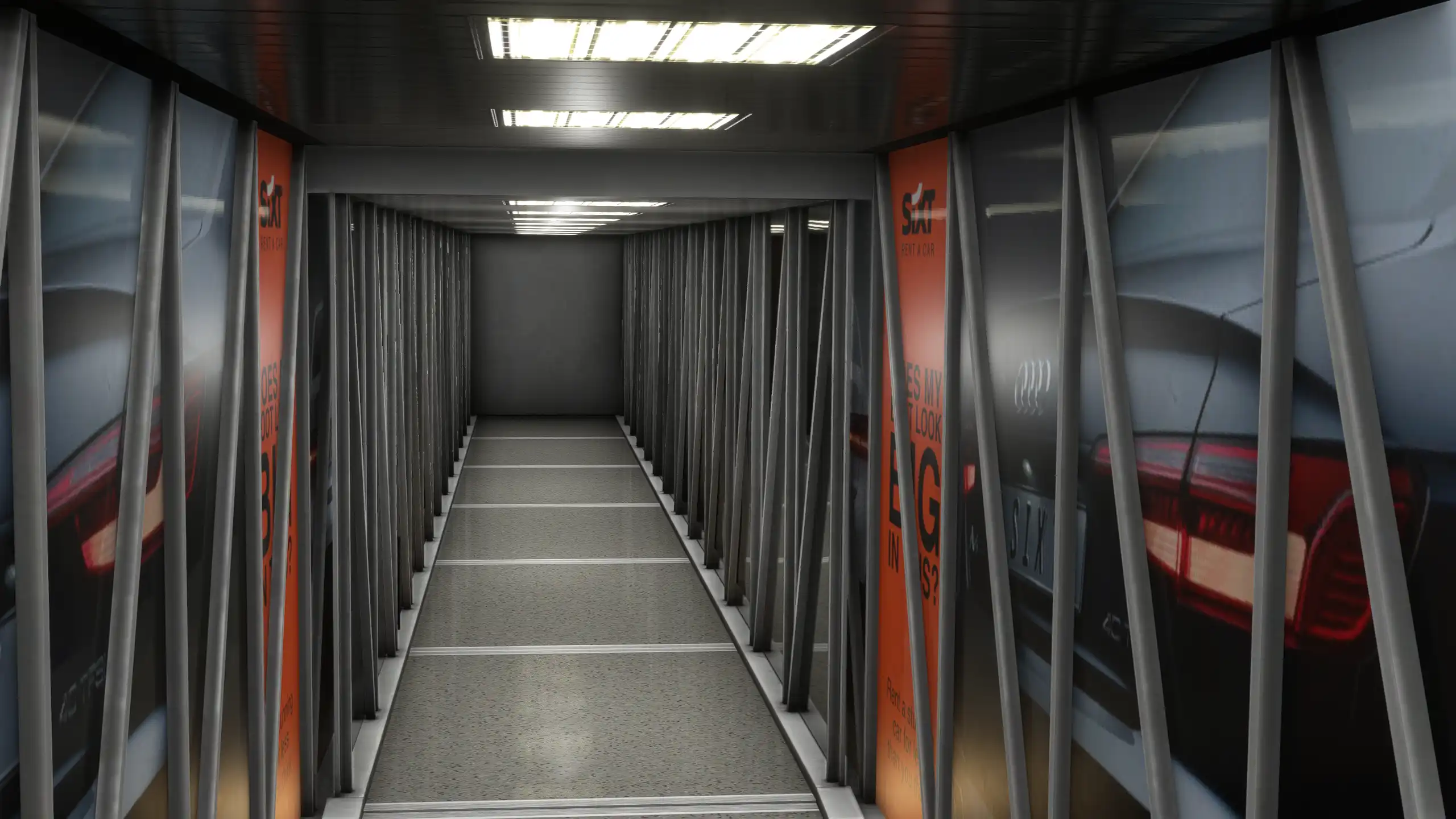
The scenery promises a high-quality rendition of Newcastle International Airport, with custom ground textures, a true-to-life landside recreation, an up-to-date airport layout, handplaced lighting, custom jetways, performance-friendly optimization, a custom GSX profile, custom static GA aircraft, custom ground clutter, custom ground service equipment, and much more.
Distribution
The scenery is distributed via the iniManager
First Impressions
The past couple of weeks must have been exciting for UK-based folk as two long-awaited airports finally saw the light of day. Newcastle was a happy surprise to those waiting for Orbx to update their rendition, released back in the early days of Microsoft Flight Simulator.
RW Profiles is still a relatively new name in the scenery development scene, with Newcastle only being their second product. Very much like their distributor, iniBuilds, they started their journey as GSX profile creators. Eventually, they tried their luck at scenery development in mid-2023, releasing their first airport within nine months of intensive SDK studying.
At this point, it seems like the natural pipeline for Microsoft Flight Simulator companies, with iniBuilds having similar roots, RD Presets (albeit they made shaders at first, not GSX profiles), and so on. The big lingering question is: Are they as good at making scenery as they are at making profiles? There was only one way to know.
The route of choice was a flight I have done multiple times in the distant past, but not even once in Microsoft Flight Simulator 2020: Bristol to Newcastle. If my trusty Volanta data is to be believed, I haven't flown that one since early 2021 and did it over 11 times. Back then, I really enjoyed the convenience of flying the UK's extensive domestic network, with no fuss to get in and out as long as it wasn't something like London Heathrow or Gatwick.
With the UK scenery development scene in full throttle again, it was finally time to re-embark on my domestic shenanigans. The timing couldn't have been better, as the aircraft of choice - the mighty Fenix A320 - had been blessed by the "Big Fenix Update", bringing multiple improvements to the flight dynamics.
As expected for England's not very impressive territorial size, the flight does not take more than 49 minutes if the weather is just right. Thus, I figured it wouldn't hurt to do an actual round trip rather than a single leg, and then do the same route again the next day to collect even more performance data.
The flight went as uneventfully as it could go up until the final approach, when 30kn+ headwinds greeted me until short final, when the weather engine updated and the headwind vanished, making my airspeed shoot up like a lying dog's head when they hear the word "treat". I barely managed to slow down in time for the landing, and my descent was a bit too steep to arrest properly without requiring a miracle.
Somehow, I salvaged it with last-minute joystick shenanigans. It came to rest on the runway at an impressive twenty-four feet per minute, the sort of landing that inadvertently brings a smile to your face. I felt a mixture of satisfaction and relief due to what initially seemed like a spanker in the making.
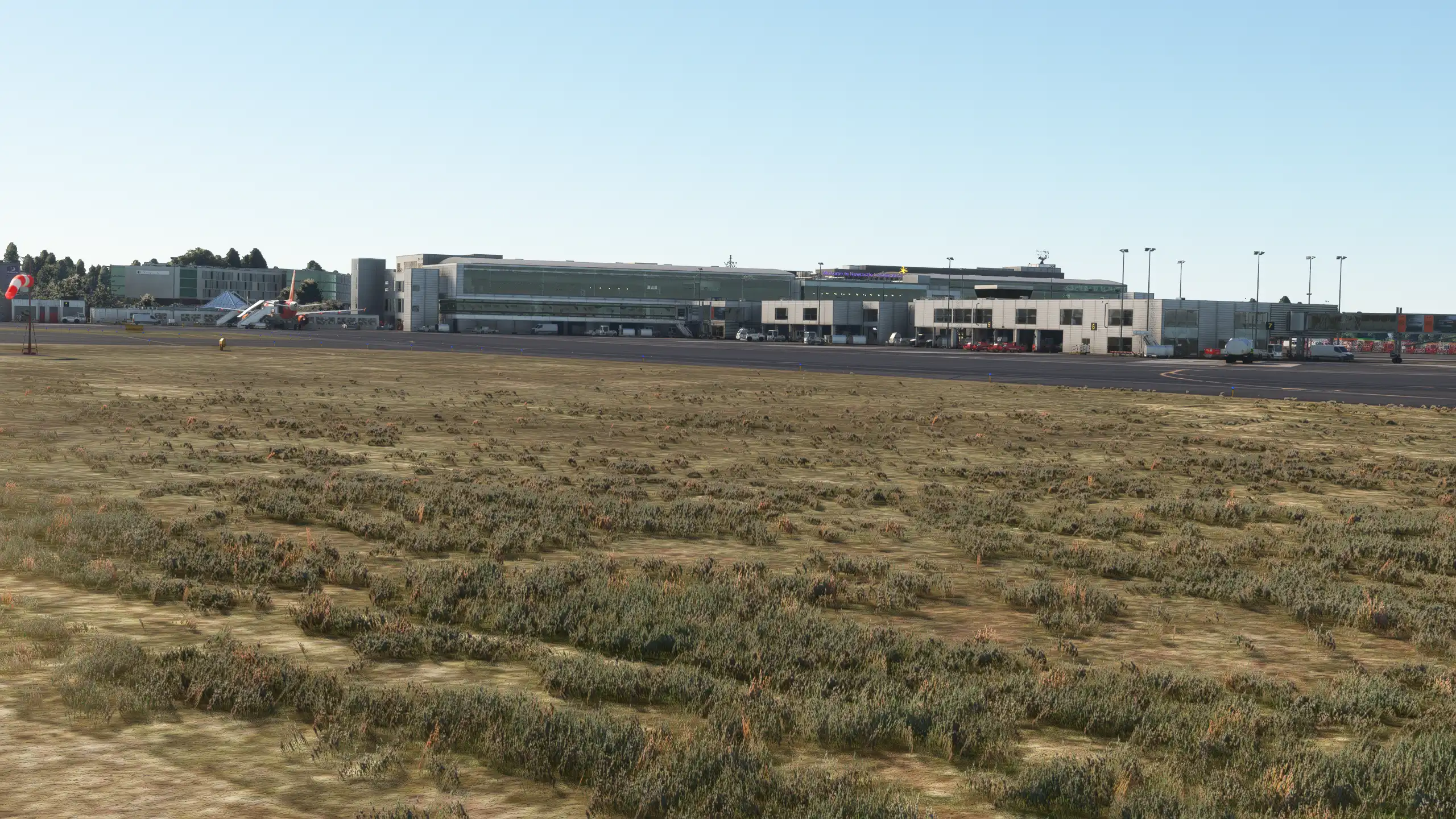
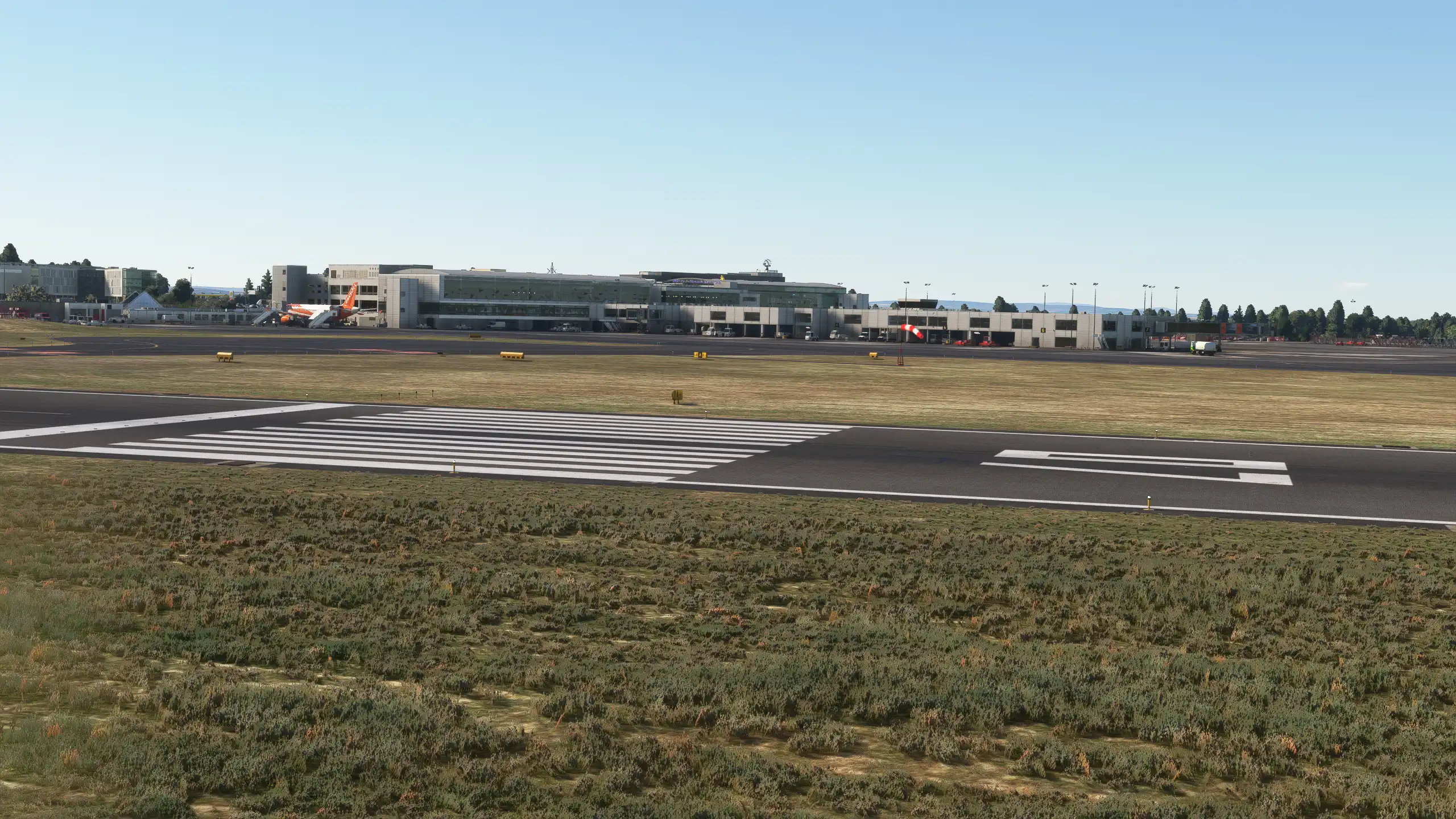
As I like to fly into sceneries for each of my reviews, the first thing I see is the runway—ideally at least—and I'd like to think I'm no Harrison Ford just yet. The runway texturing was excellent, miles ahead of the old EGNT we all used to know and love.
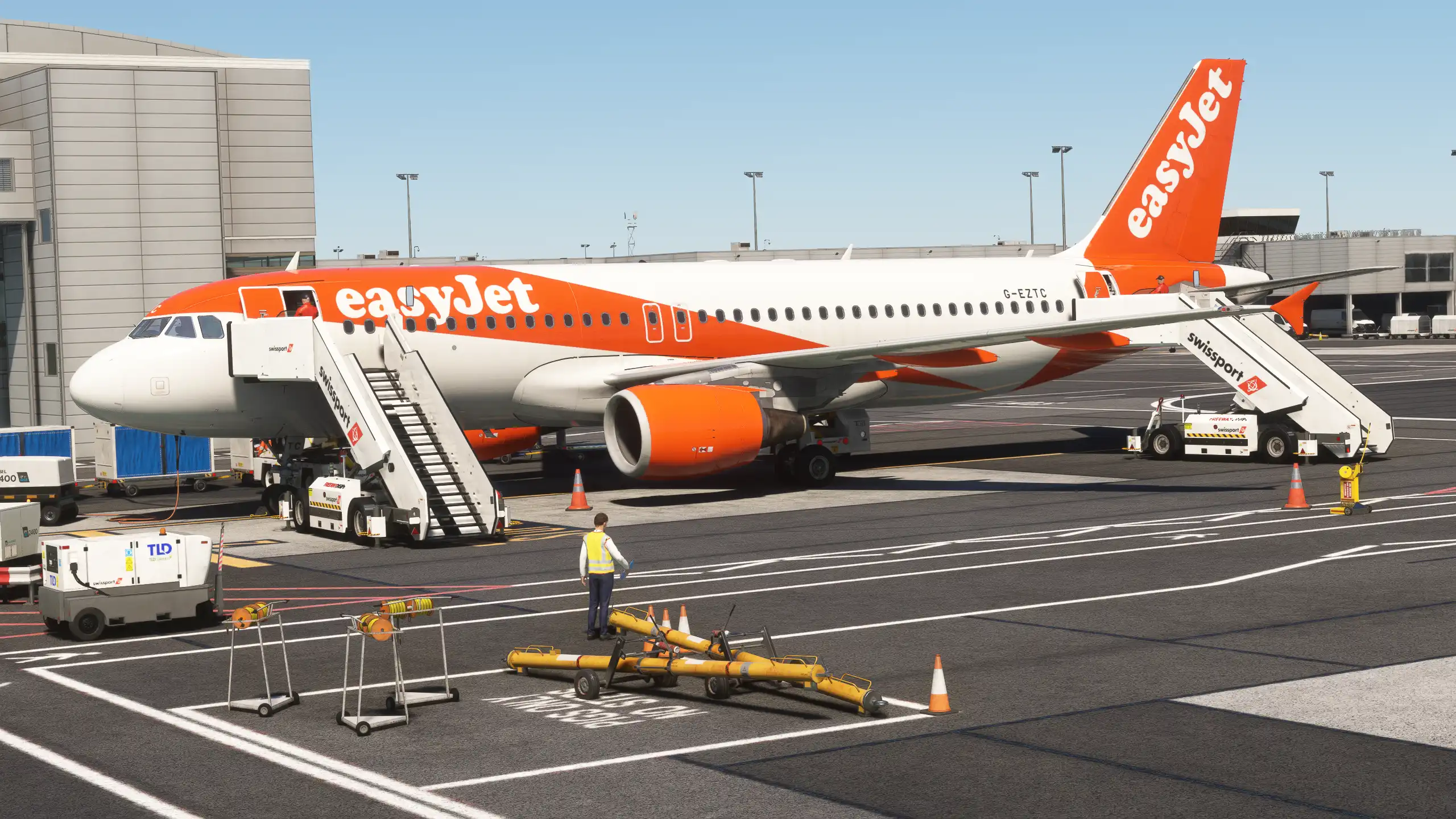
Once off the runway, I was greeted by extremely sharp taxiway textures, indicating a job well done in more ways than one. I use autoFPS to warrant a consistent framerate through my virtual journeys. The TLOD was automatically set to 100 with a 40 fps target.
Modelling & Texturing
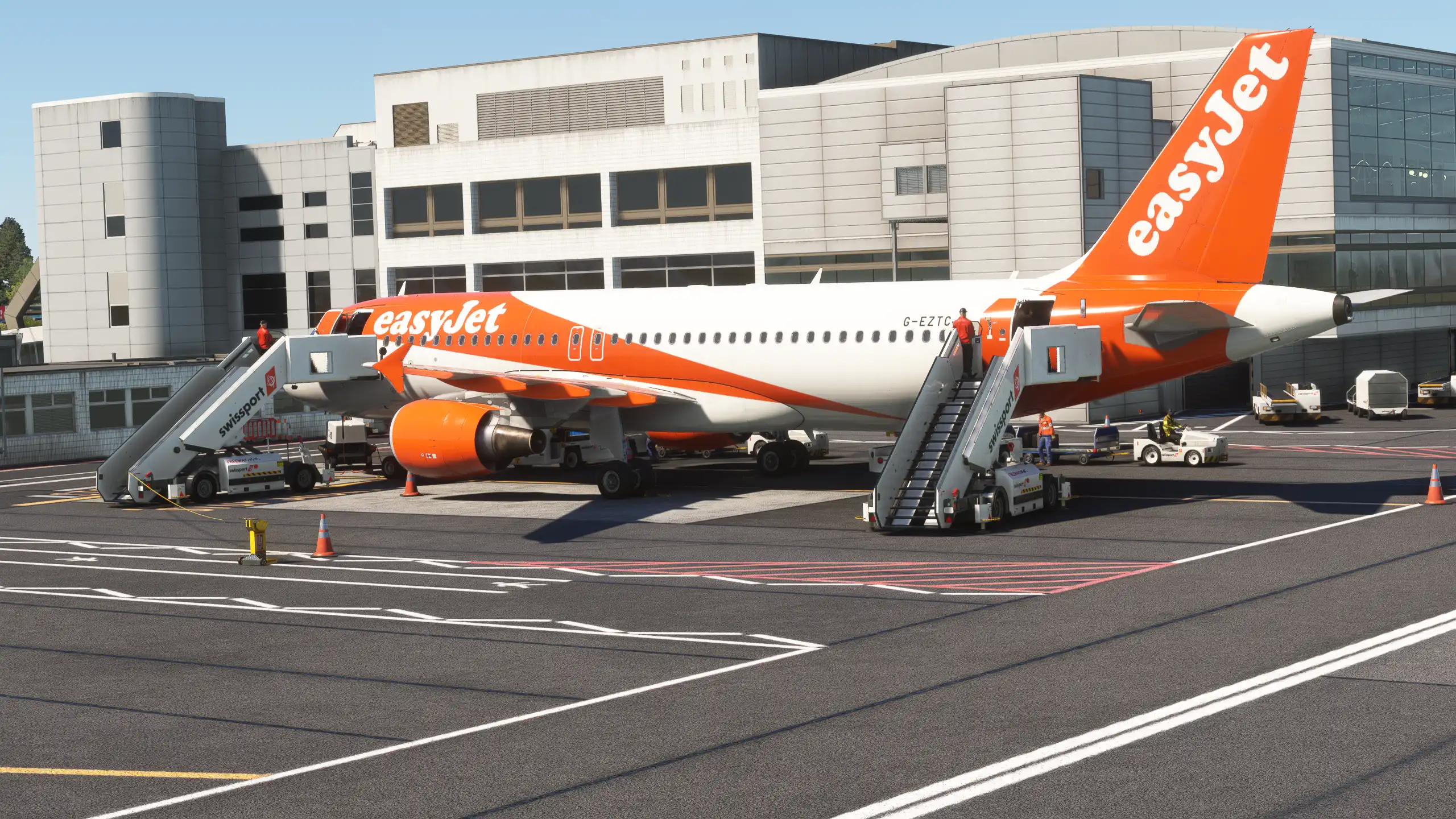
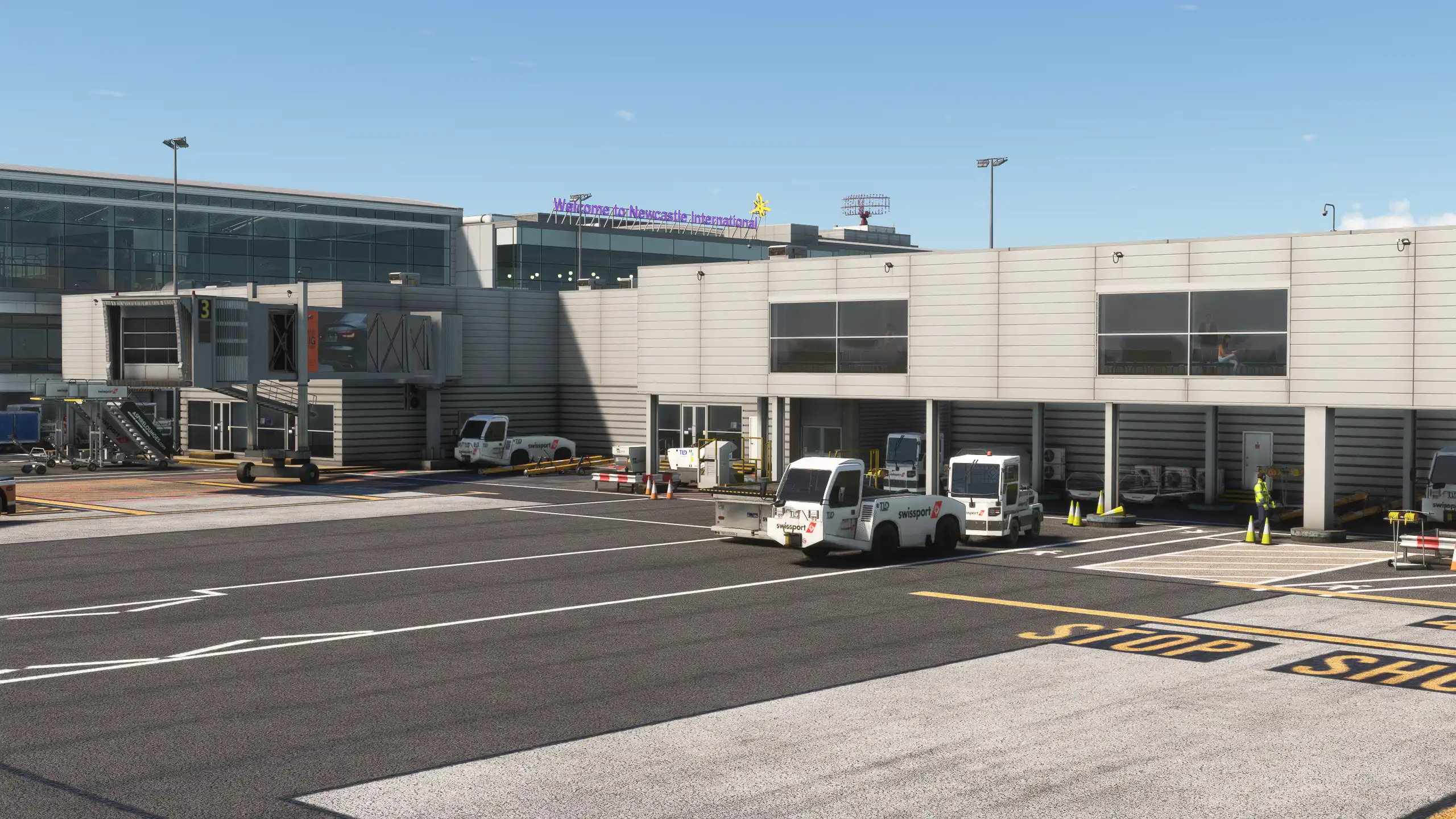
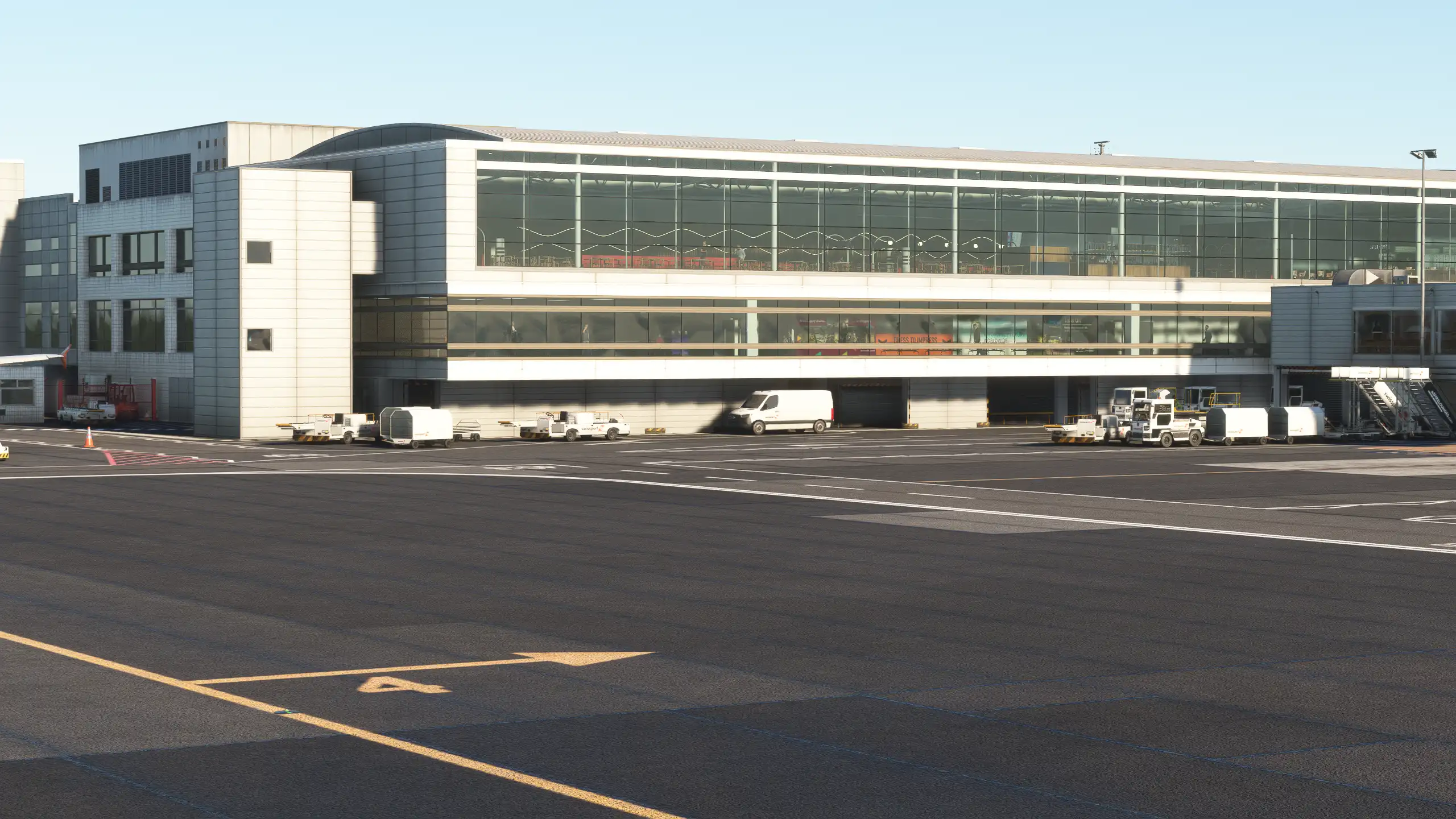
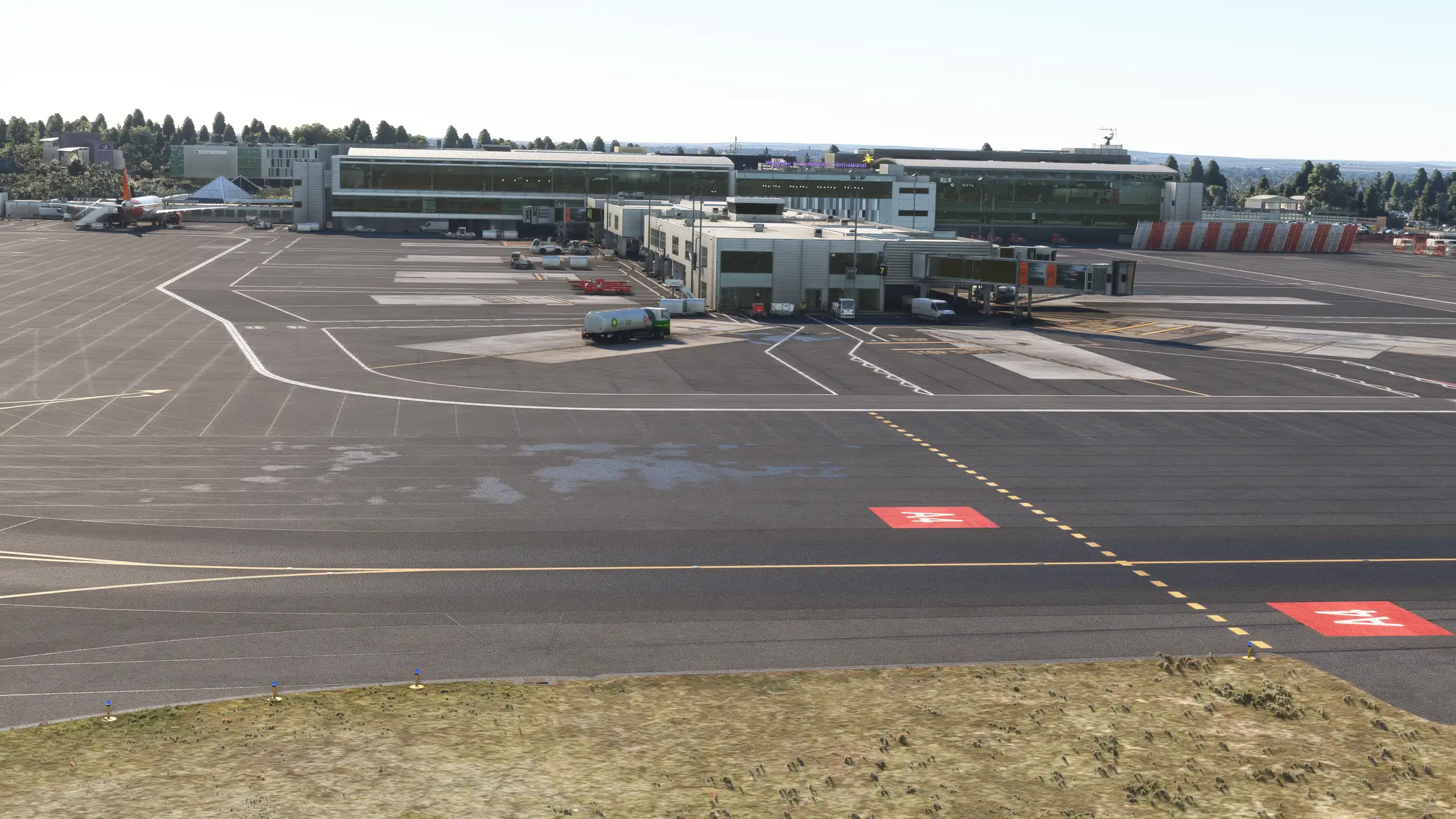
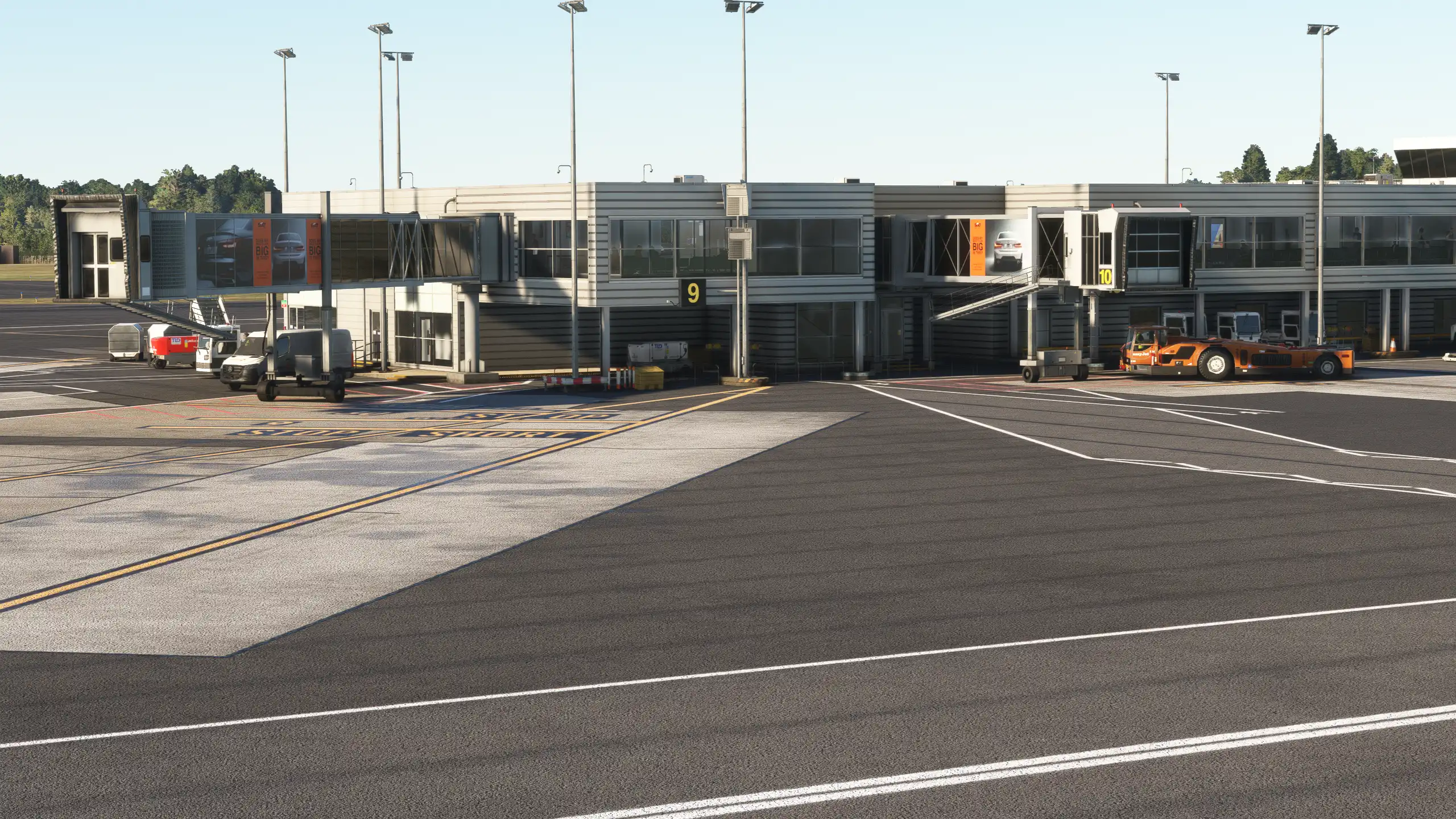
Upon parking at stand 2 with my easyJet A320, I was greeted by an impressively well-modeled terminal. I could only see a bit of it at first due to where my stand sits in relation to most of it, but further exploration with the drone camera just confirmed what already seemed apparent enough: the airside is impressively well-crafted.

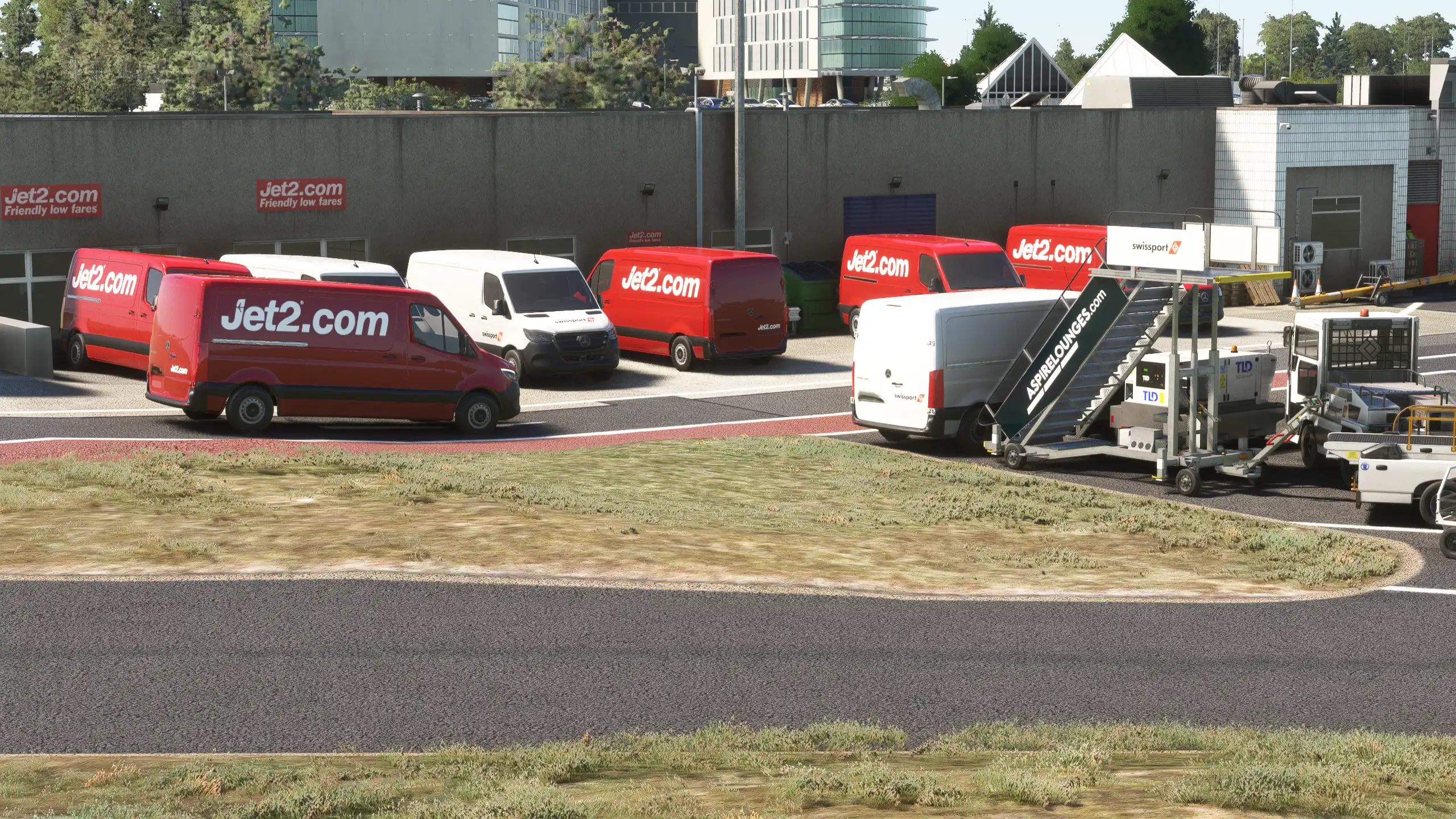
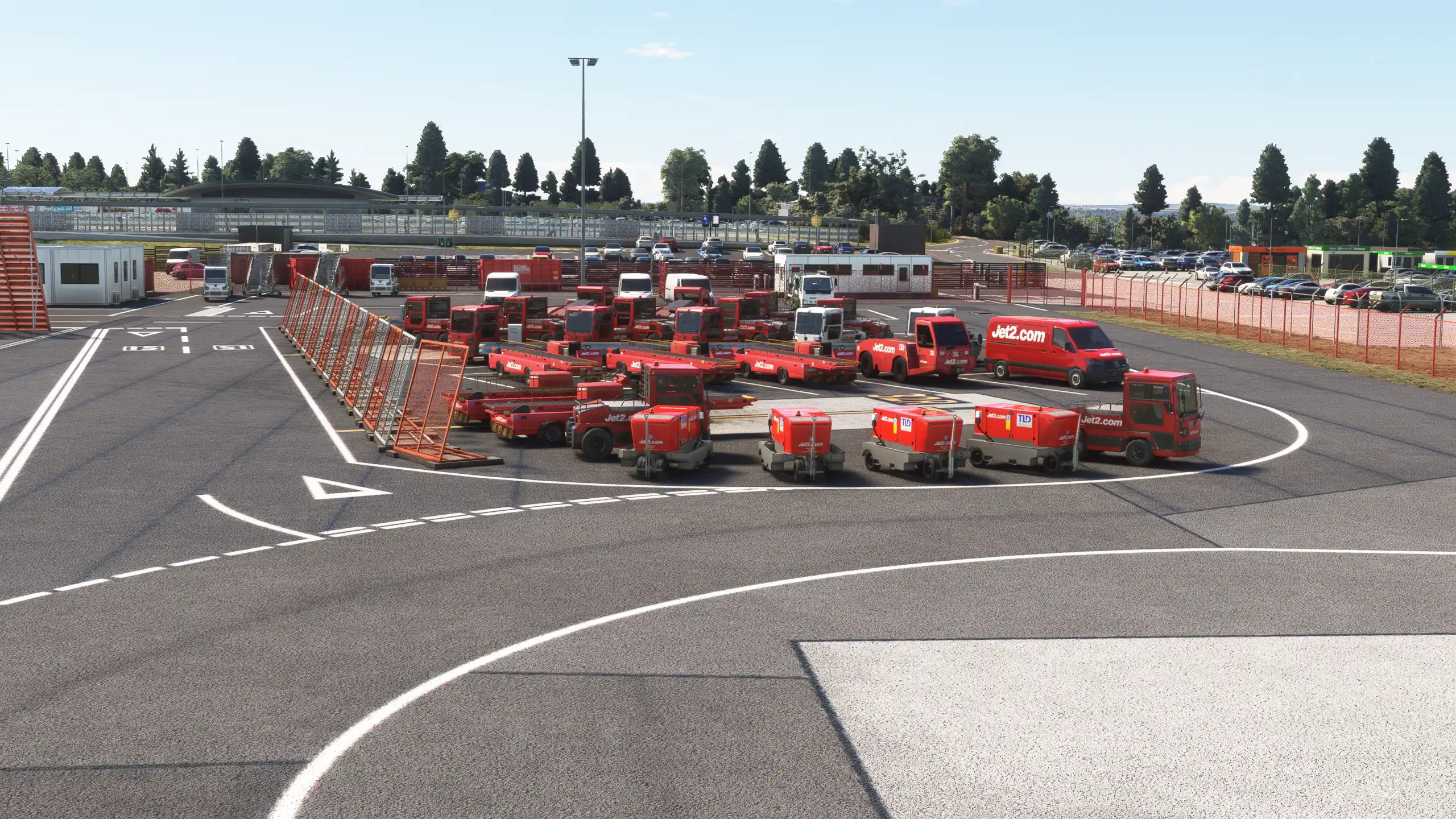
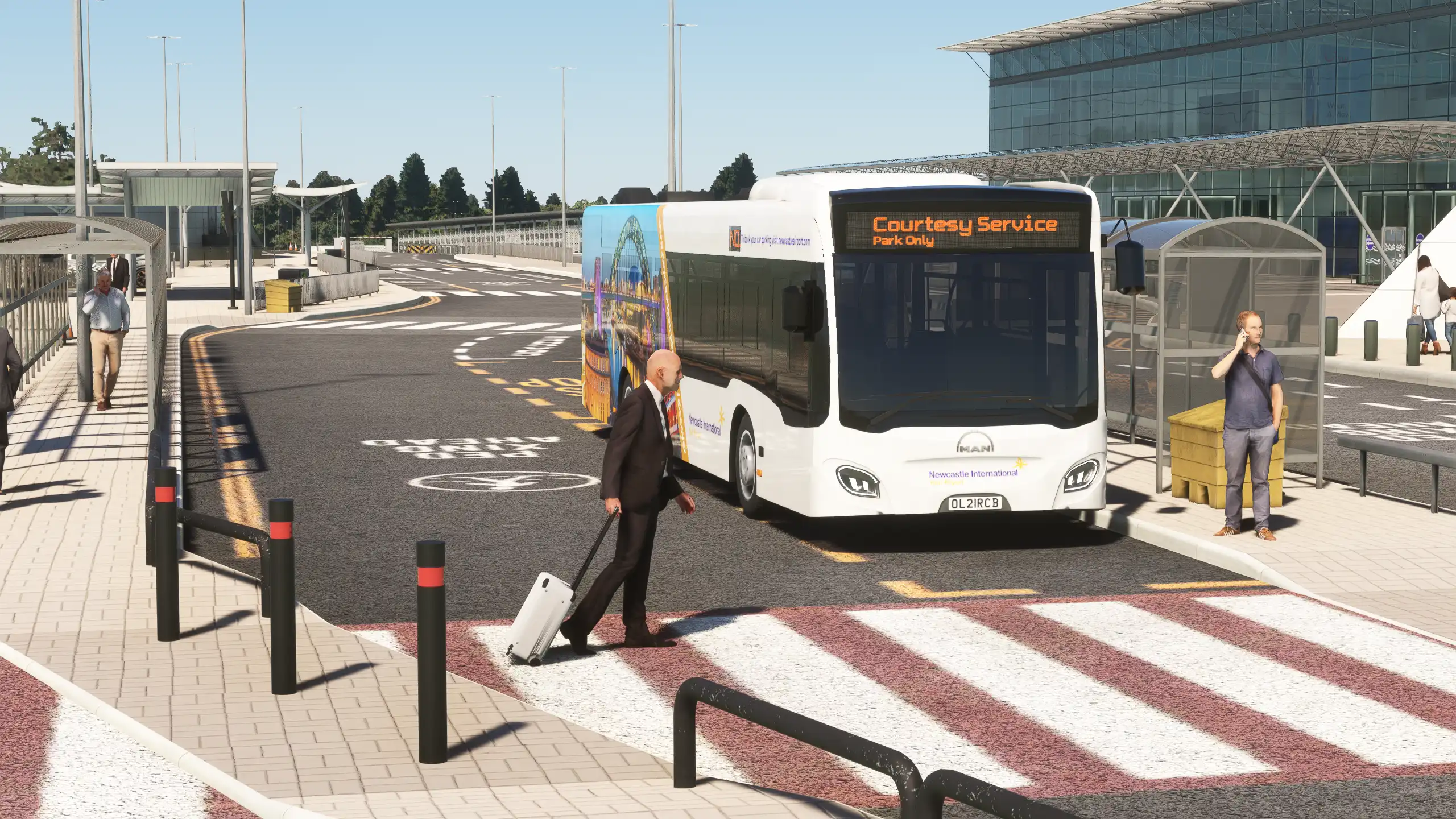
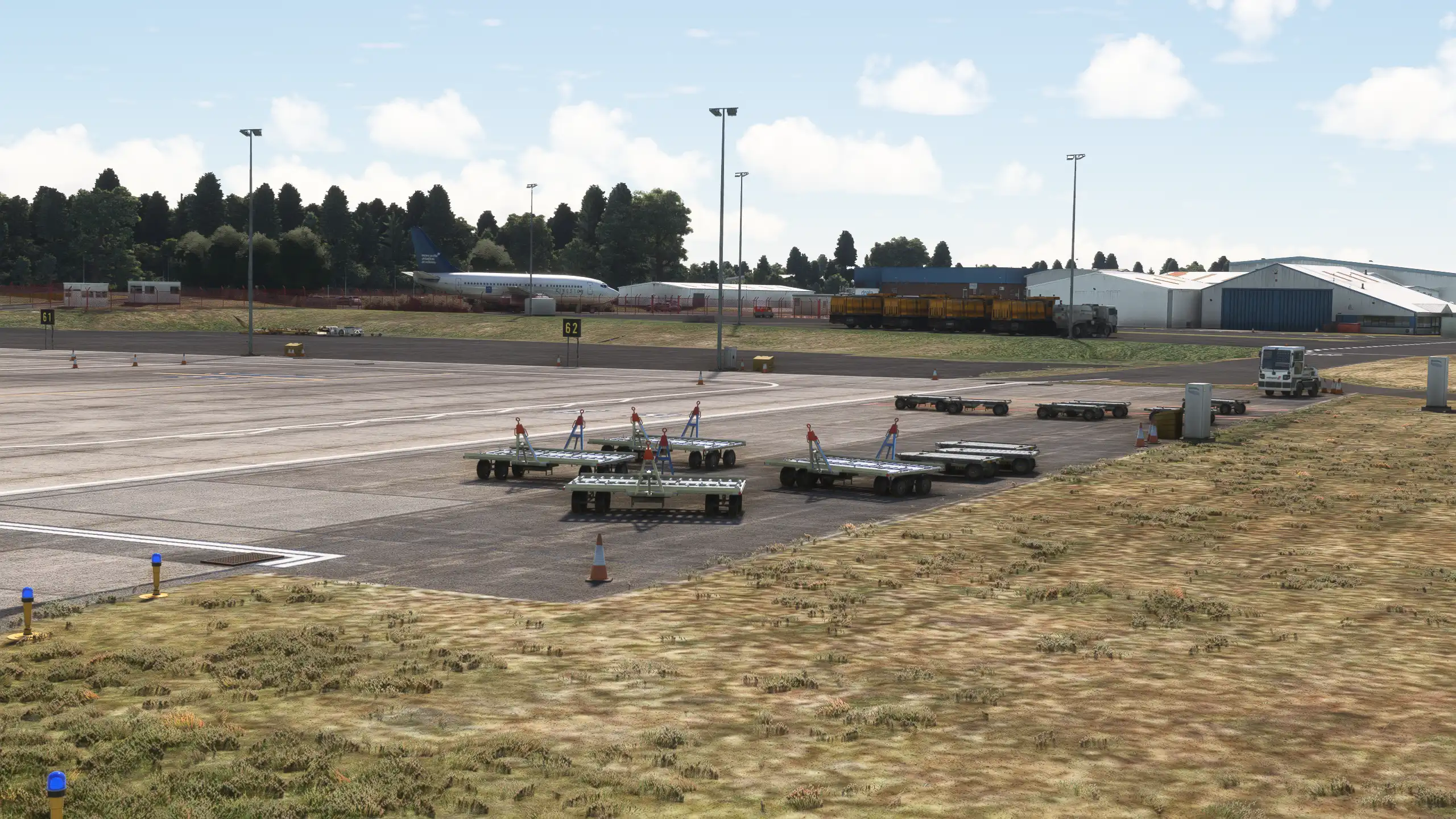
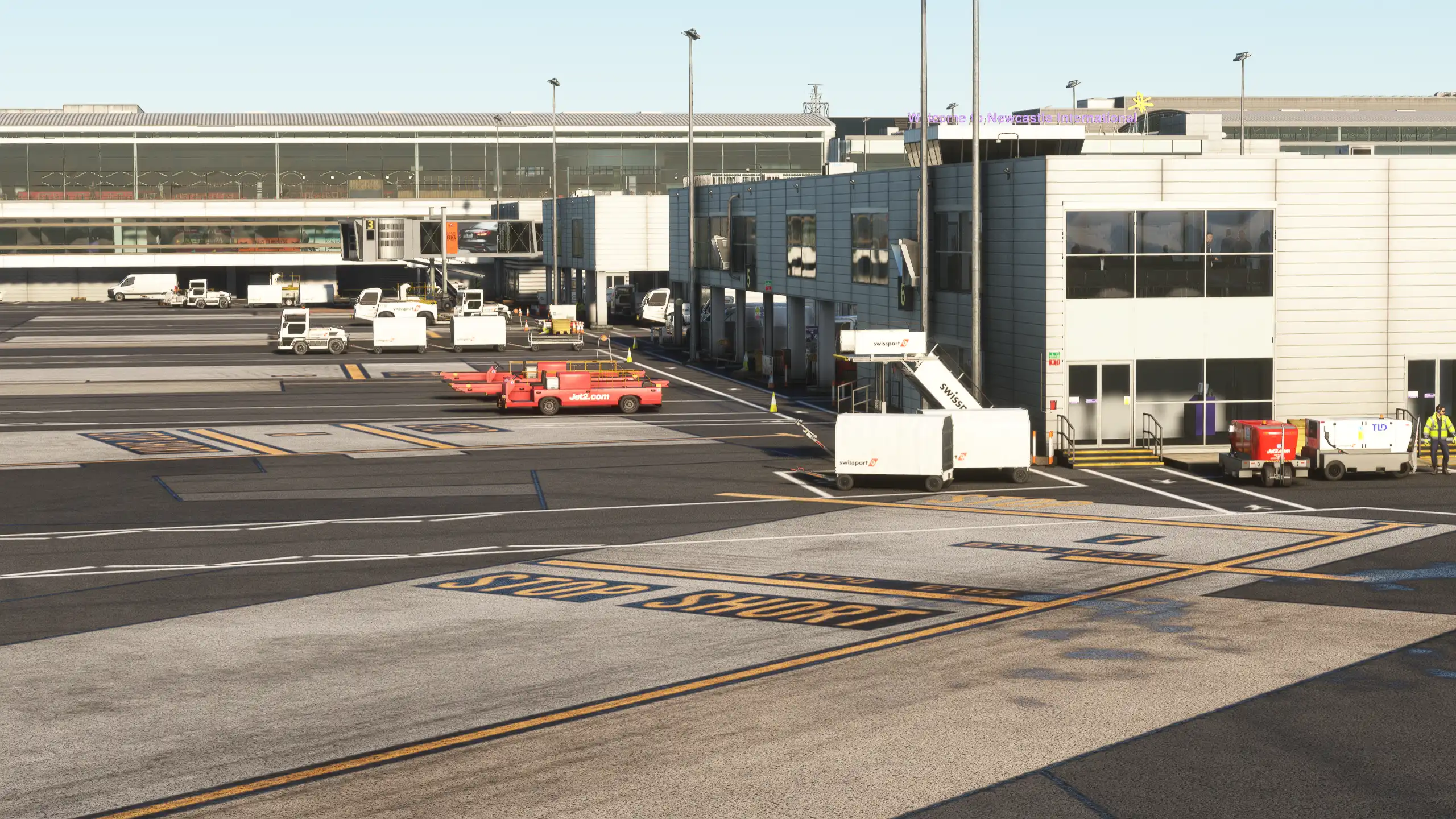
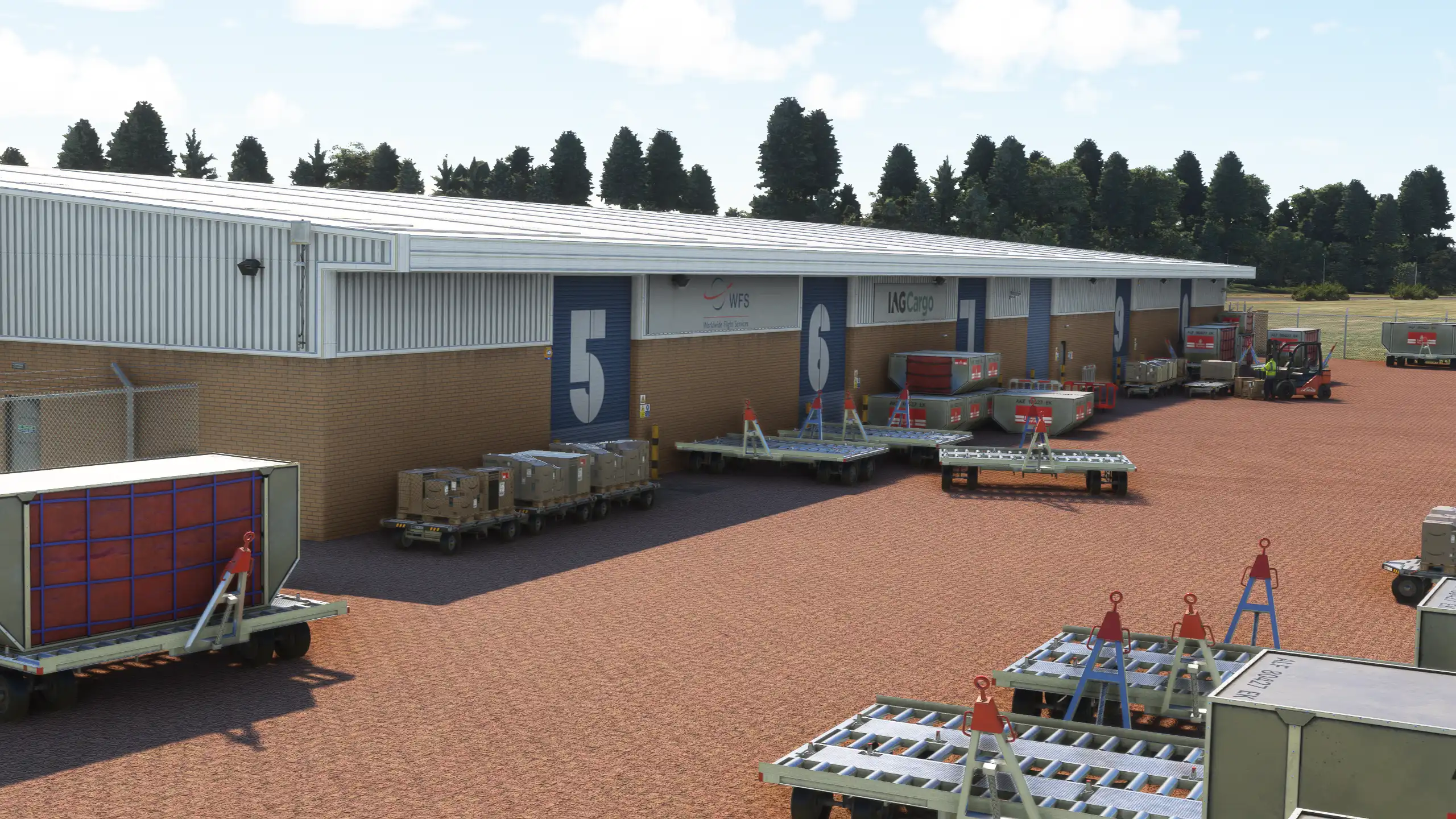
Not only does the terminal look great, but all the clutter scattered around the airport, like baggage carts, airport vehicles, and Jet2 vans, makes it look properly busy, as you'd expect from Northern England's busiest airport.
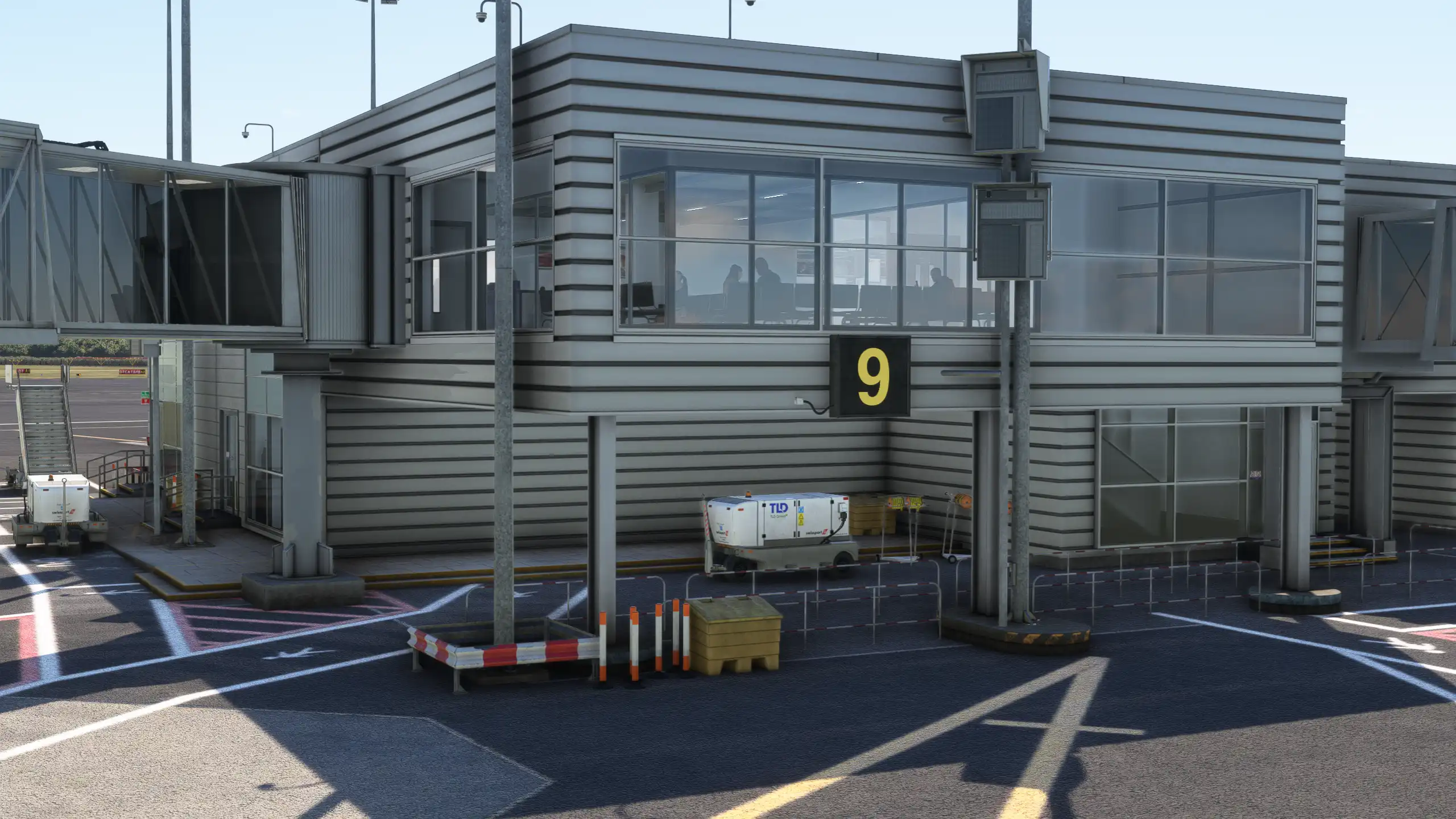
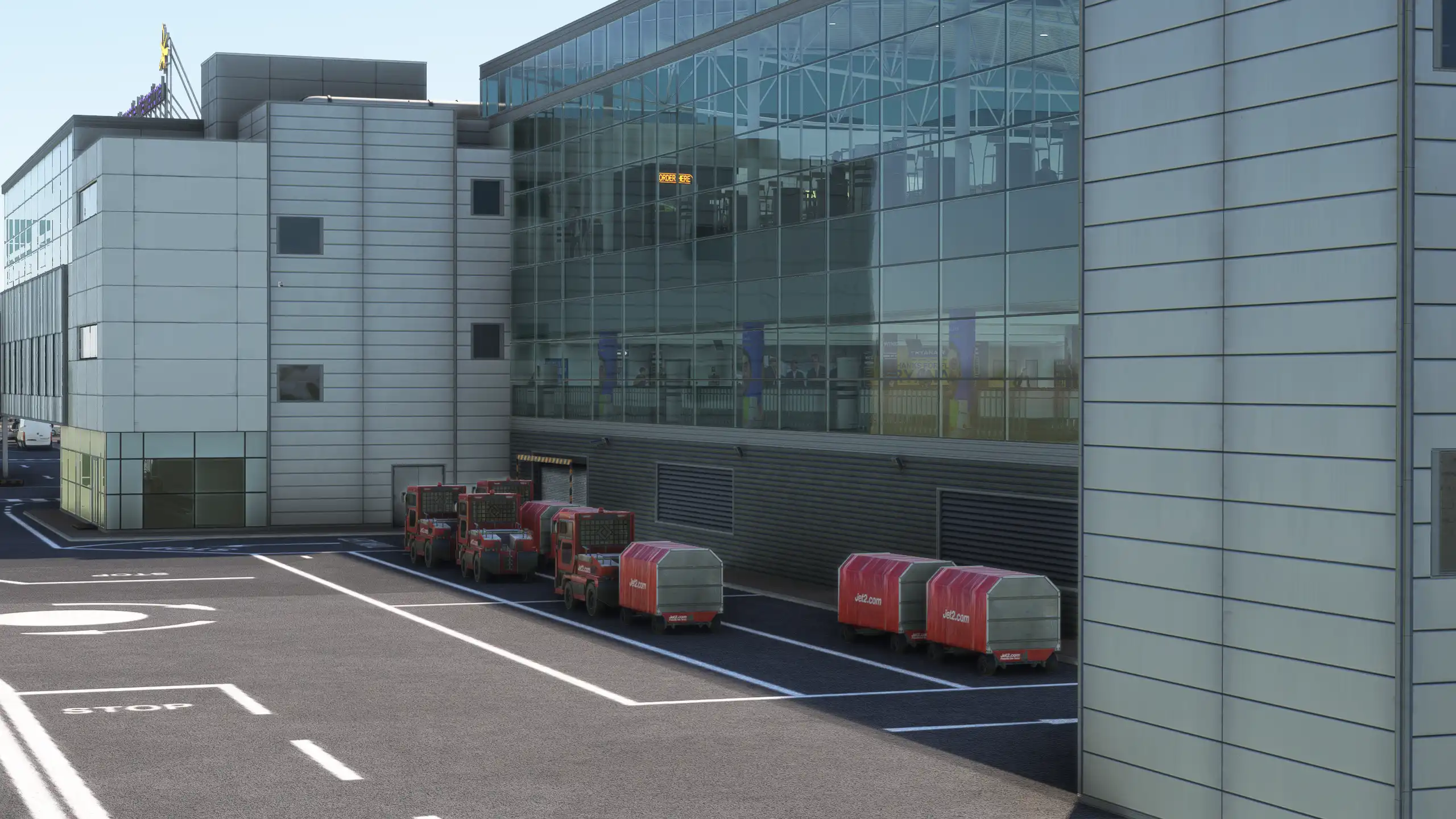
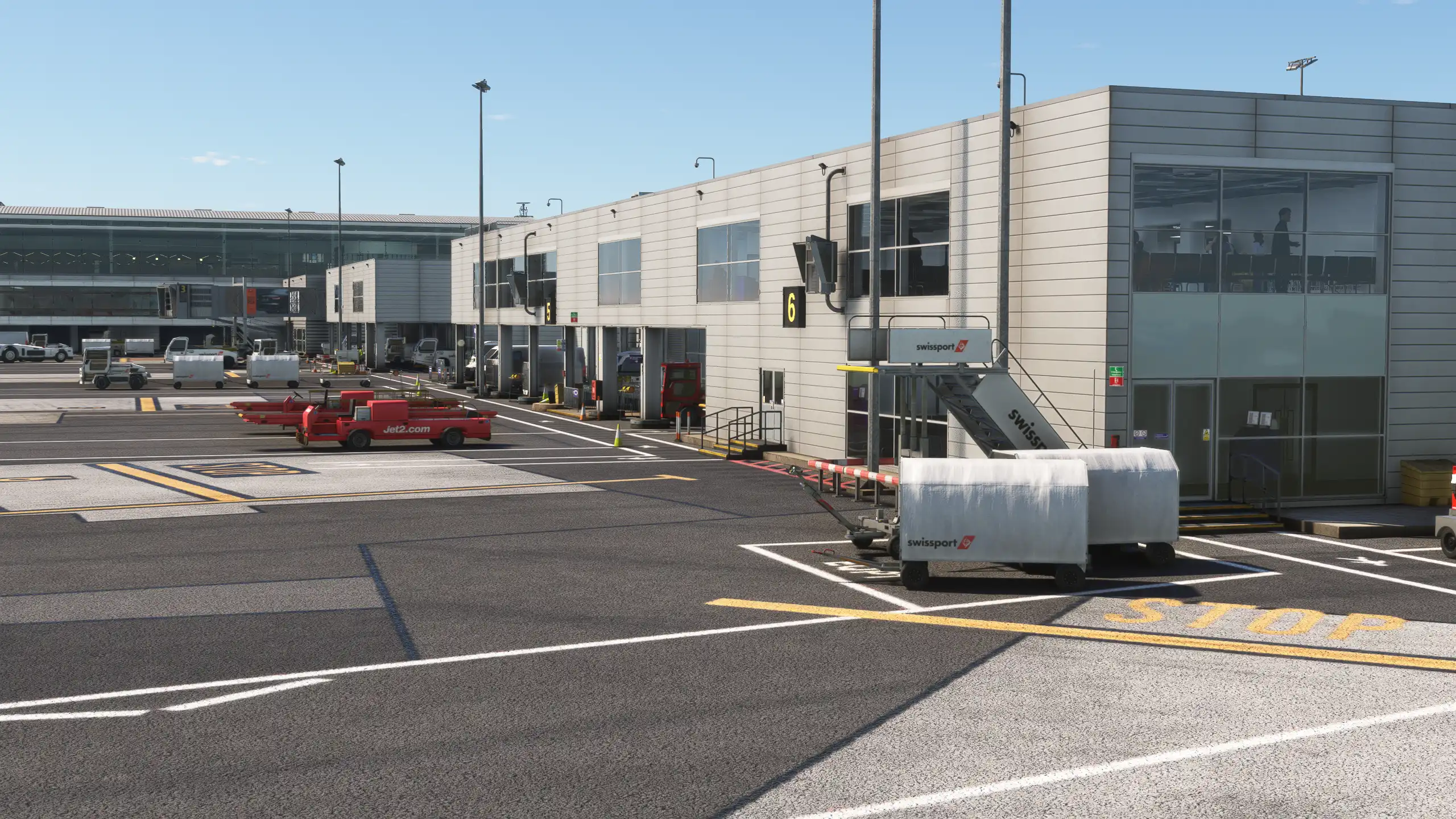
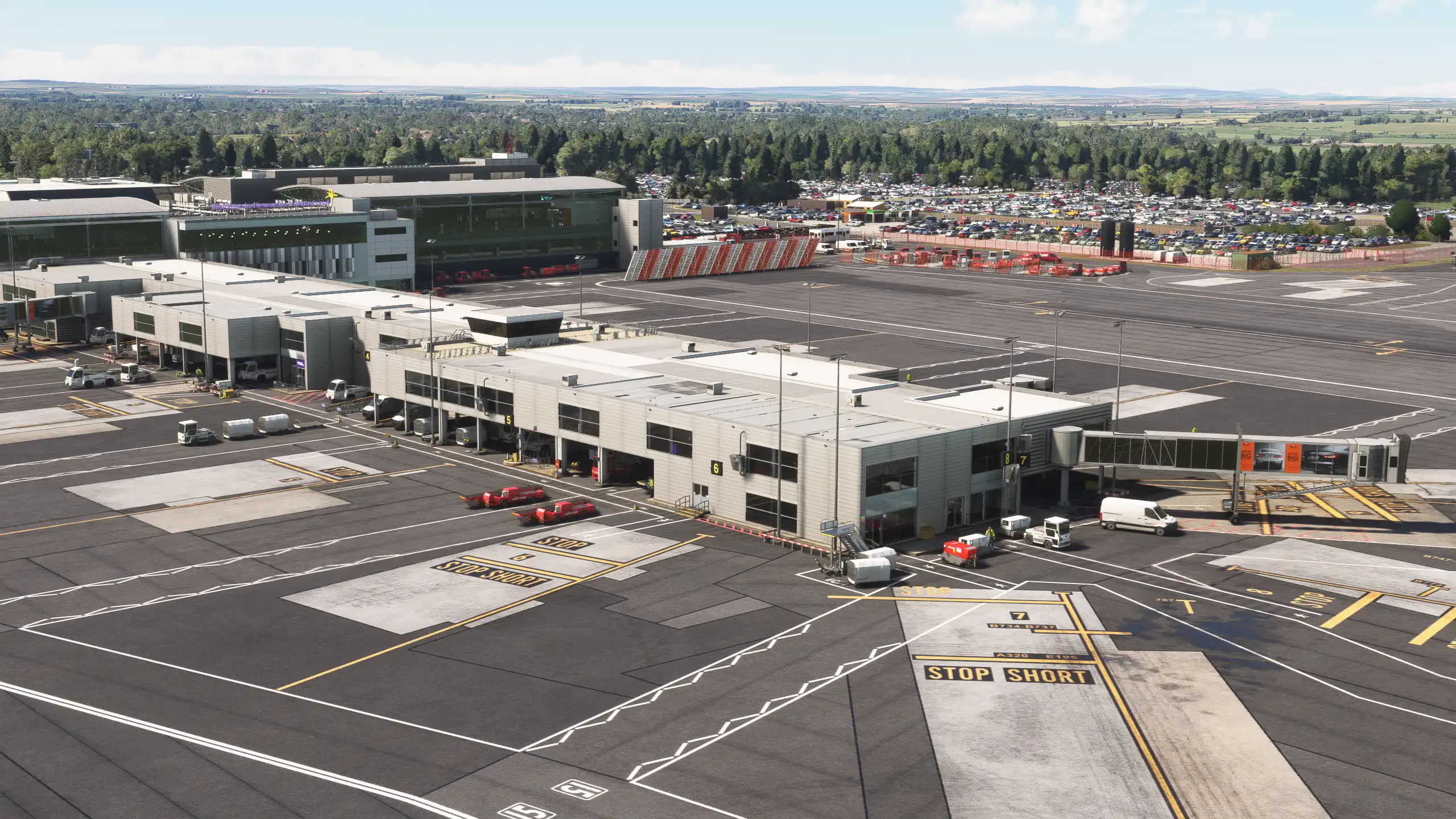
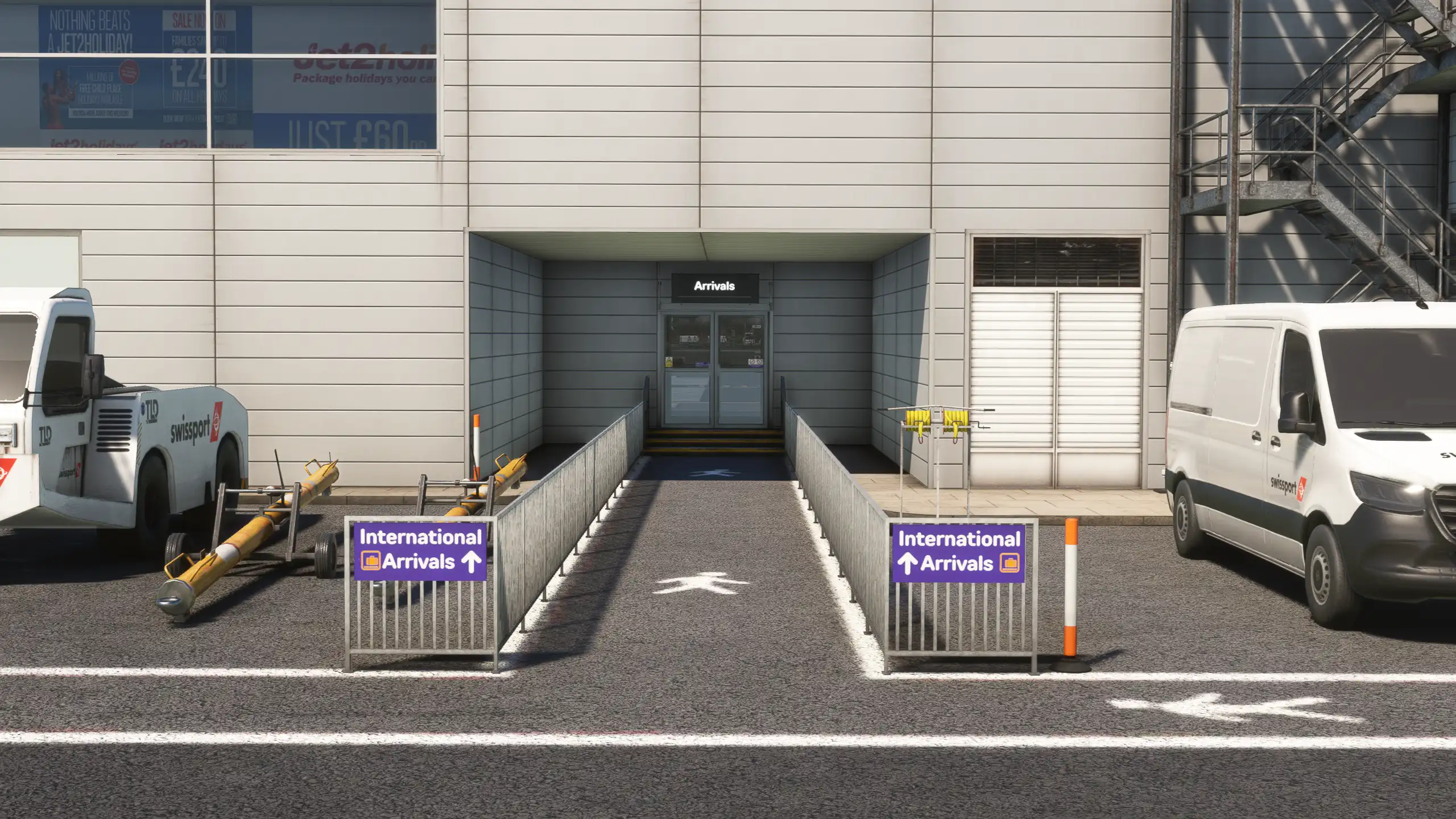
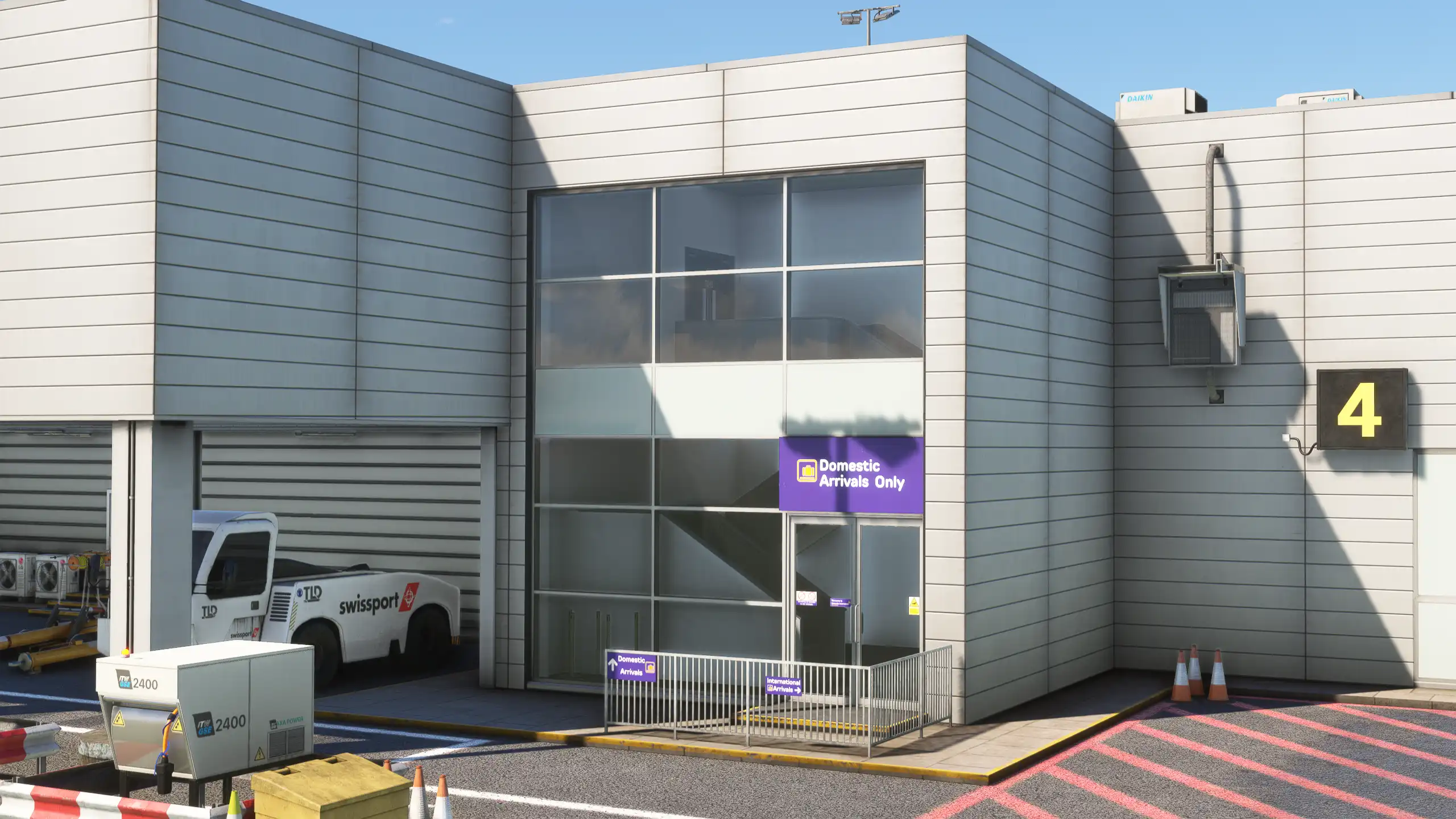
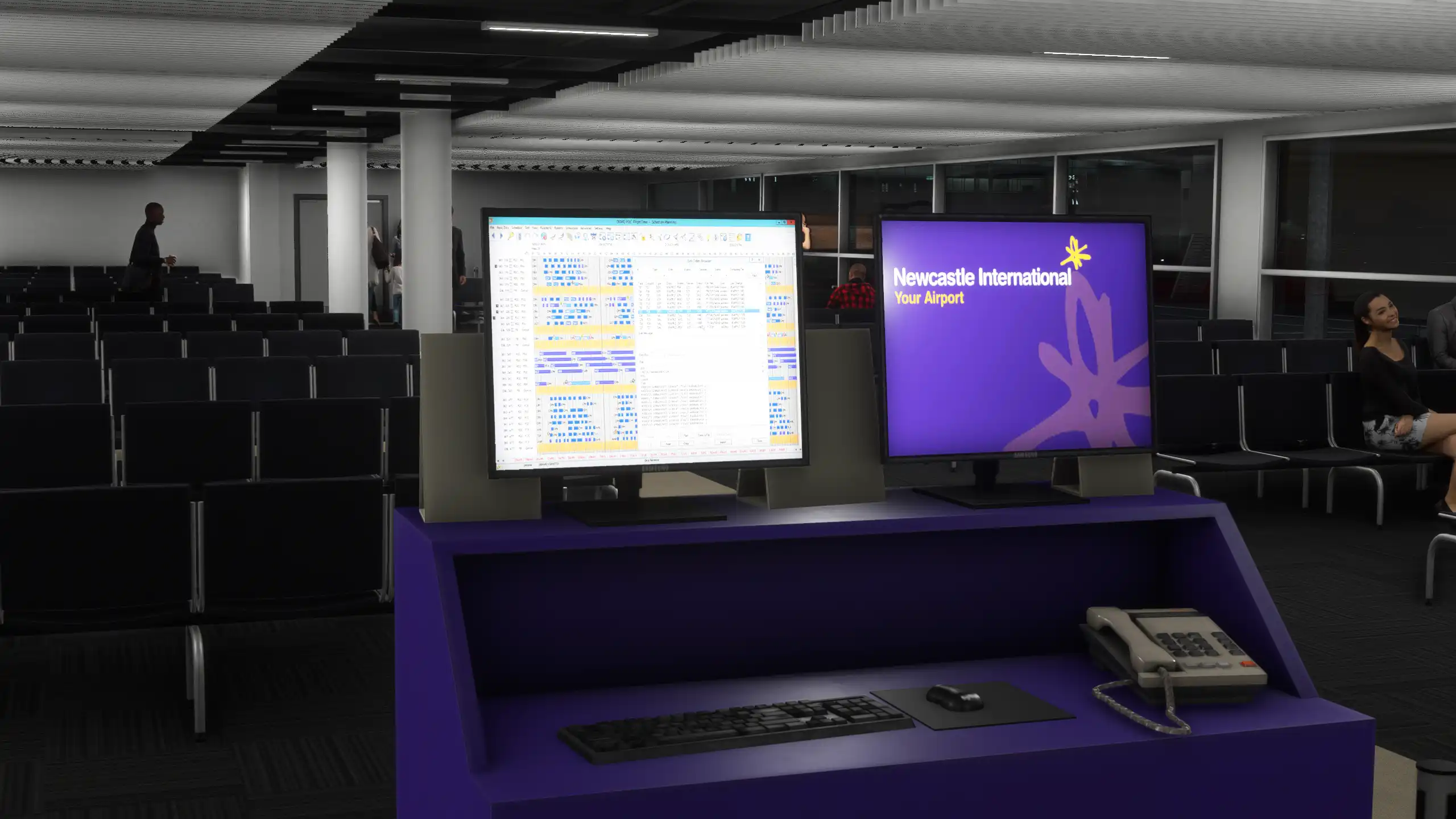
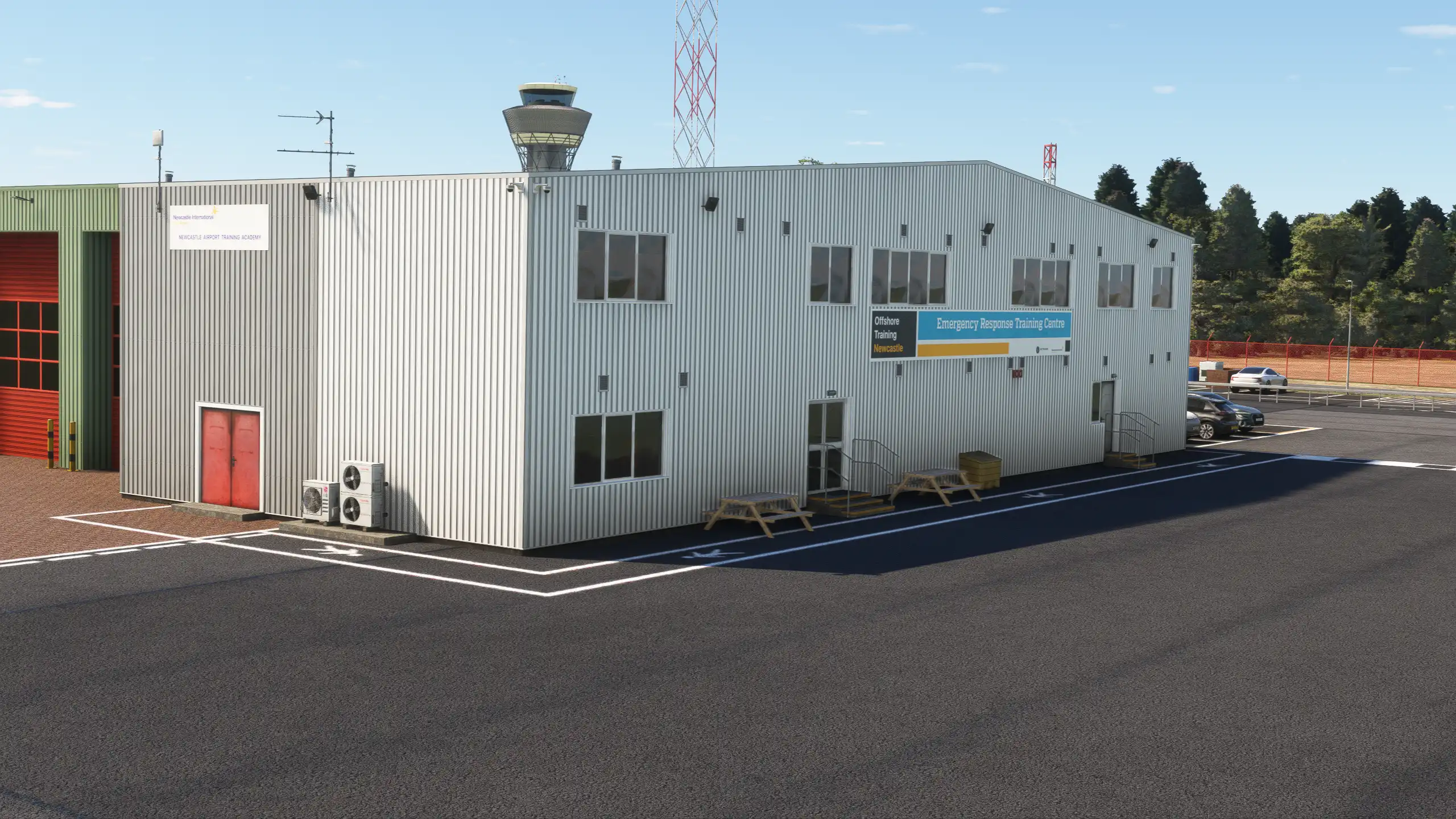
You can really see how much attention was paid to minor details such as the stickers on the doors, the warning labels, the computer monitors displaying the proper software with very decent texturing to boot, the subtle weathering on the buildings, the properly branded air conditioning units on the roofs, all of which heavily contribute to the overall immersion.
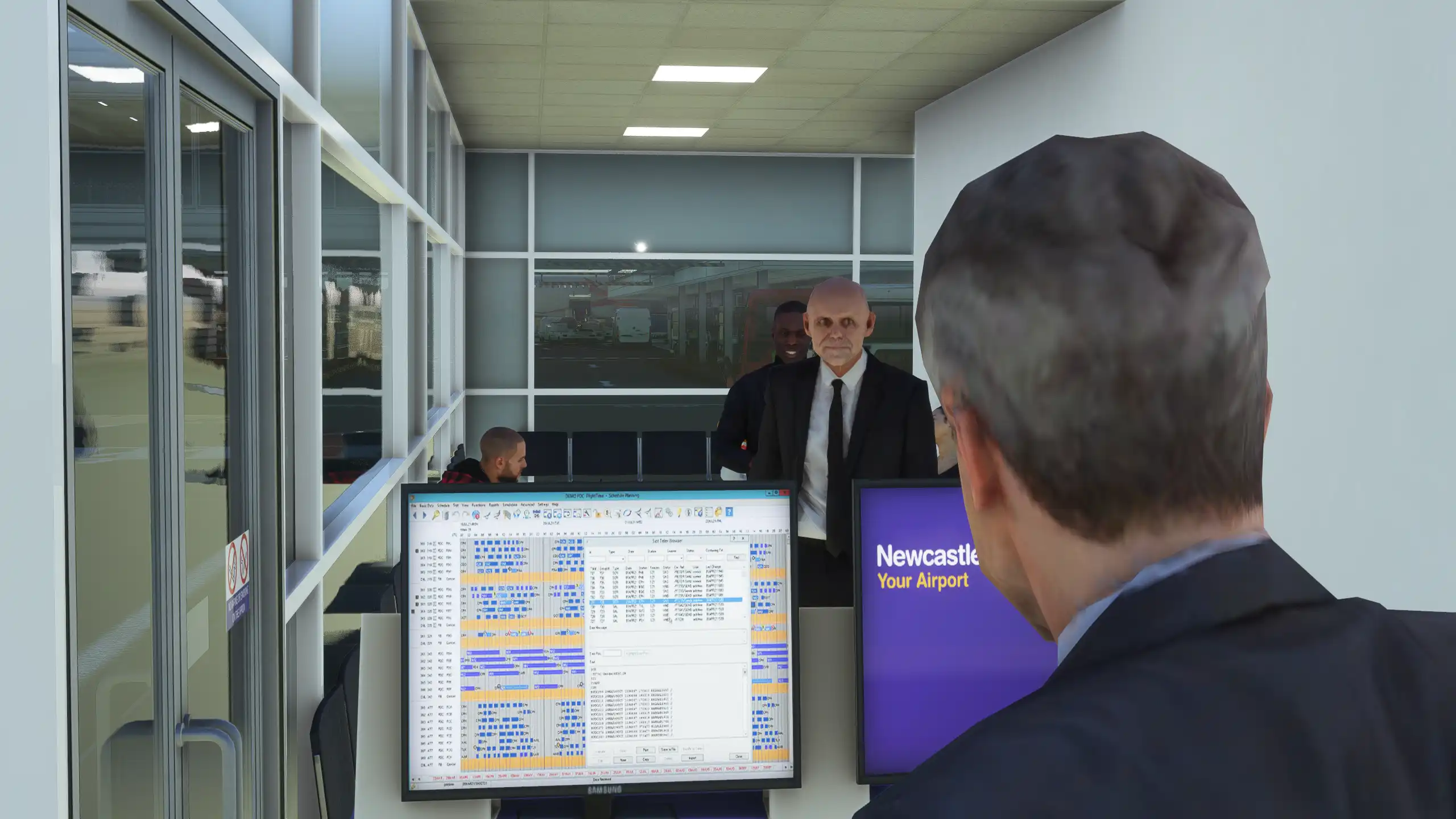
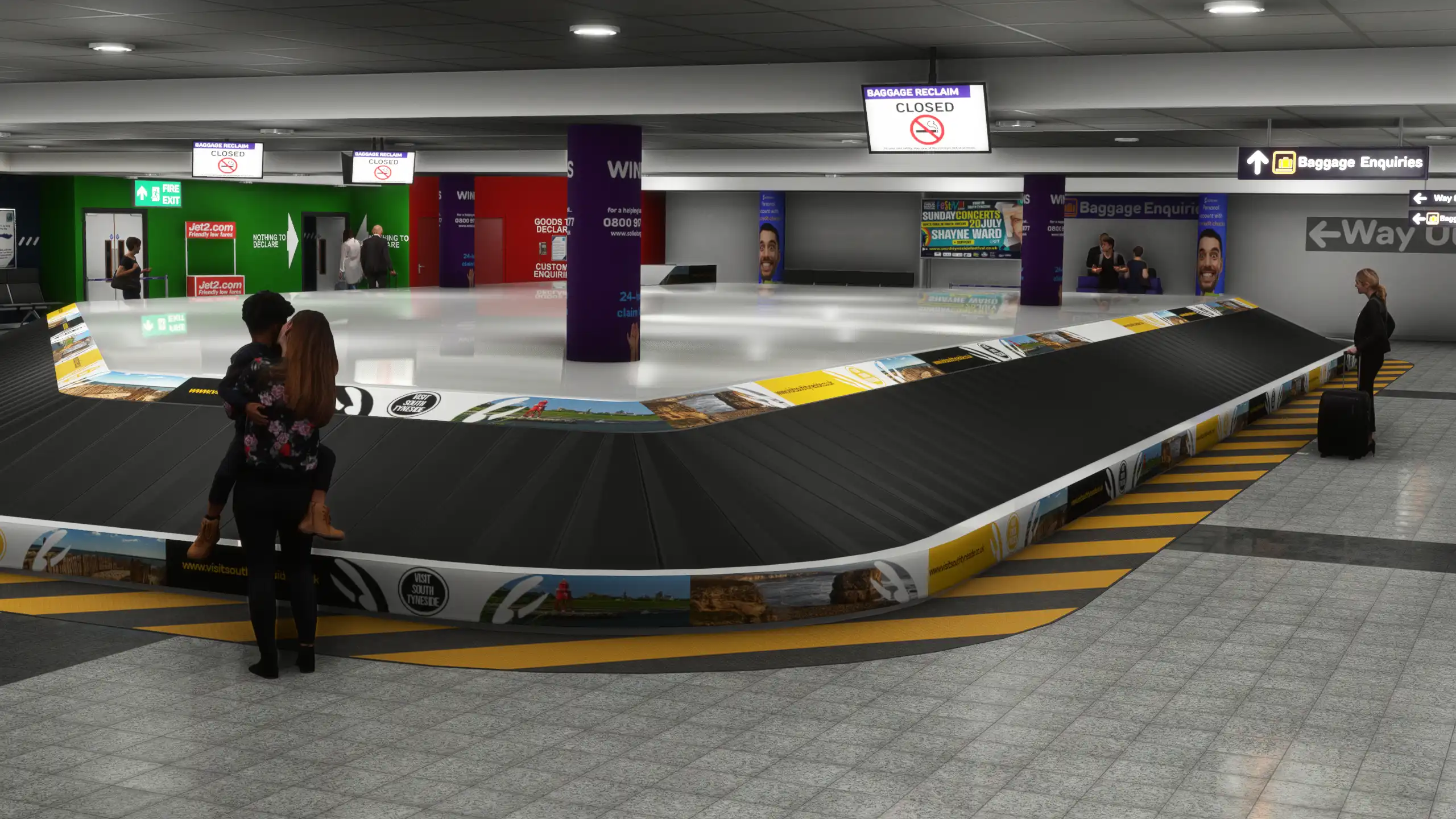
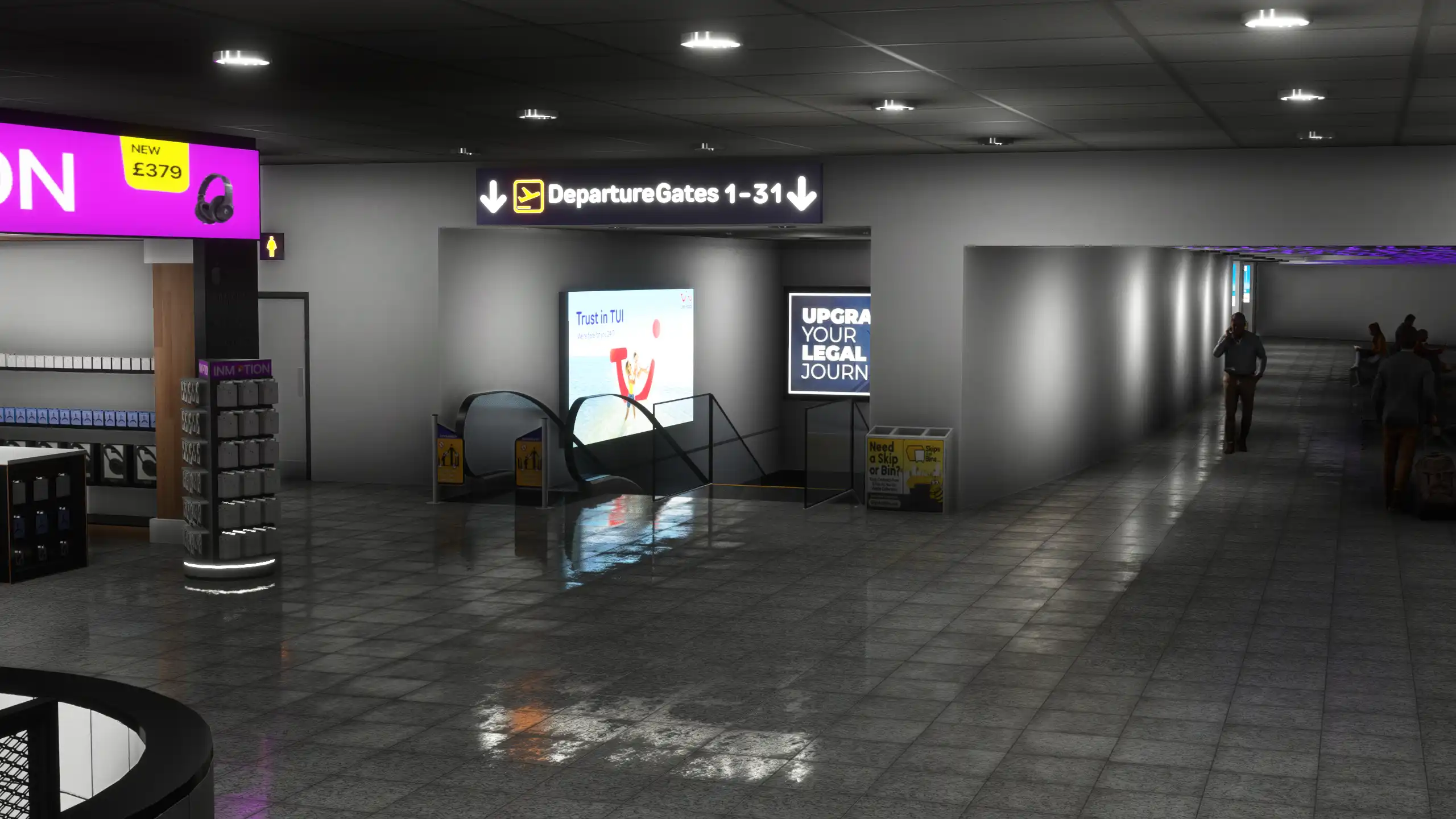
Newcastle's mostly see-through terminal practically asks for a detailed interior, and they have dutifully delivered. While interiors are not strictly necessary, so to speak, a good interior really adds to the experience, especially now that you can step out of the airplane (Microsoft Flight Simulator 2024 only). Even 2020 folks like me can still drone around and feel just as immersed.

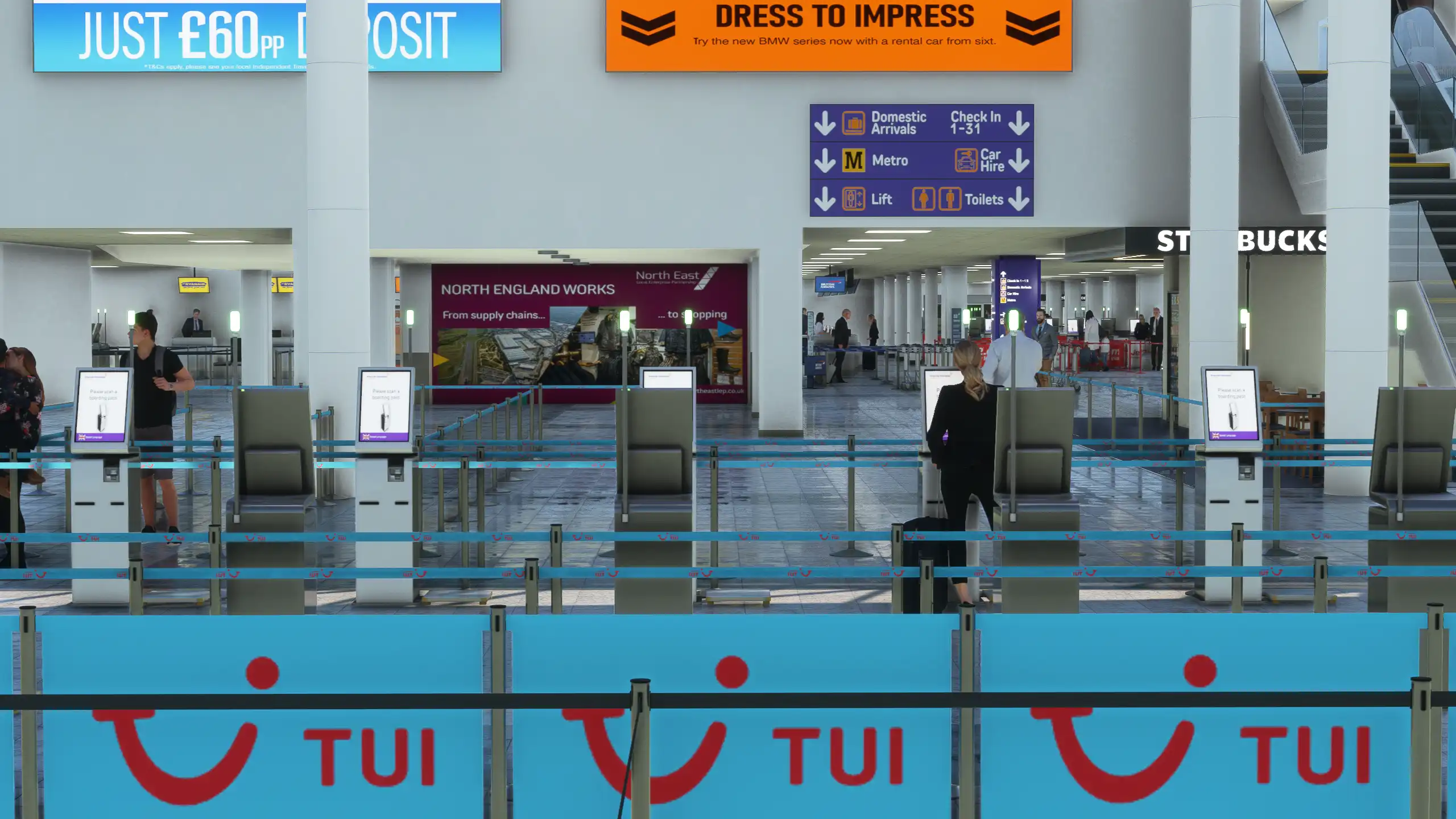
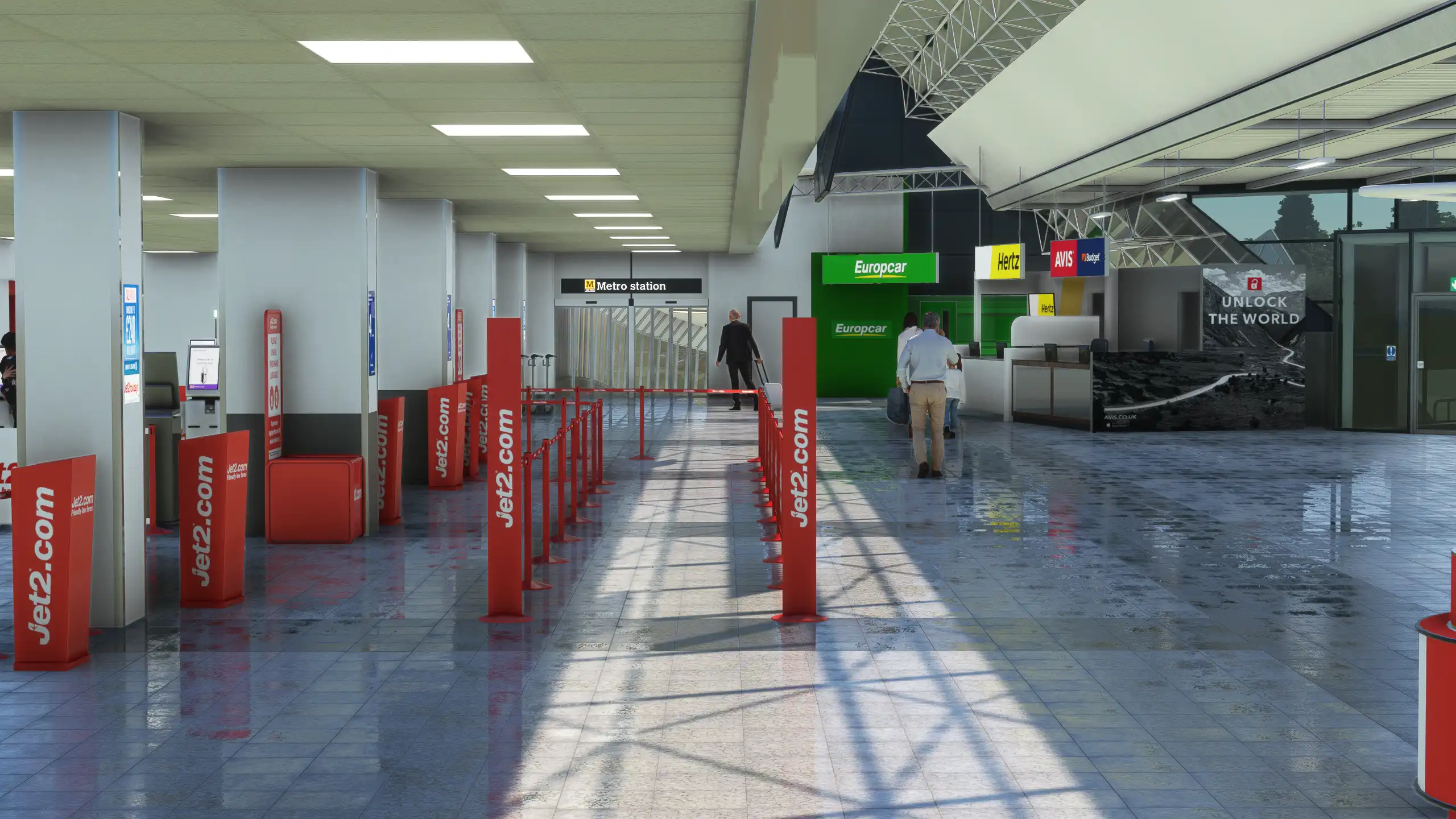

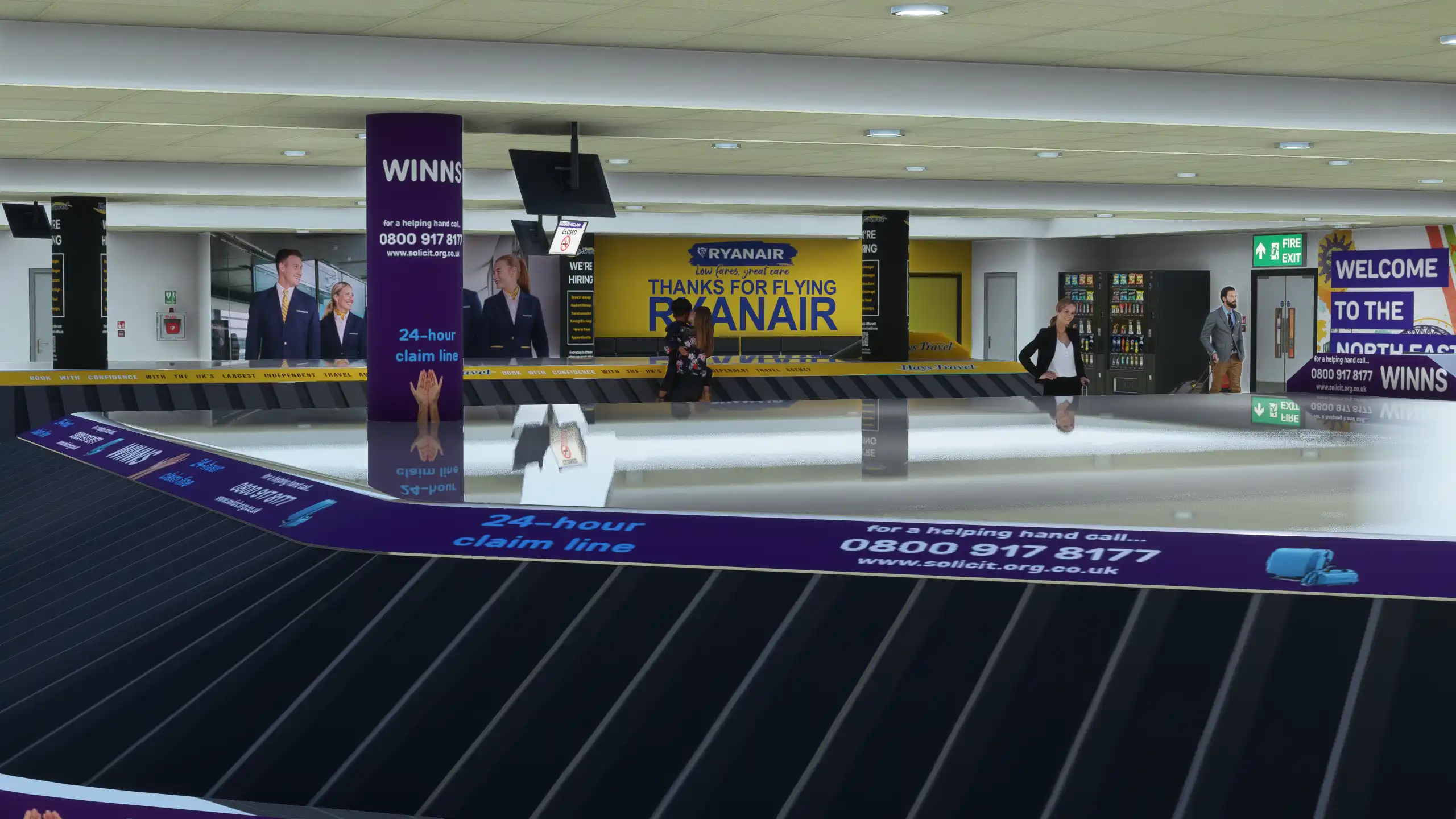
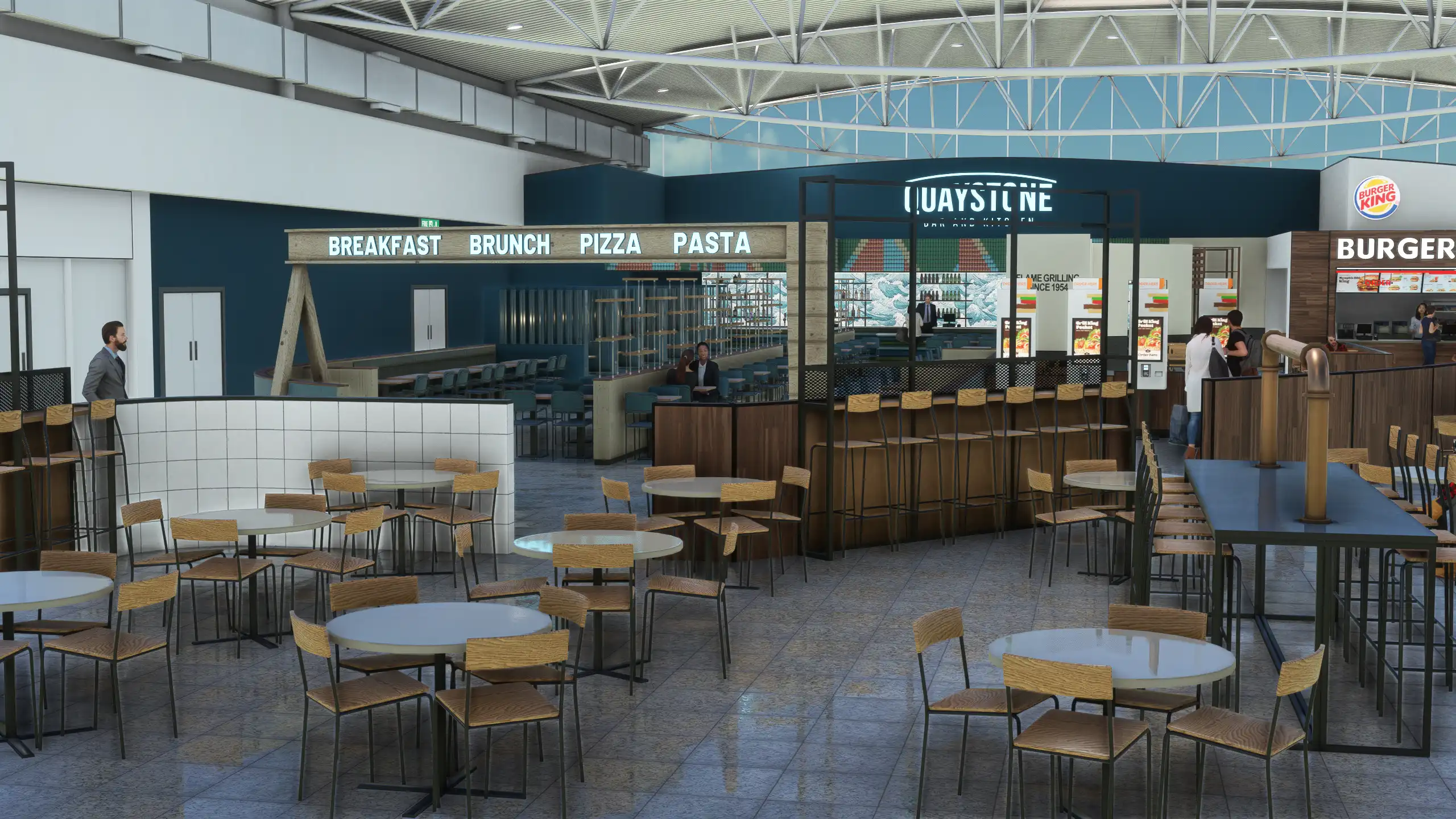
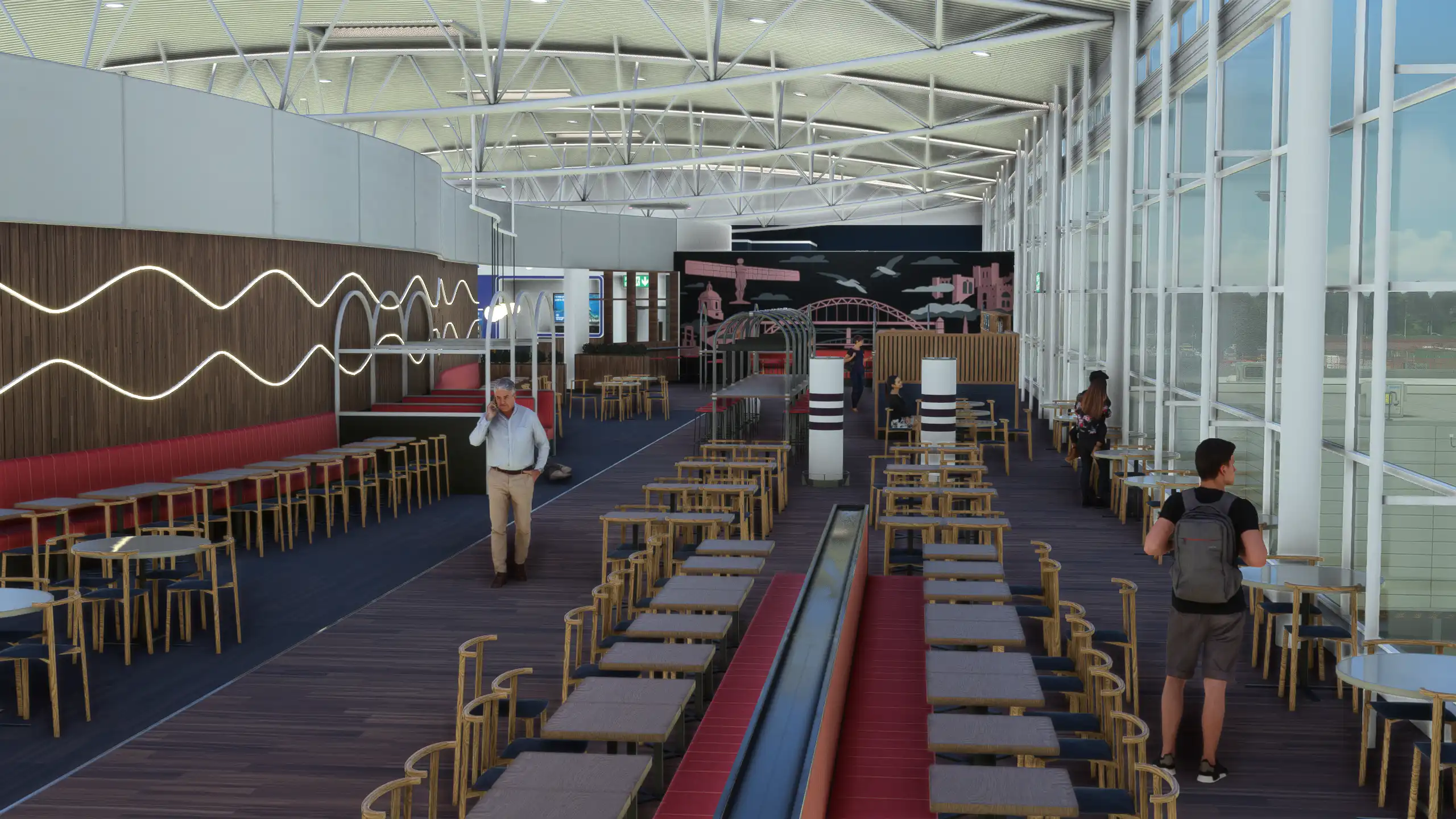
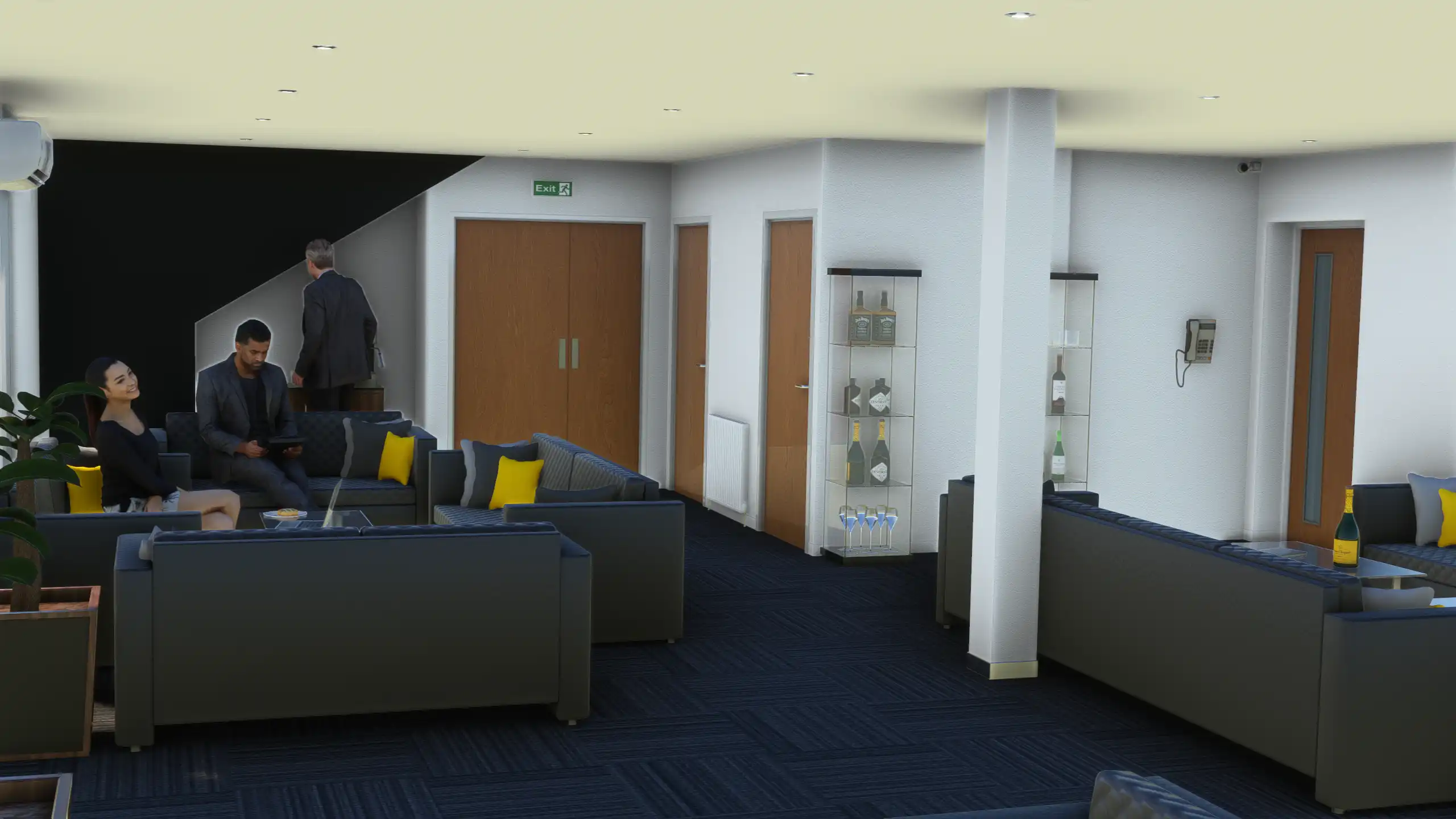
The interior coverage spans the entire terminal and even covers Samson Aviation Services, which is meant for private flights, or so I guess. It sure looks fancy there, with champagne bottles, expensive whiskey, and very comfortable seats. The vehicles parked outside don't hide the fact that this is an experience meant for the ultra-rich.
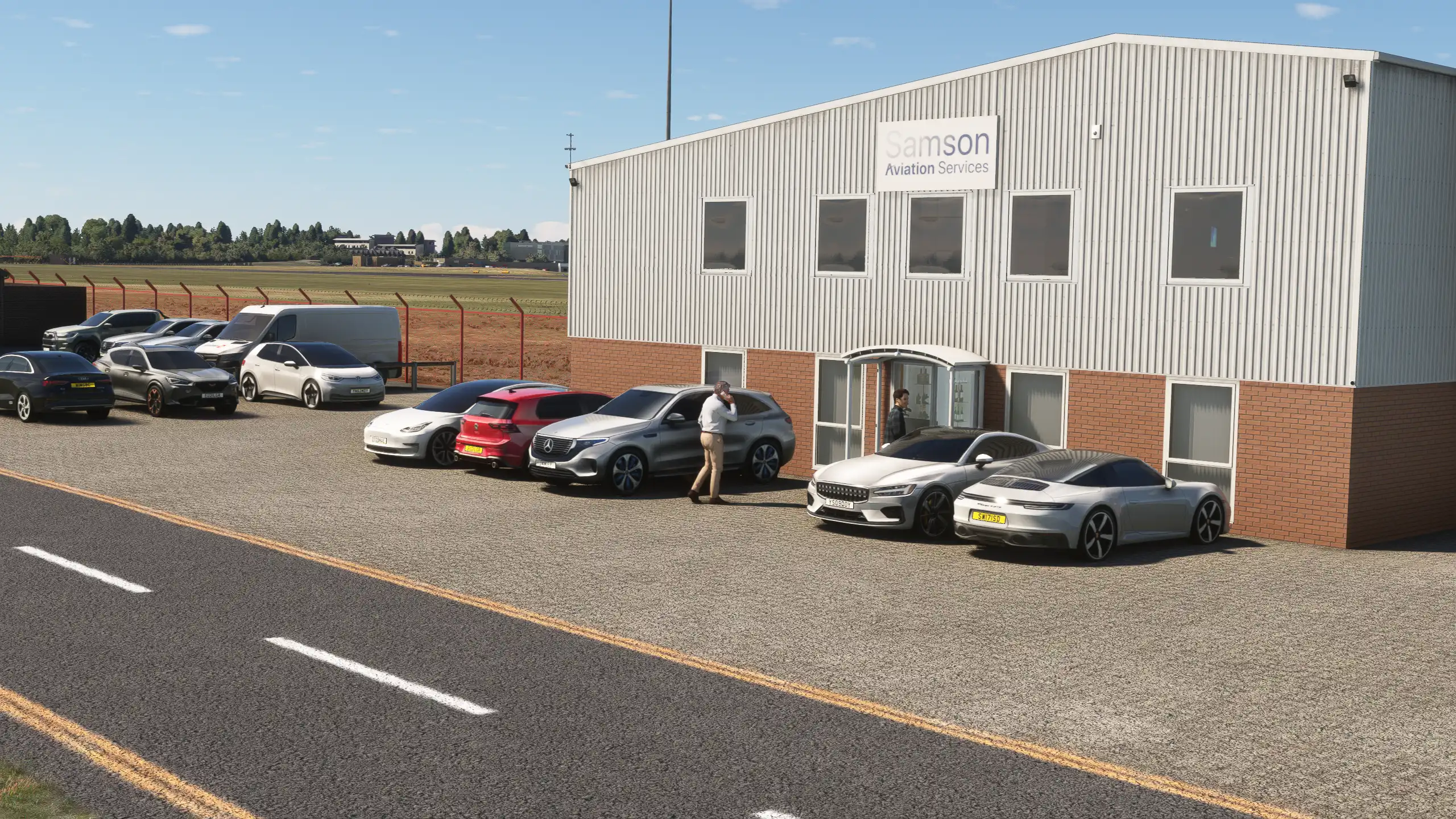
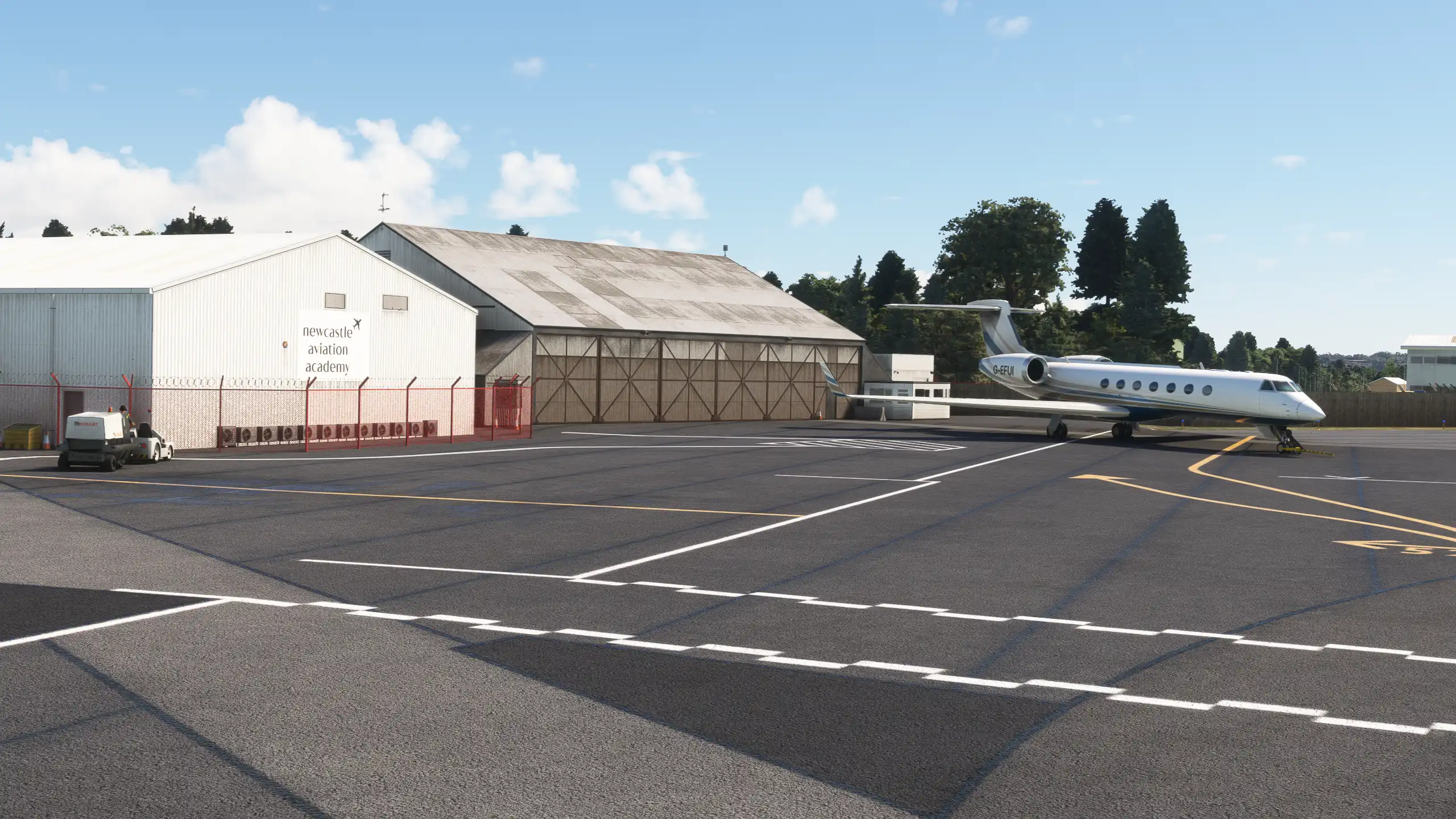
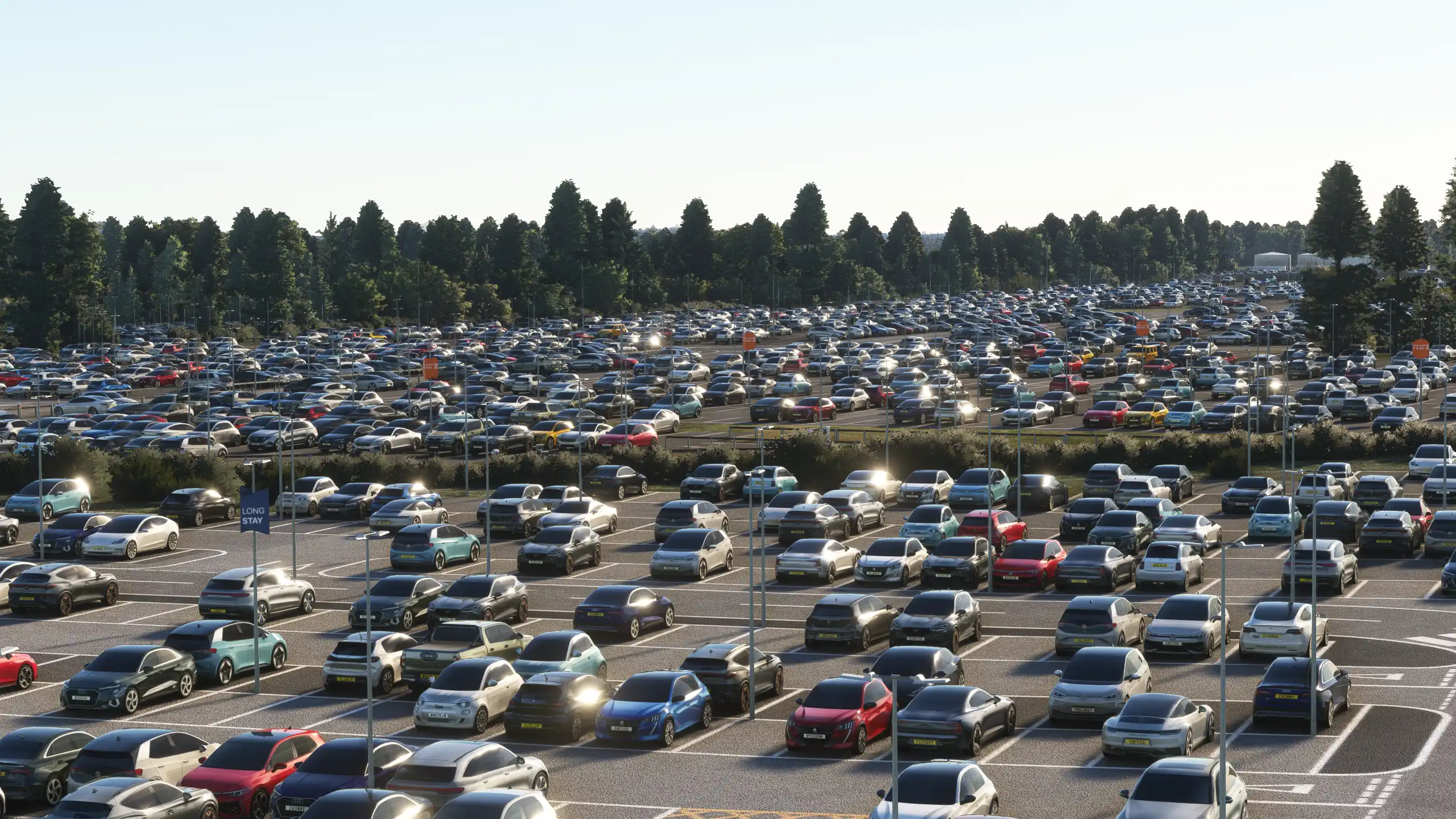
The quality remains rather high when you wander out of the terminal and into the general aviation area, the multiple parking lots scattered around the airport, or the cargo area. While these less important bits see a lot of parallax textures rather than actual interiors, this does not detract from the overall quality in any measurable way, as you sometimes don't even get parallax with these in most products.


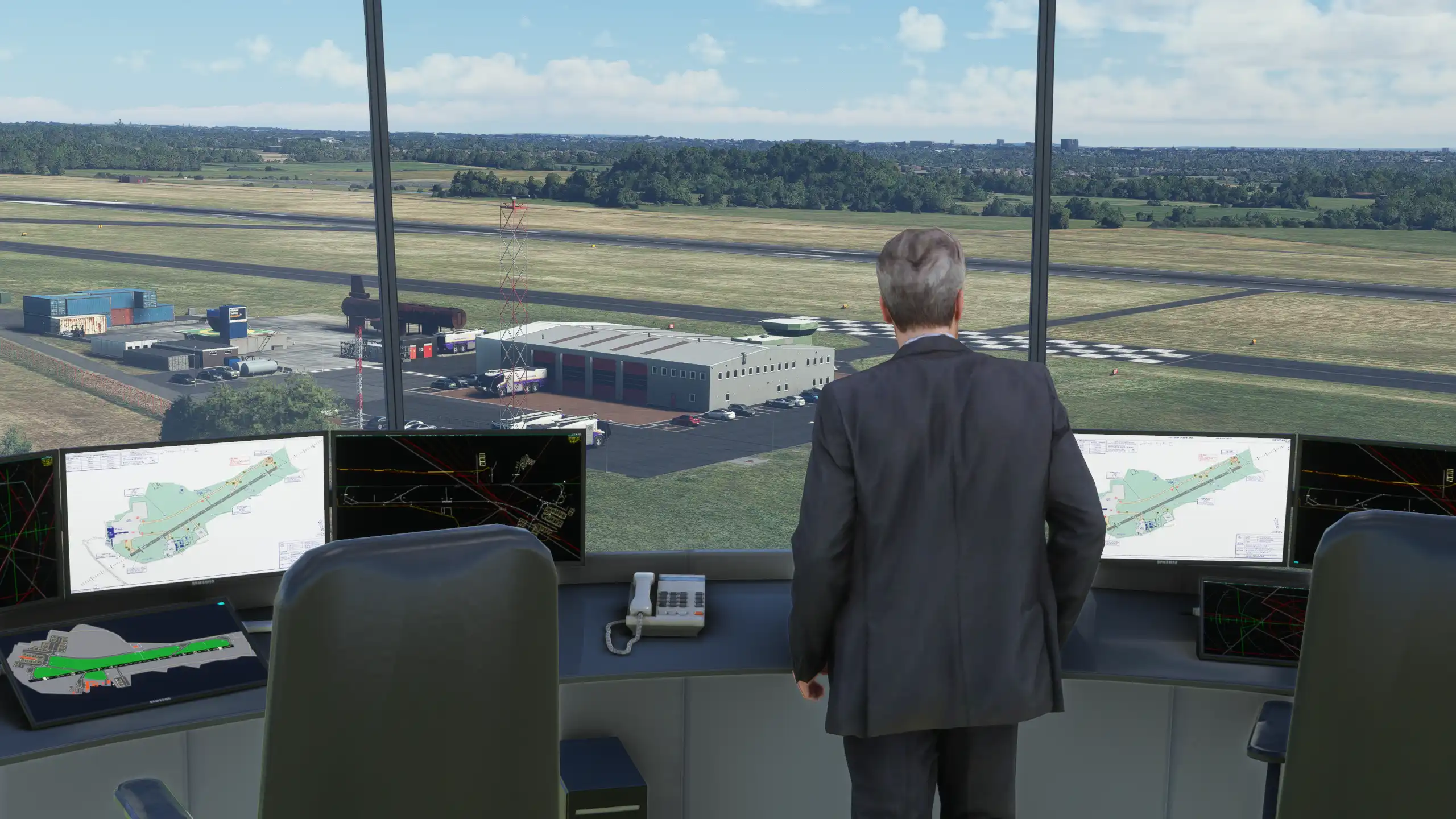
The control tower also has an interior, with big Samsung monitors displaying the airport's ground layout, airspace, and so on. I can't lie—the view from up there is quite fabulous.

All the parked and service vehicles are custom-made, and the ugly and demodée SDK stuff is not used. They are all properly British with the yellow license plates and everything. Great stuff.
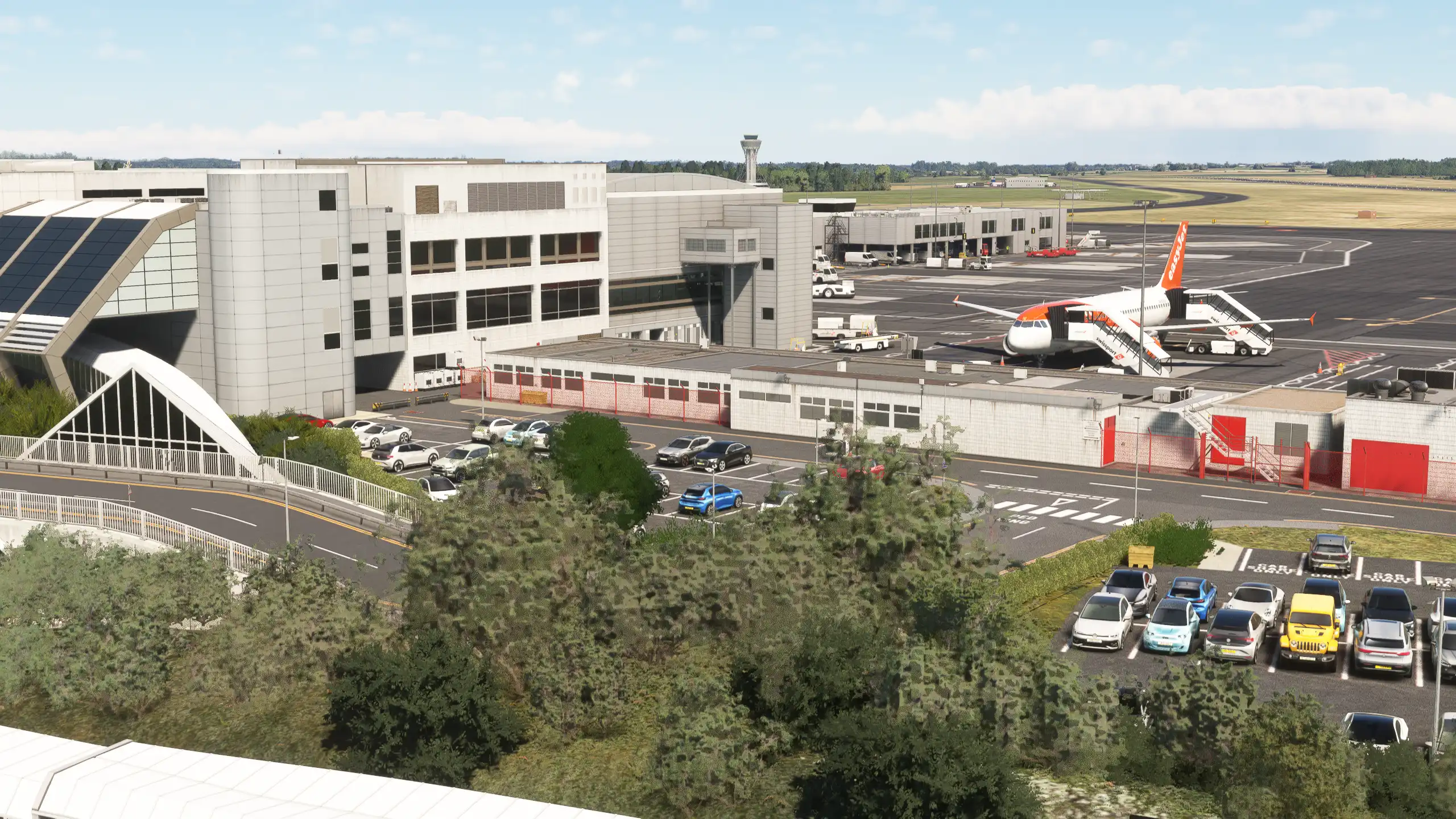
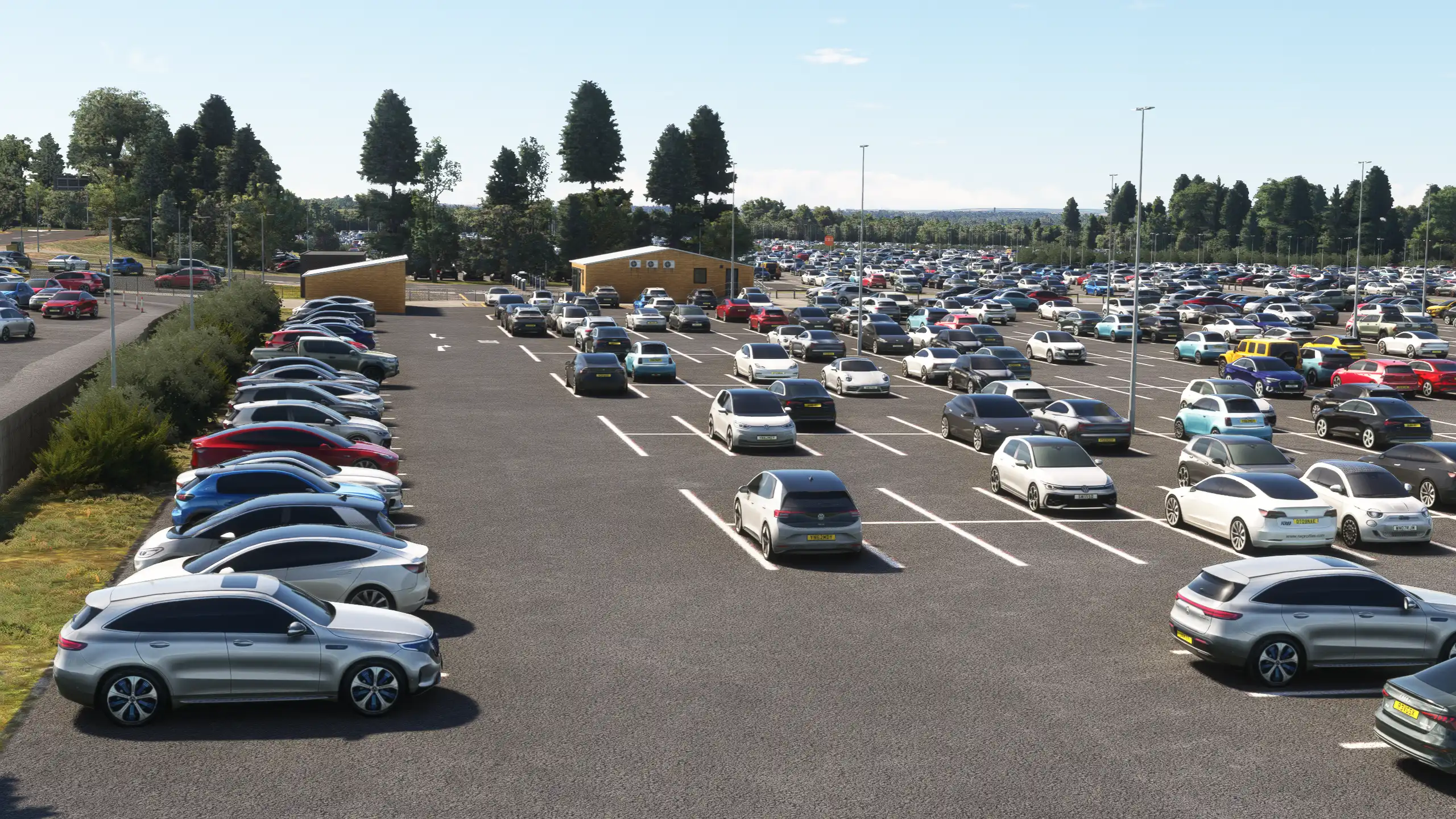
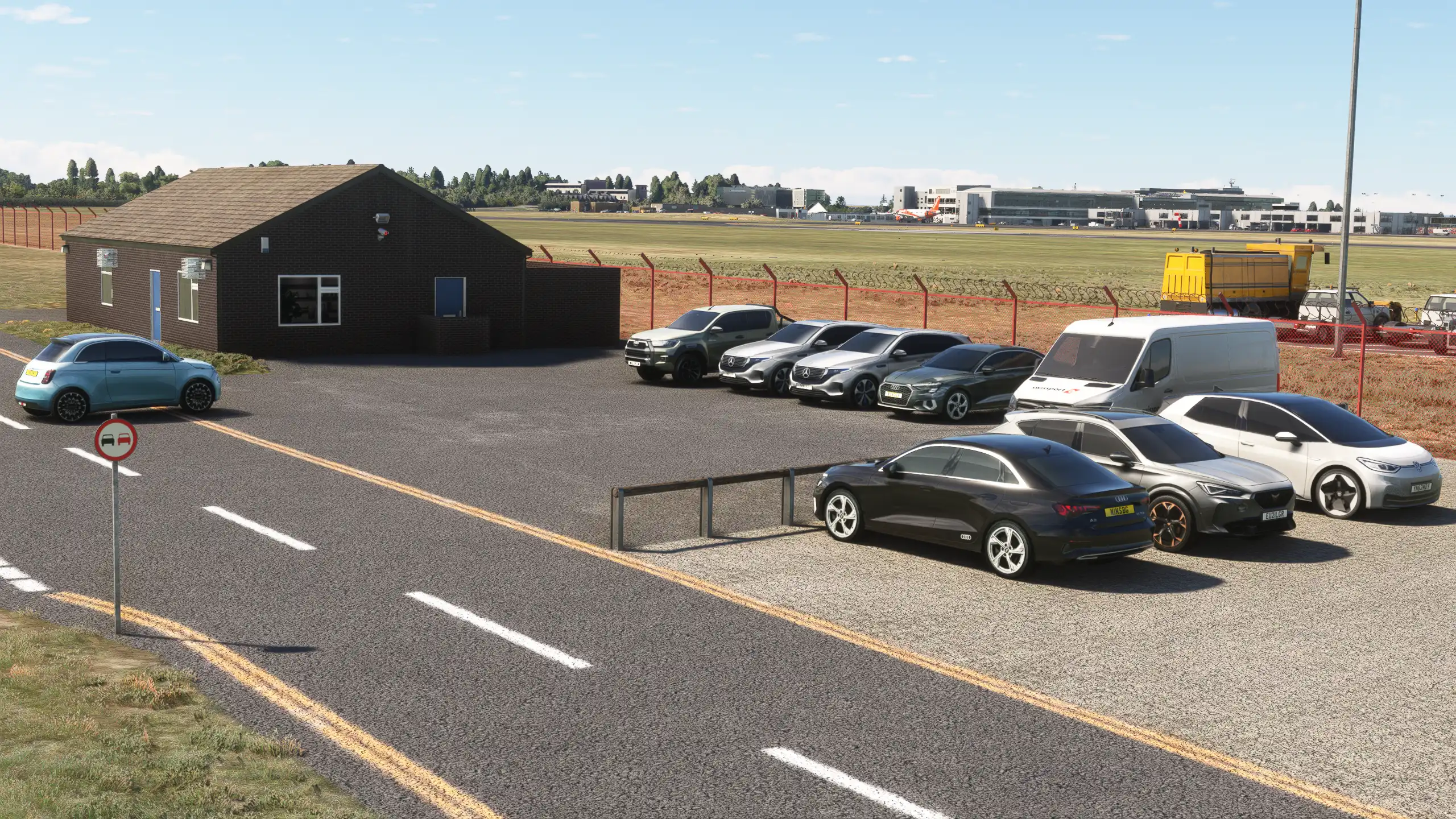
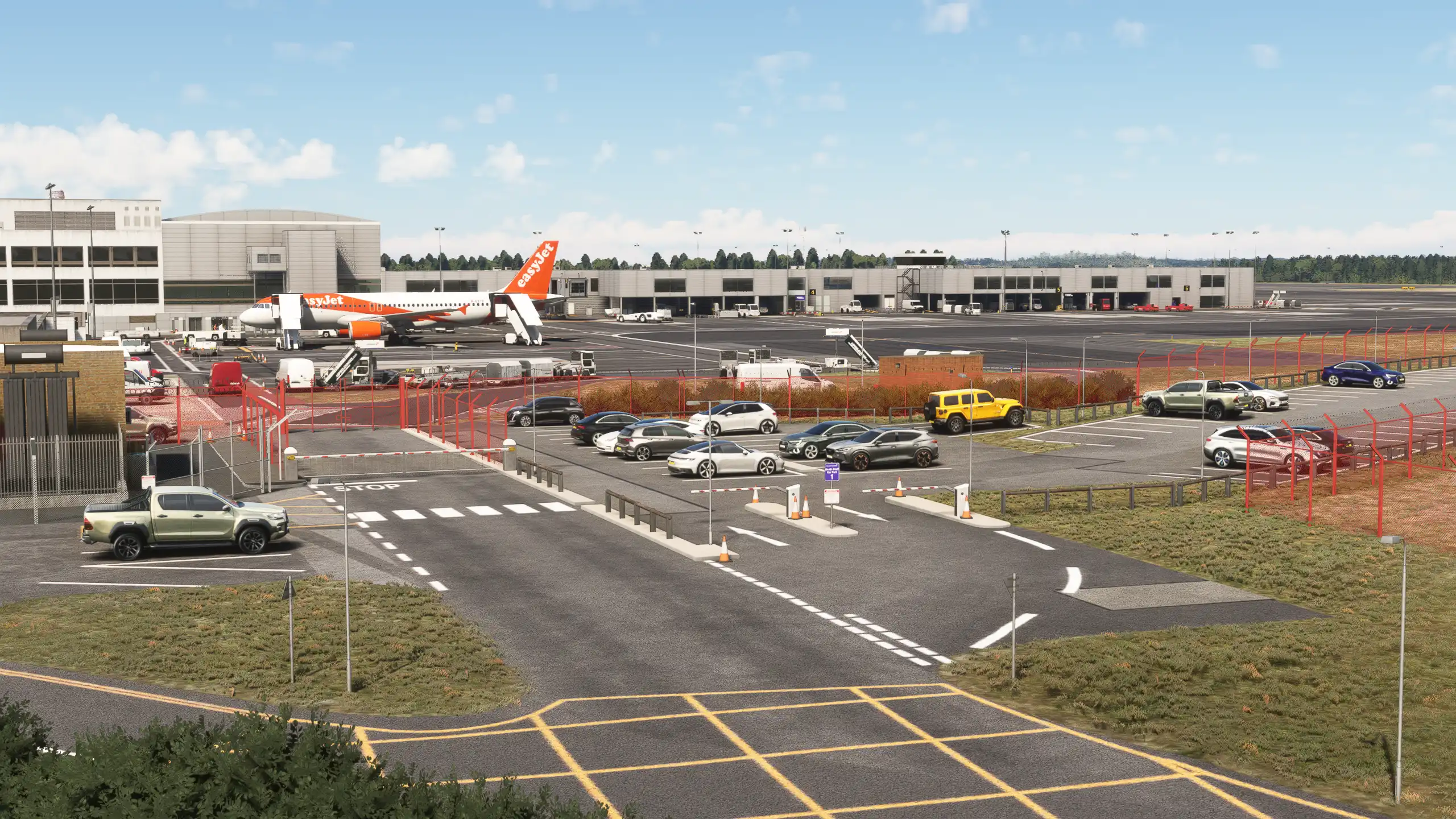
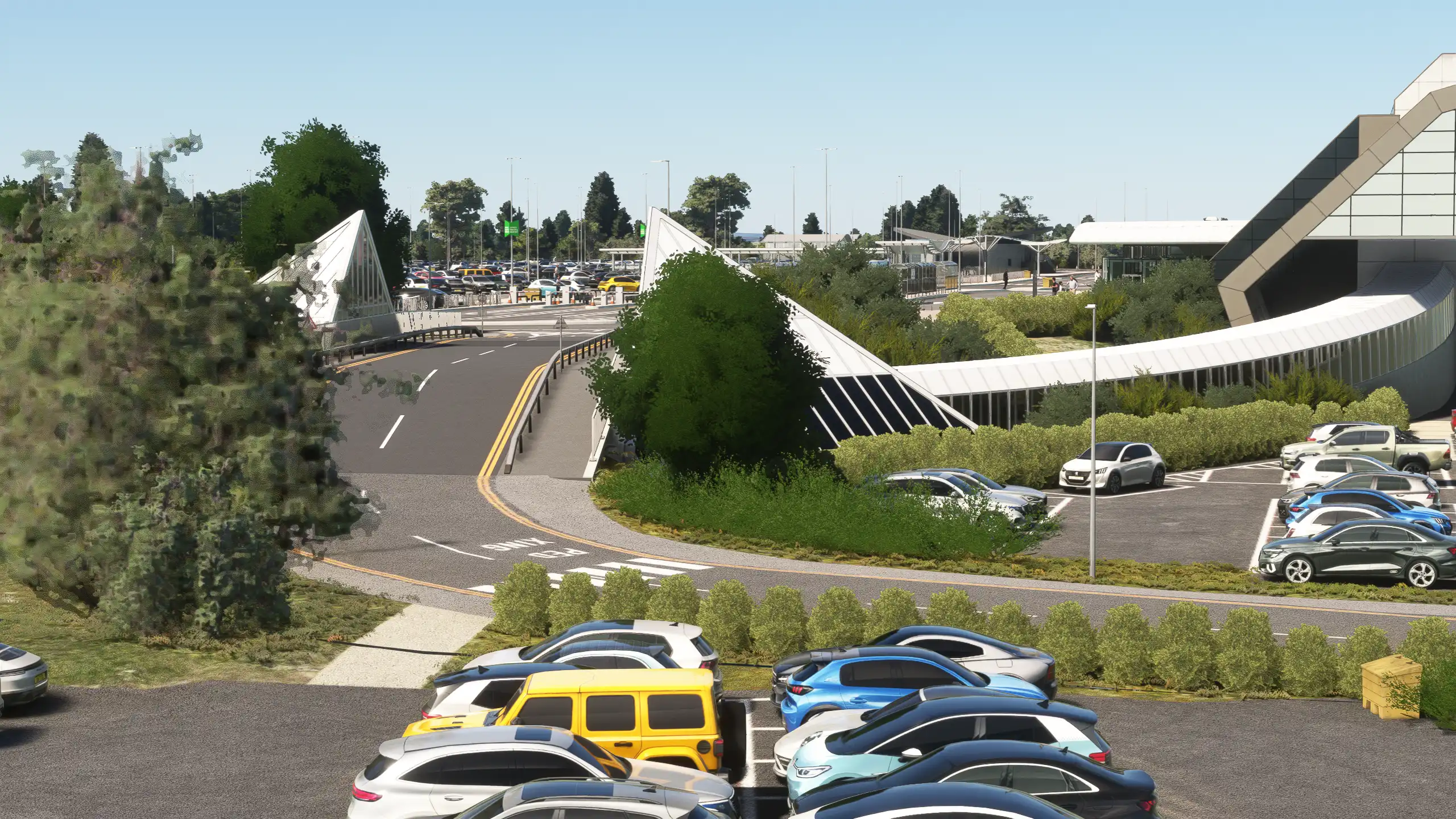
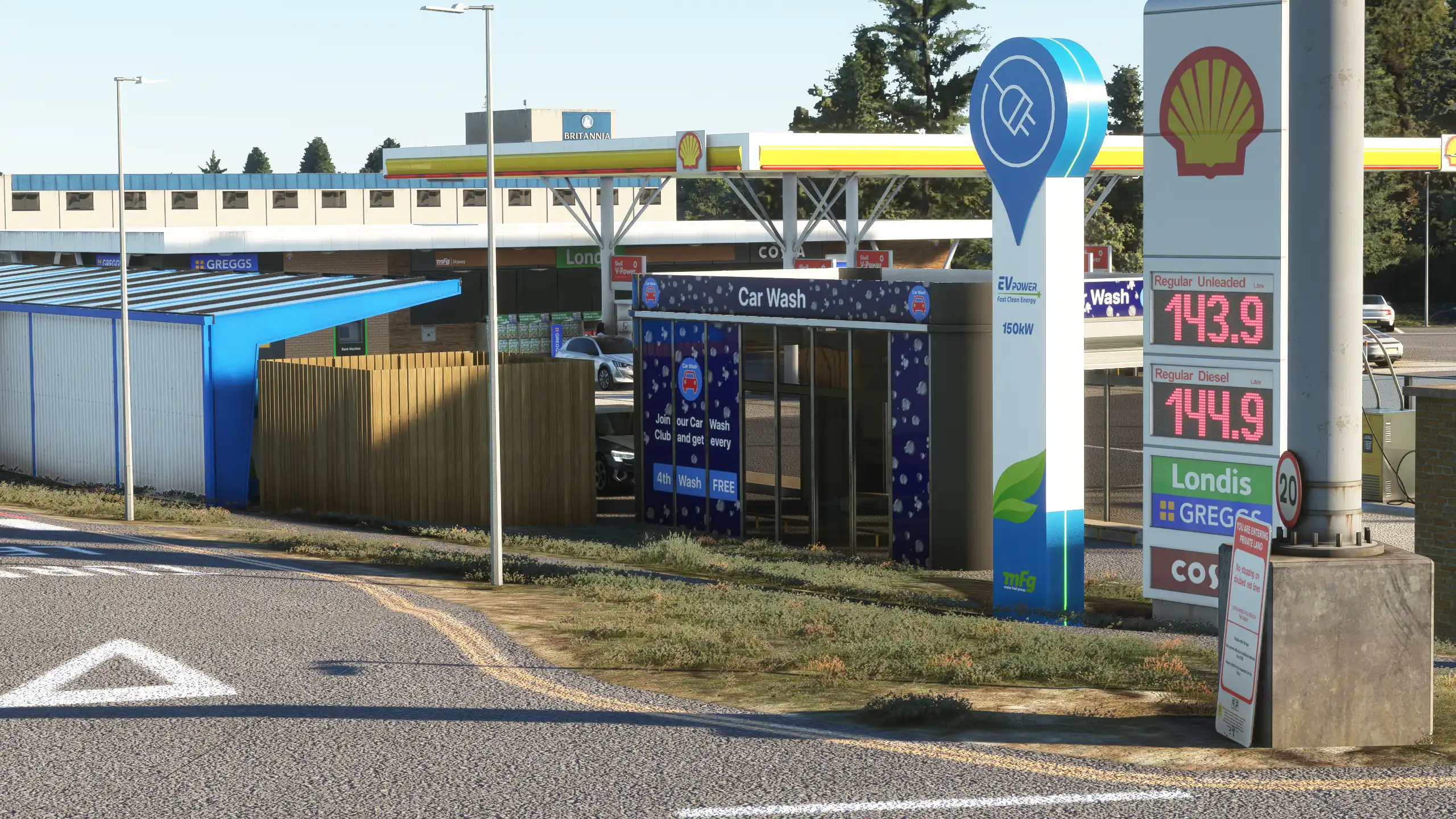
Last but not least, the airport's entrance is there in its full glory, with no compromises as far as detail goes. You can tell they have paid attention to the vegetation around it, with meticulously placed bushes and stuff. There is almost none of that purely flat satellite imagery stuff with 3D stuff on it every now and then.


Night Lighting
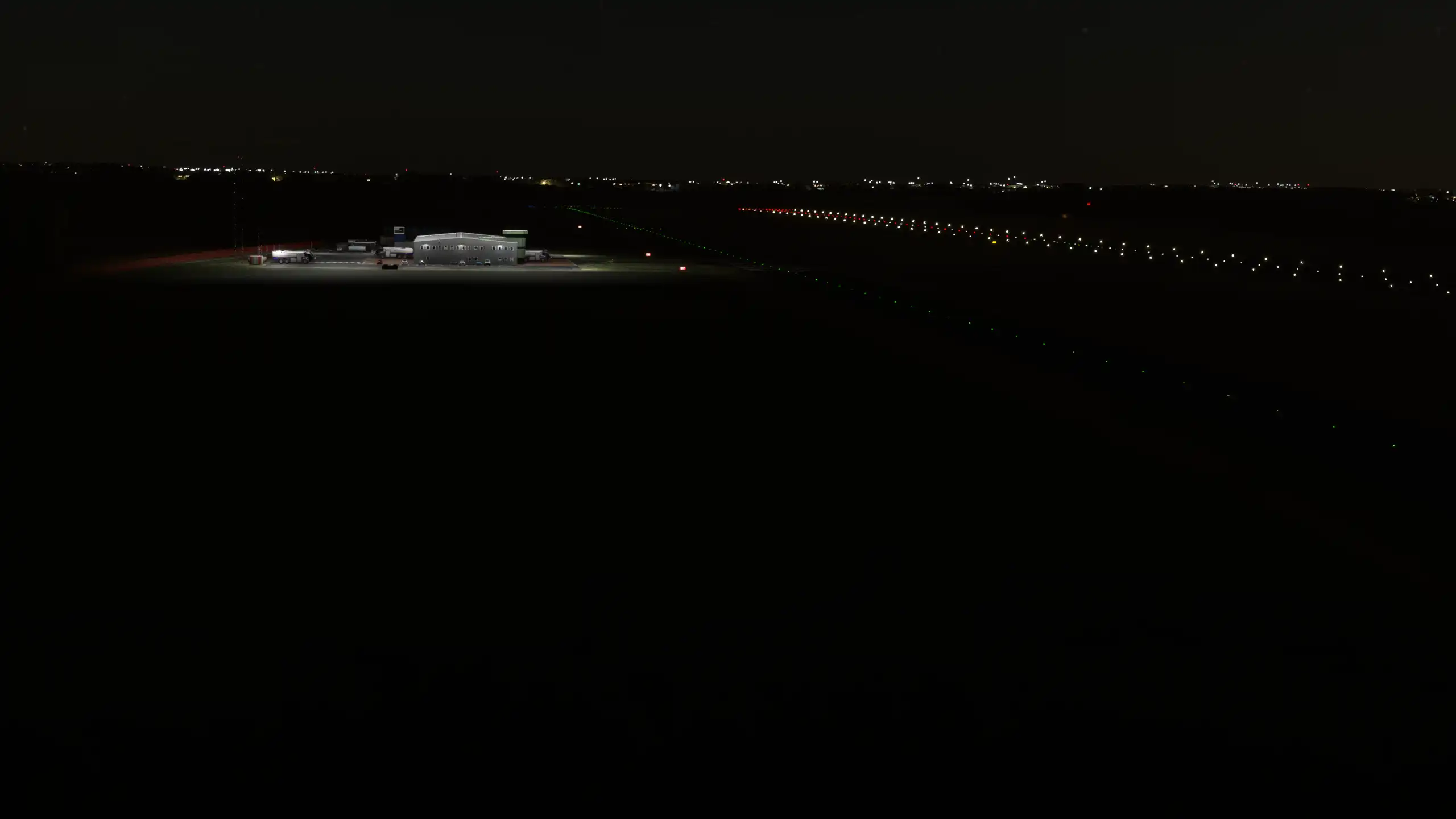
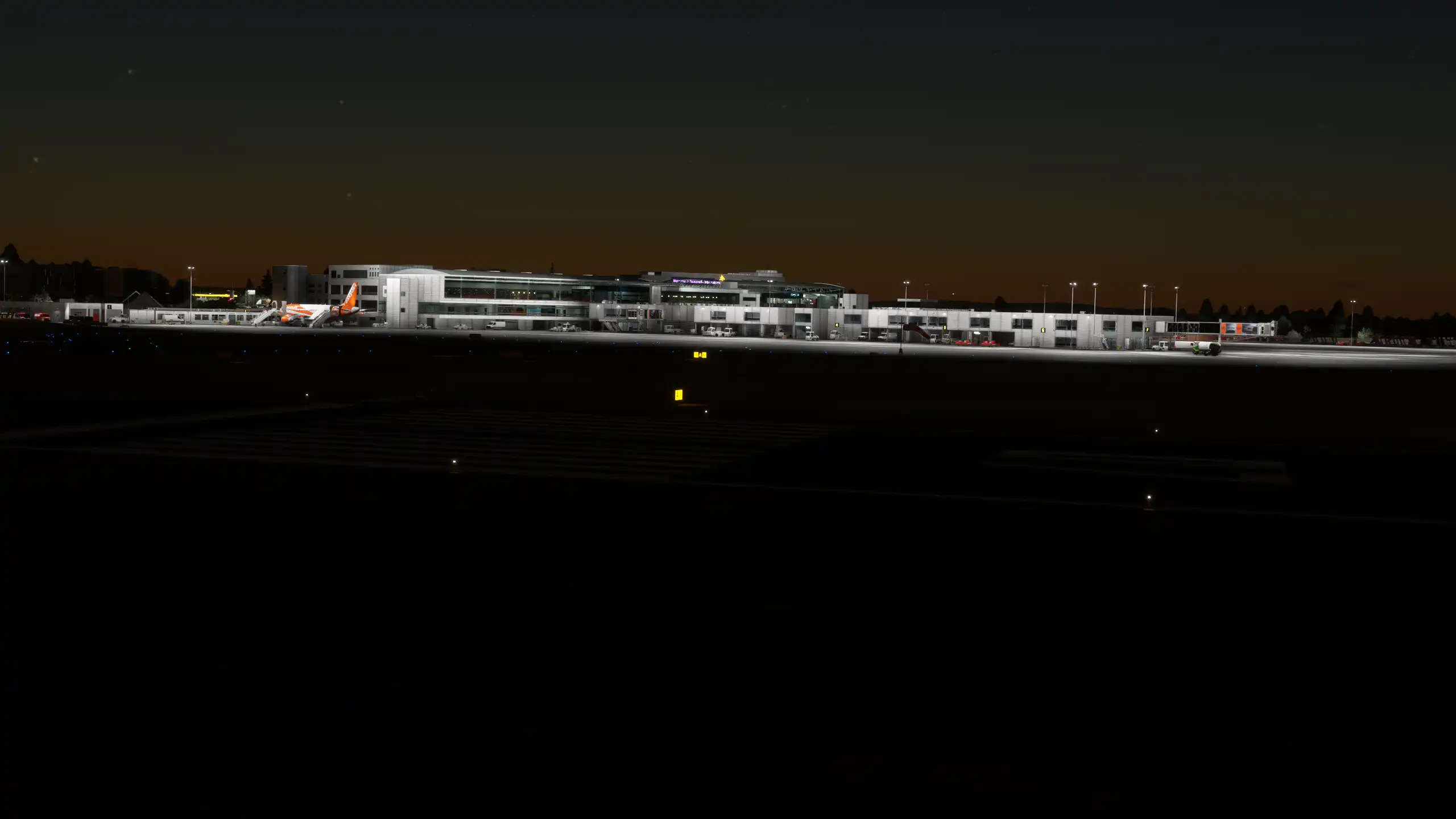
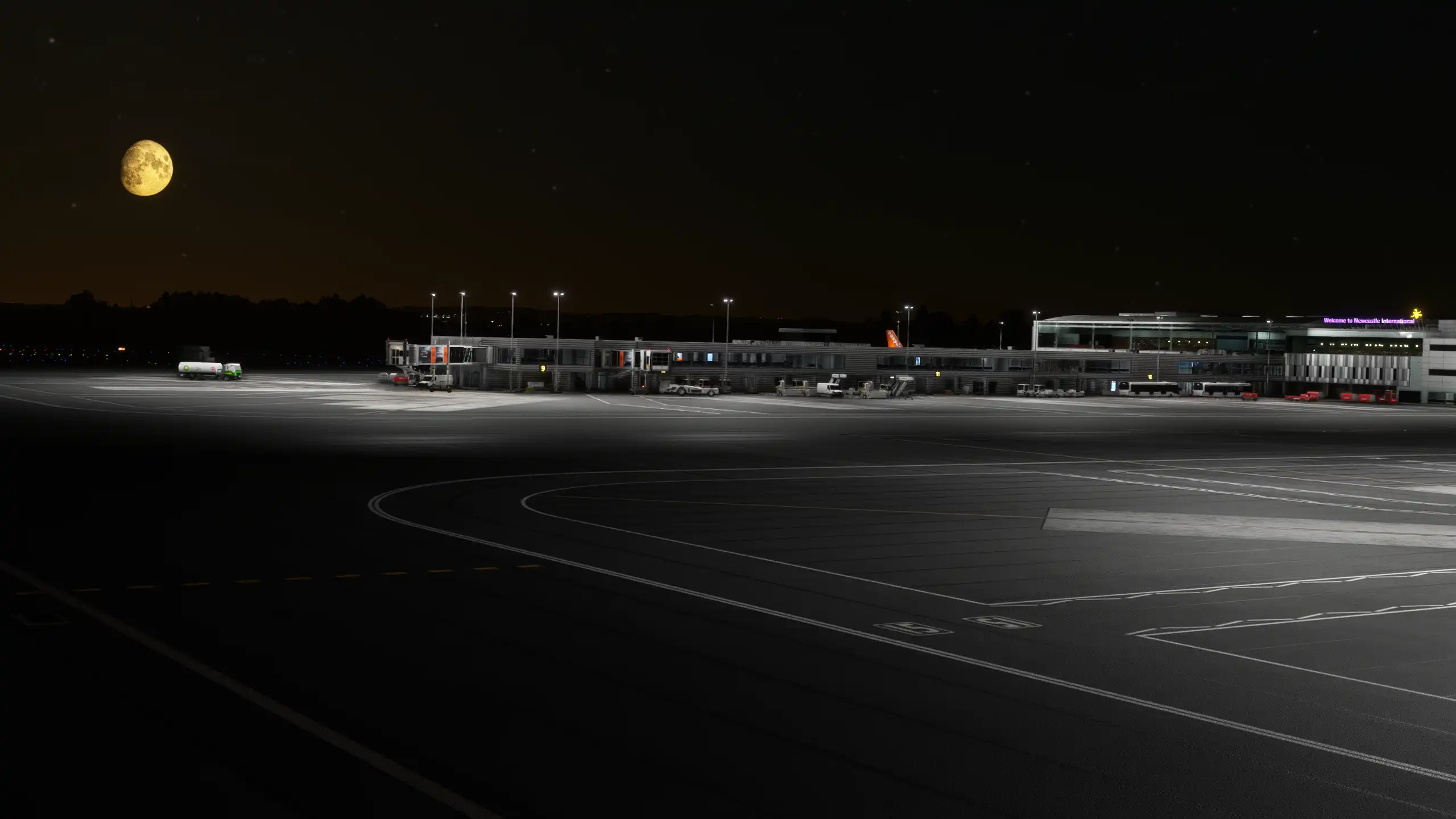
The night lighting around the airport's area is done well, with attention to placement and intensity. It looks very natural and strikes an outstanding balance overall.
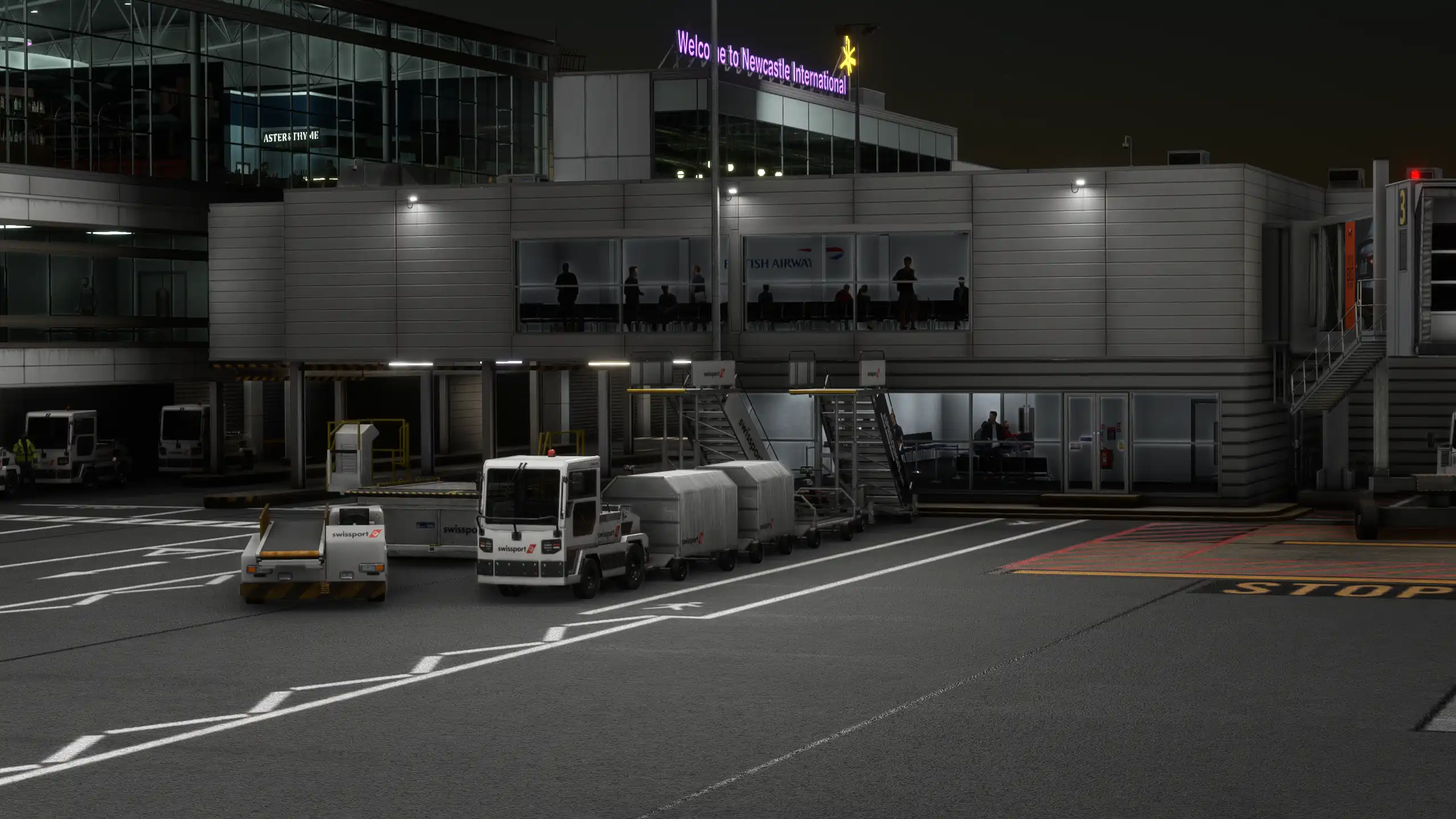
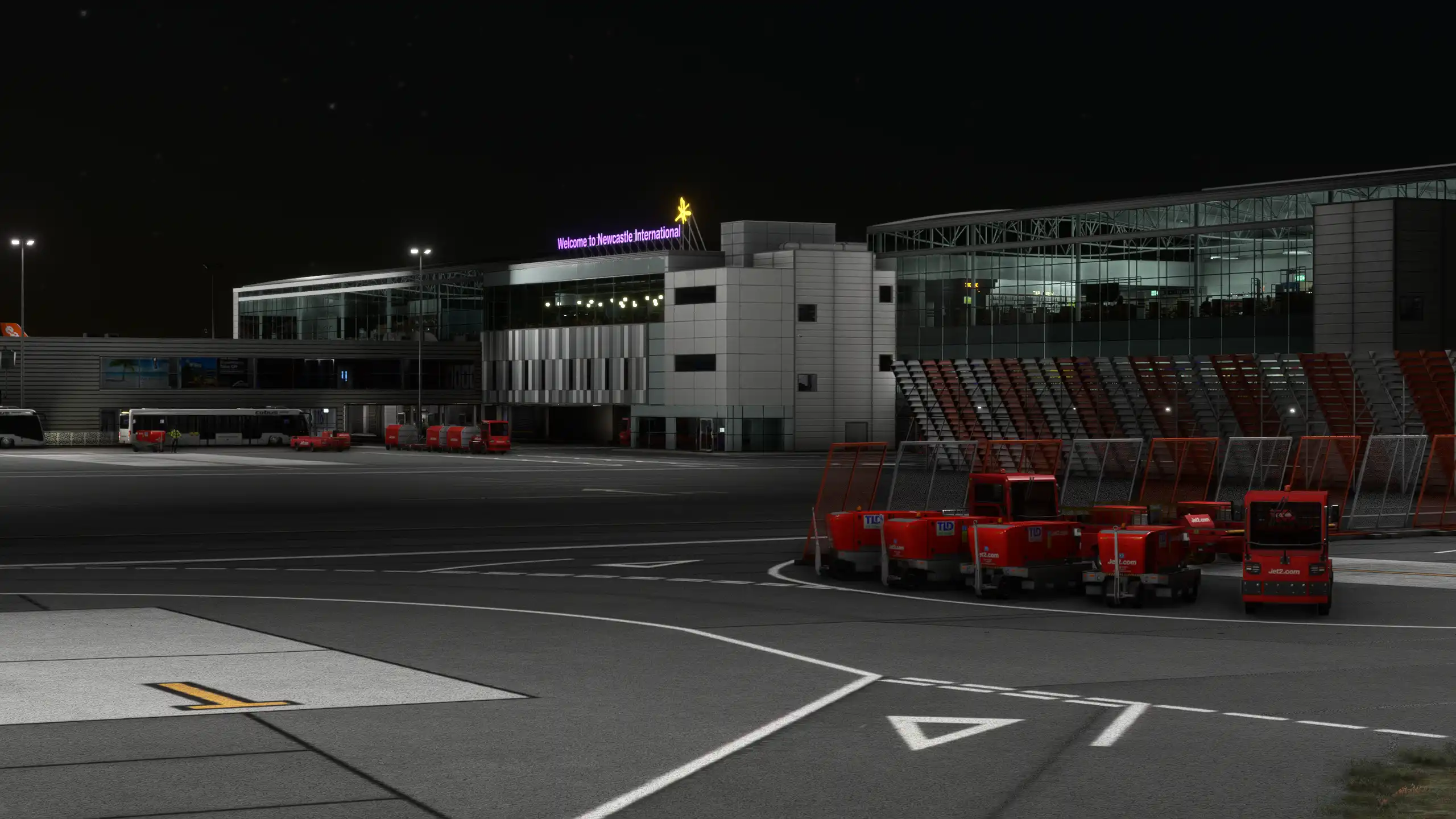
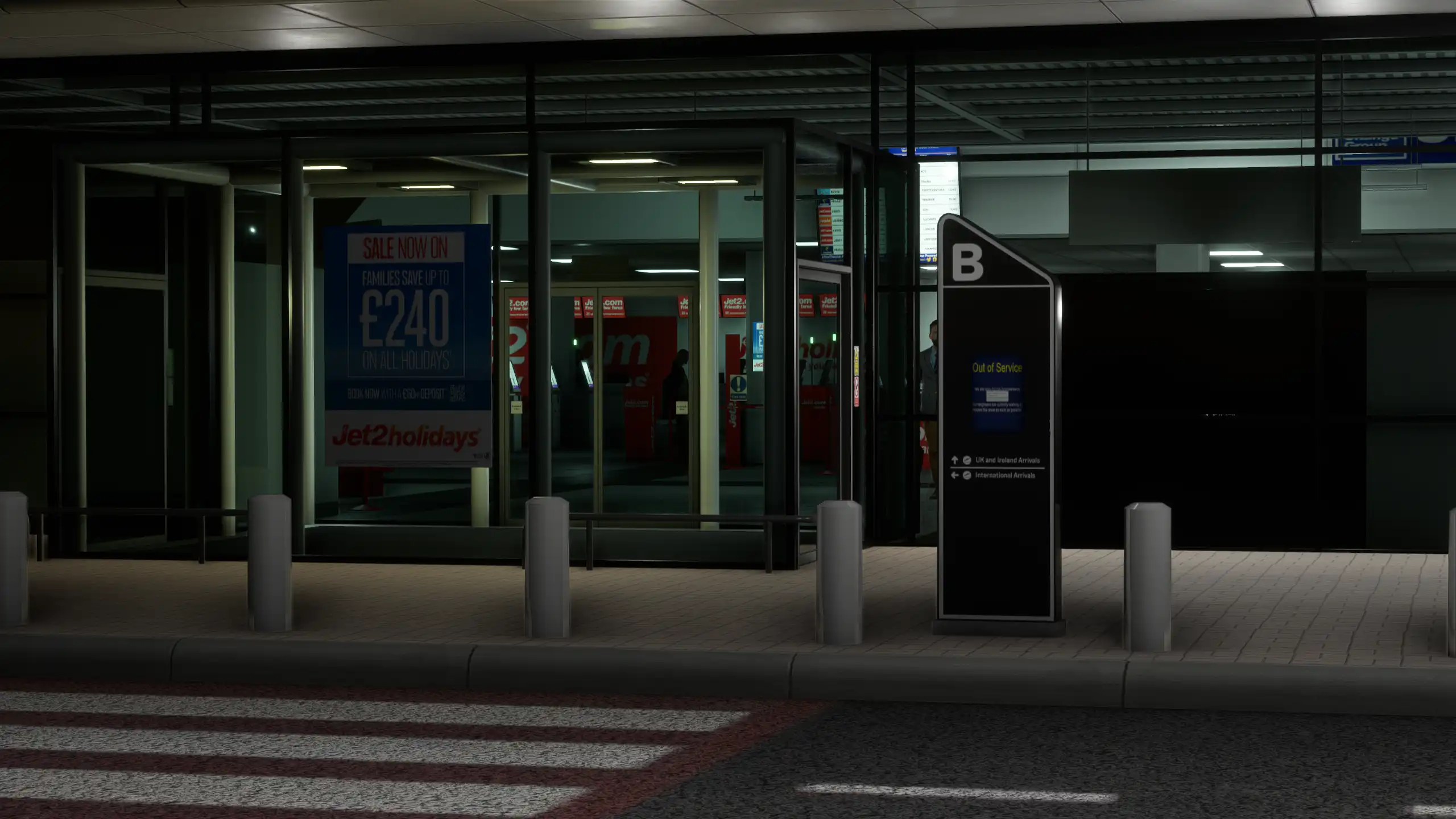
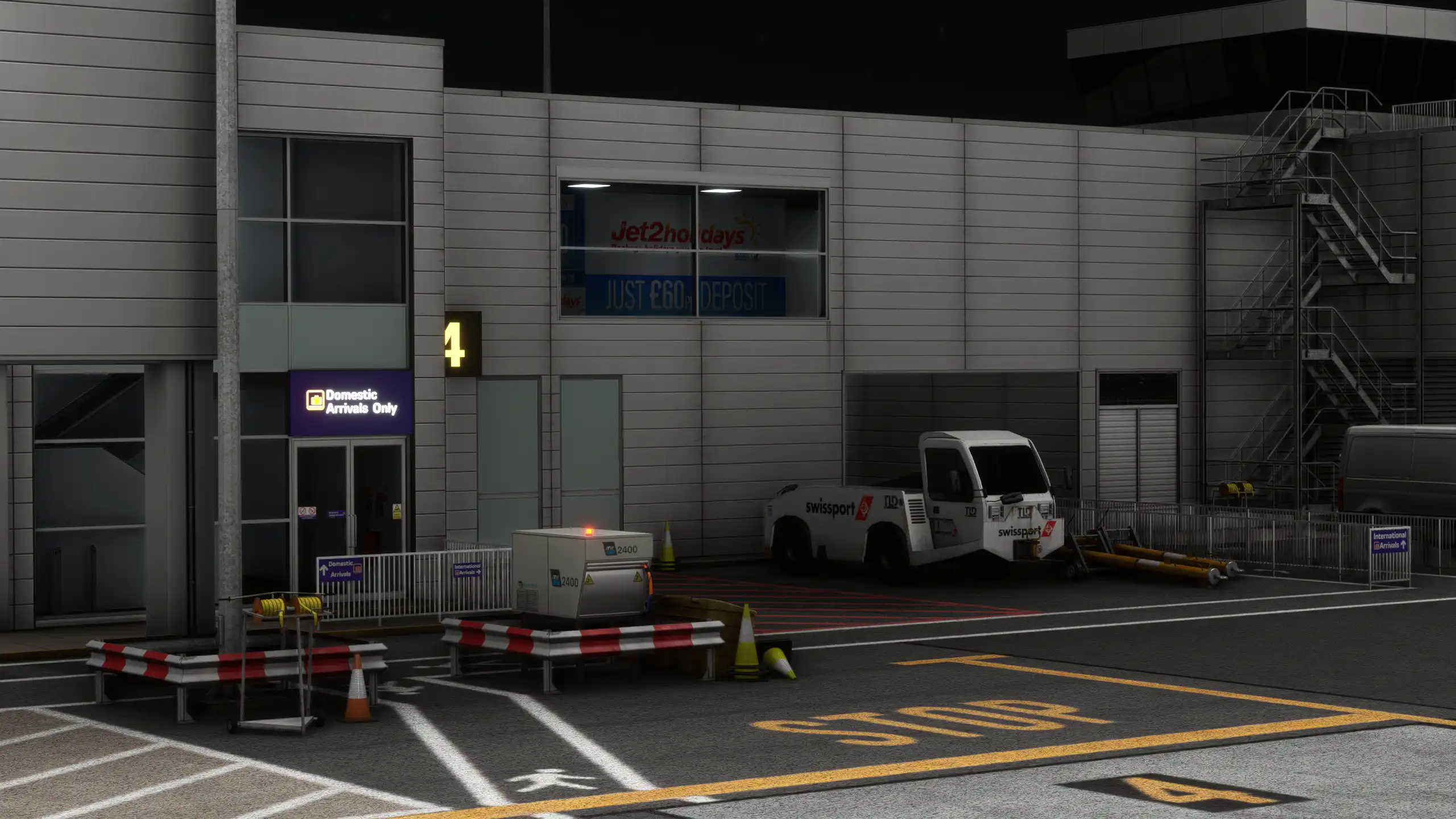
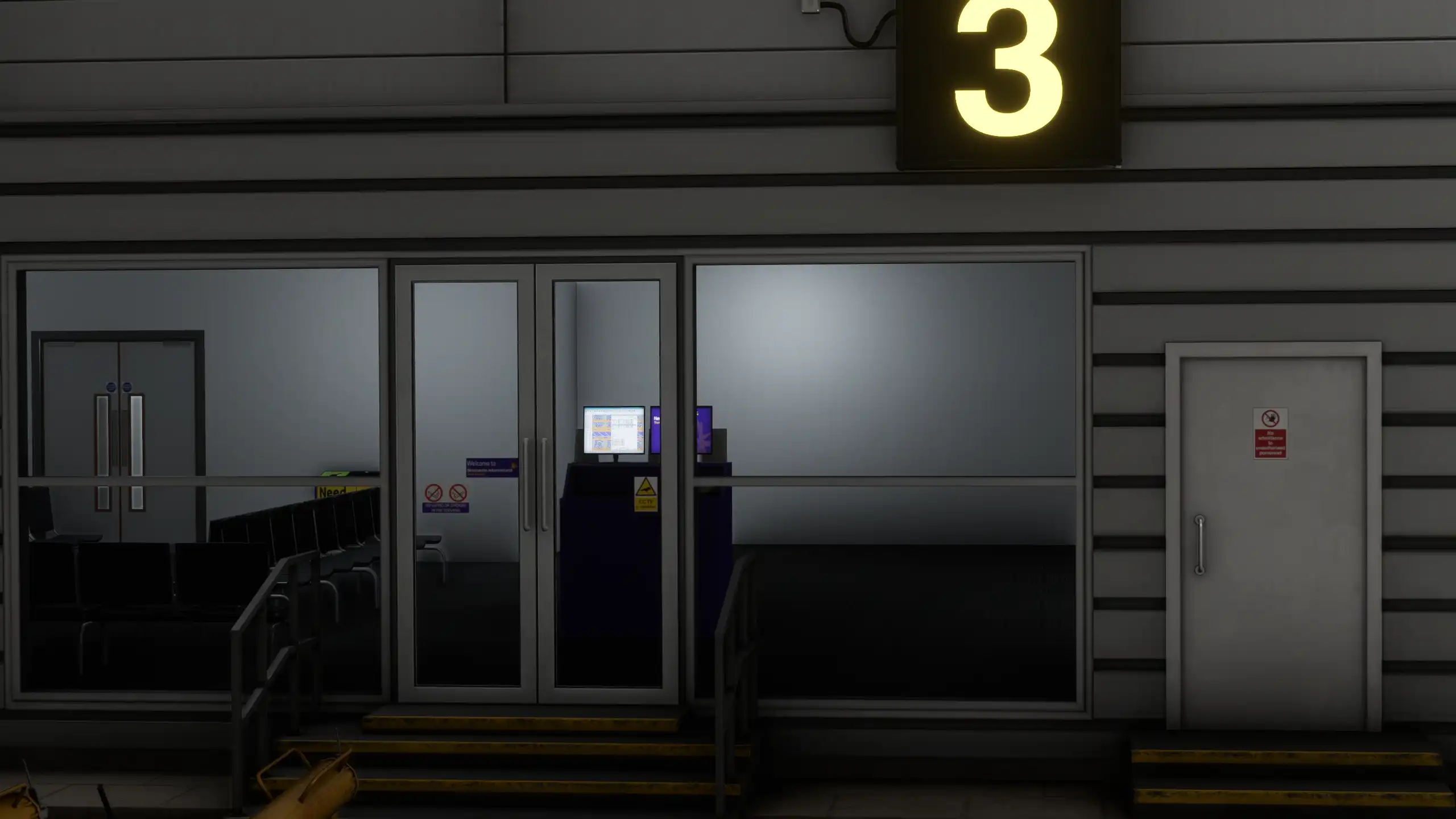
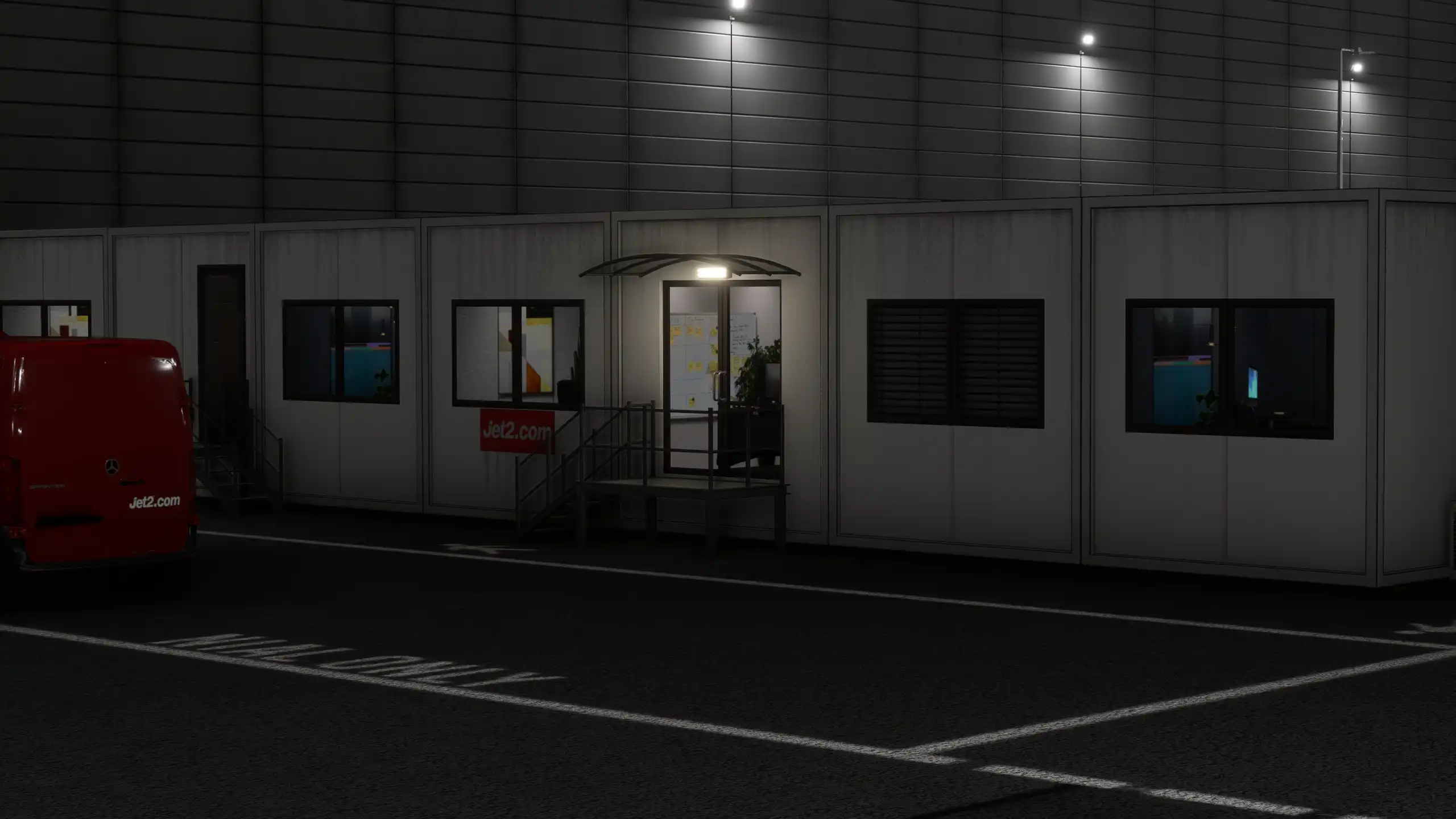

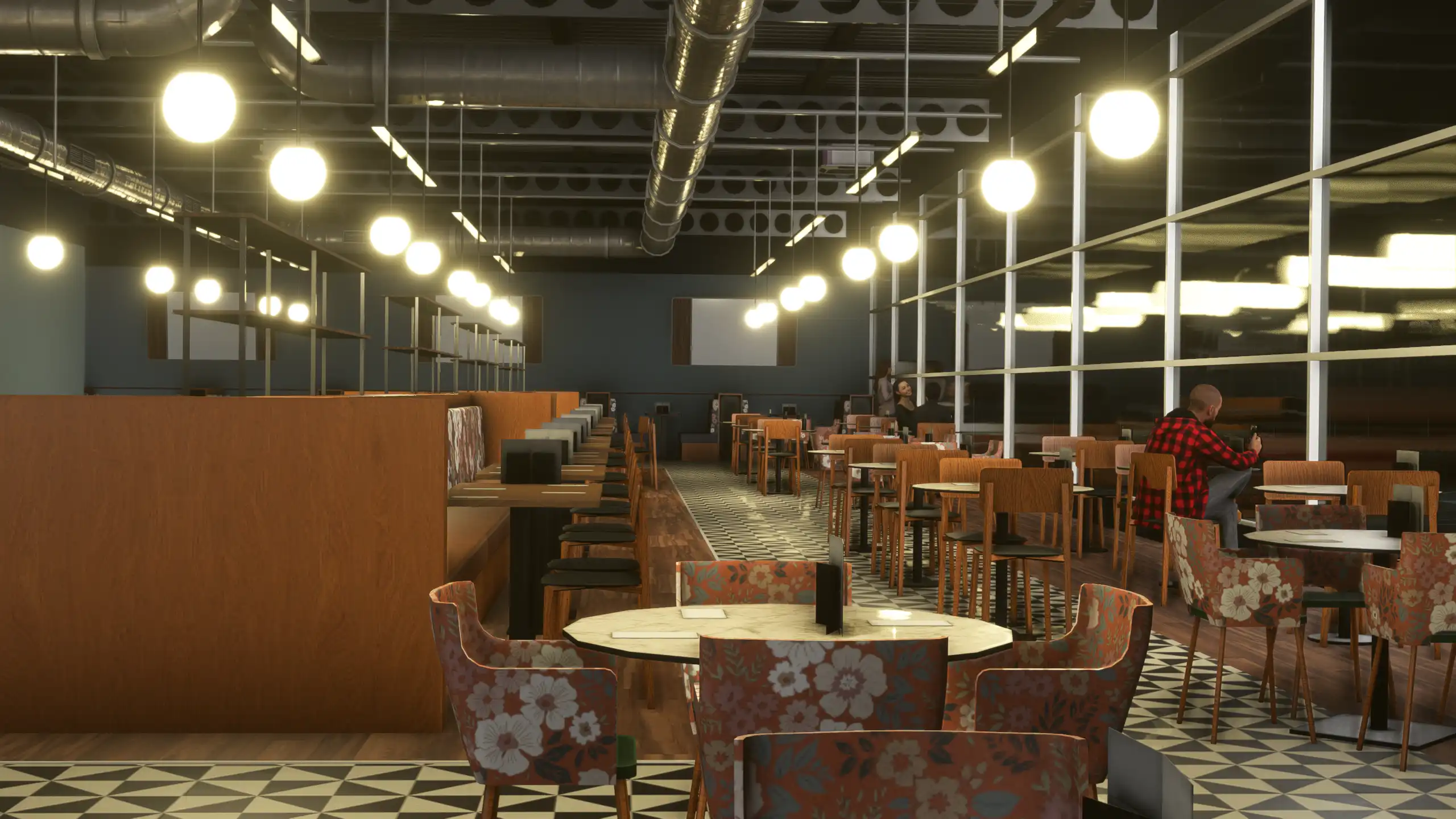
The interior lighting is equally well done, and that is crucial given how the terminal faces the airside with its massive transparent windows. You can see almost everything from there, with its many fast food chains, duty-free shops, restaurants, etc. It's exquisite.



The lighting on the taxiway and runway does not disappoint either, making night-time operations a true joy.

Performance
My Setup: 32 GB RAM DDR5 6200 MHz, Ryzen 7 9800X3D 5.2GHz, Nvidia GeForce RTX 3080 10 GB, 2 TB SSD NVMe 6000 MB/s R&W
Performance was one of my main concerns at first, given the fact that the team is relatively new to scenery making and all that, but I was positively surprised to confirm that they have done a fantastic job with LOD optimization. There were absolutely no stutters on final, no stutters whilst droning around, and I have only seen it dip below 40 fps when GSX had to display the passengers walking out of the plane (my VRAM is generally at the limit and GSX just about goes past that).


On that VRAM note, the highest I've seen it hit without GSX directly compromising it was 9.2 with the Fenix. This is a good number overall, especially considering how much detail the scenery packs in.
It is really performant as is, and the developers even allow you to turn off certain parts of the interior and disable certain scenery features to squeeze out the best performance possible. I did not feel the need to disable anything, as the TLOD was not dipping down to 50 with my 40 fps target. On approach, the terrain LOD hovered around 190-200, which isn't too shabby, allowing for very nice wing view shots just before my landing.
All in all, performance really isn't an issue with this scenery, and I heard it is just as performant in Microsoft Flight Simulator 2024. However, I have not tried it myself because I do not have enough VRAM to run the new simulator without major compromises.
Conclusion
For $17.27—roughly three Big Macs in the United States—you can get what is clearly the best rendition of Newcastle International Airport ever made for any simulator. It brings a remarkable level of detail and immersion to the table, with noteworthy performance to boot, without any compromises to the overall quality.
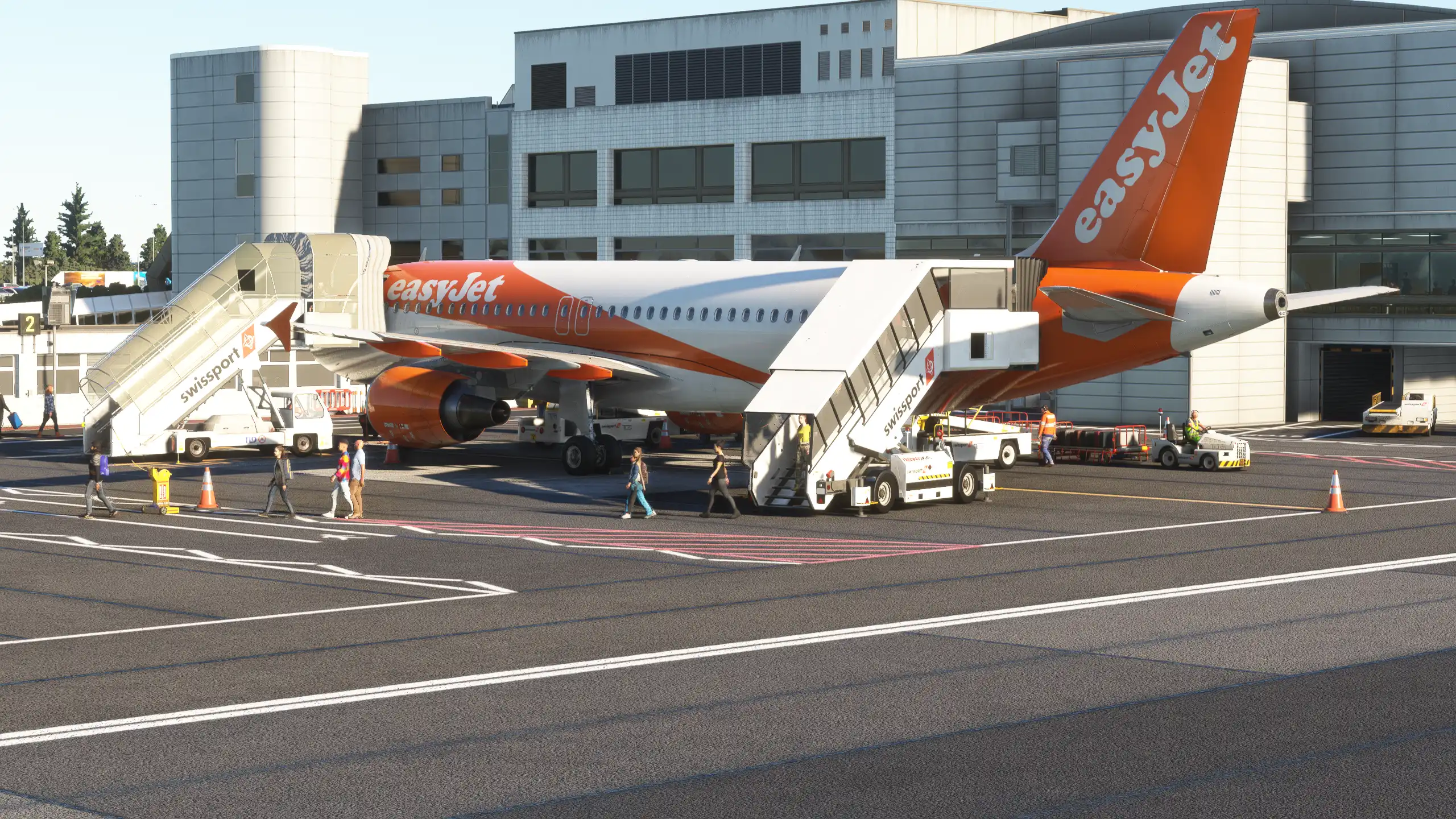
It's hard to believe it's only their second tango so far, and I can't express how surprised I was overall. They have reached a quality standard that is generally "big boy" territory and made it seem easy.

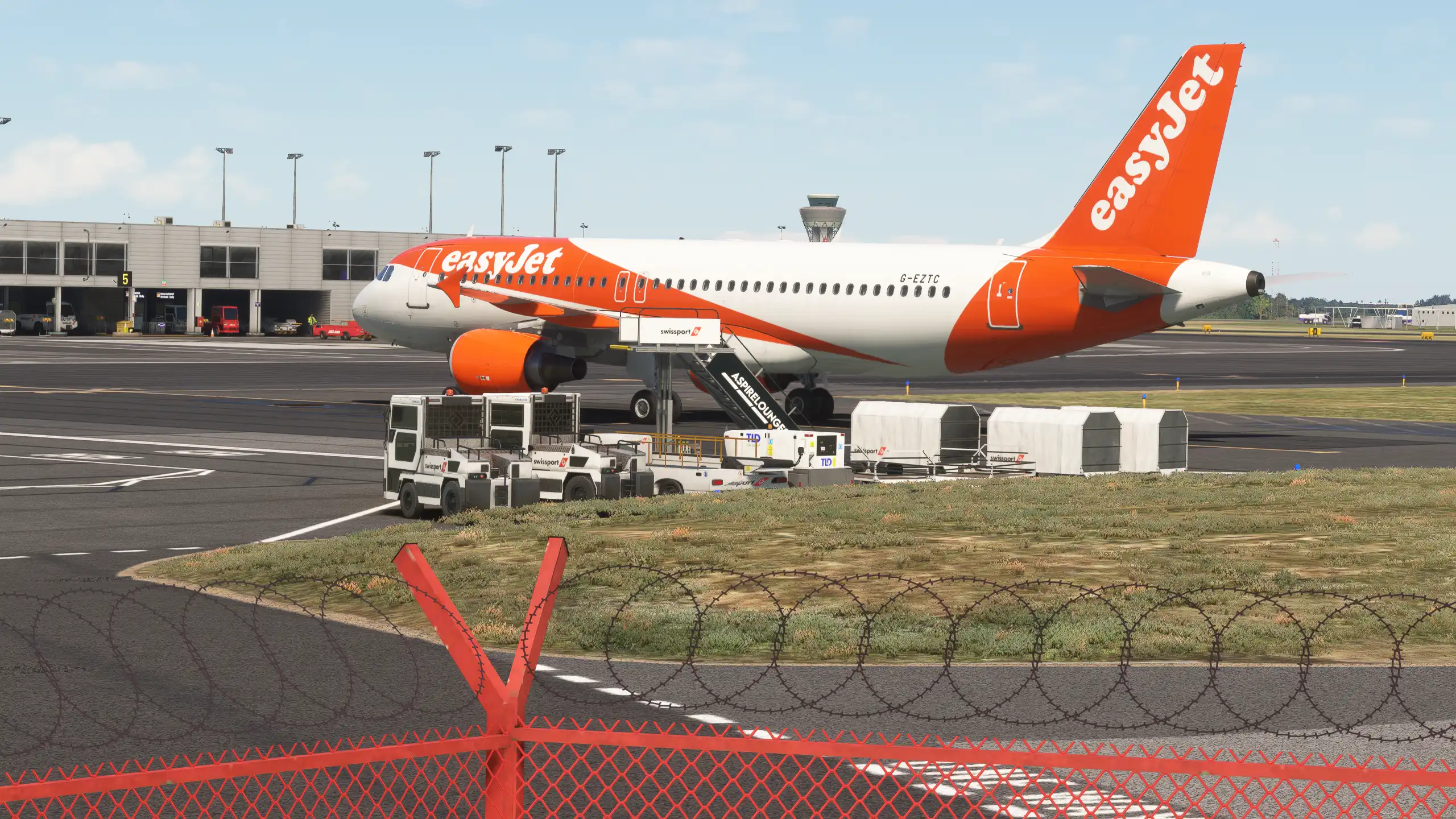
Newcastle's route network is quite fun and varied, and is bound to expand by 2026, as easyJet plans on reopening its base there, which had been closed during the pandemic. There's plenty of domestic fun to be had (Bristol, Belfast, Dublin, London Heathrow, and more), all within less than an hour of flight time, and a considerable number of summer destinations, too, all within less than 5 hours. We can not forget Emirates and their 7-hour journey to Dubai on the triple seven.
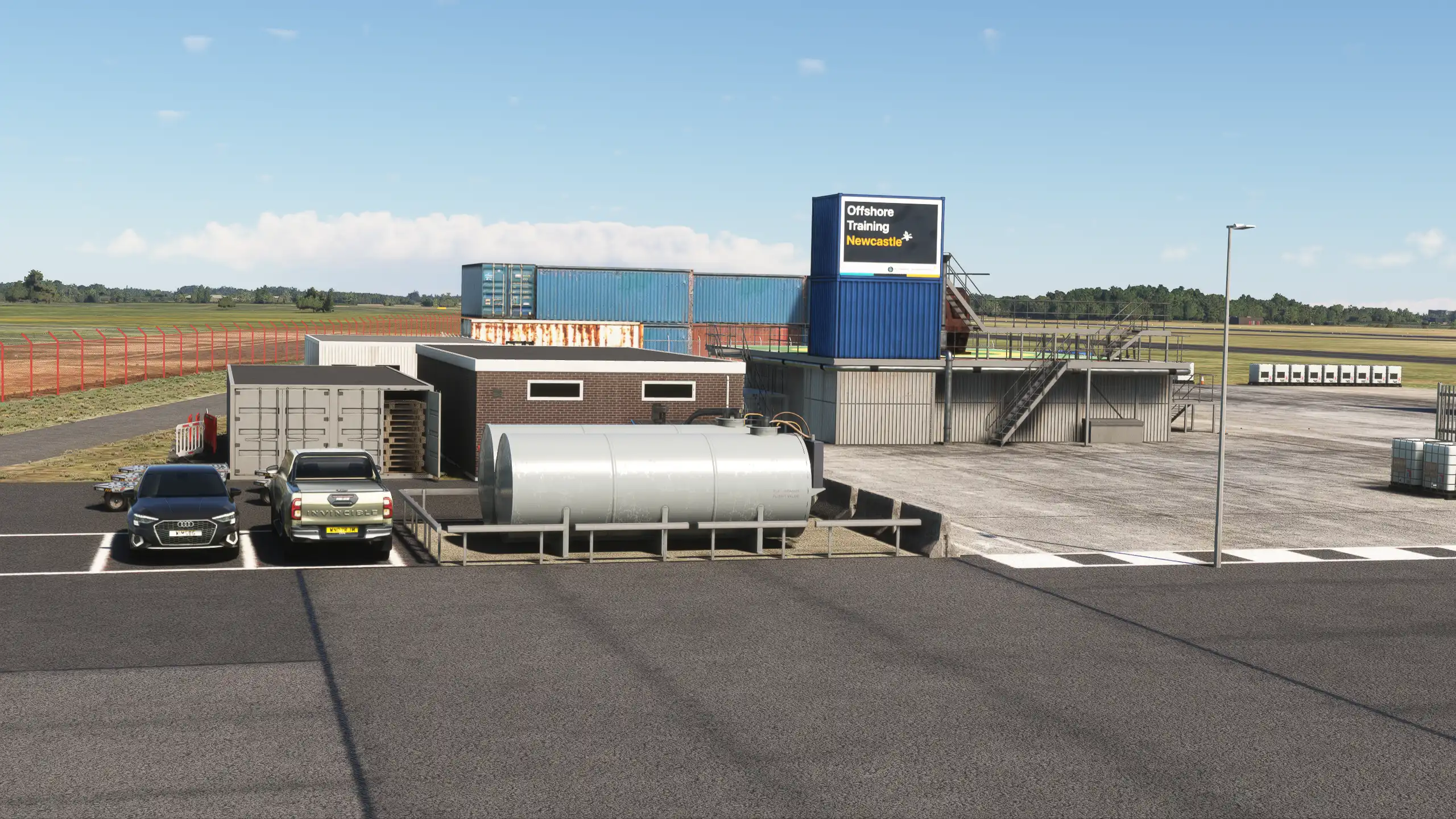

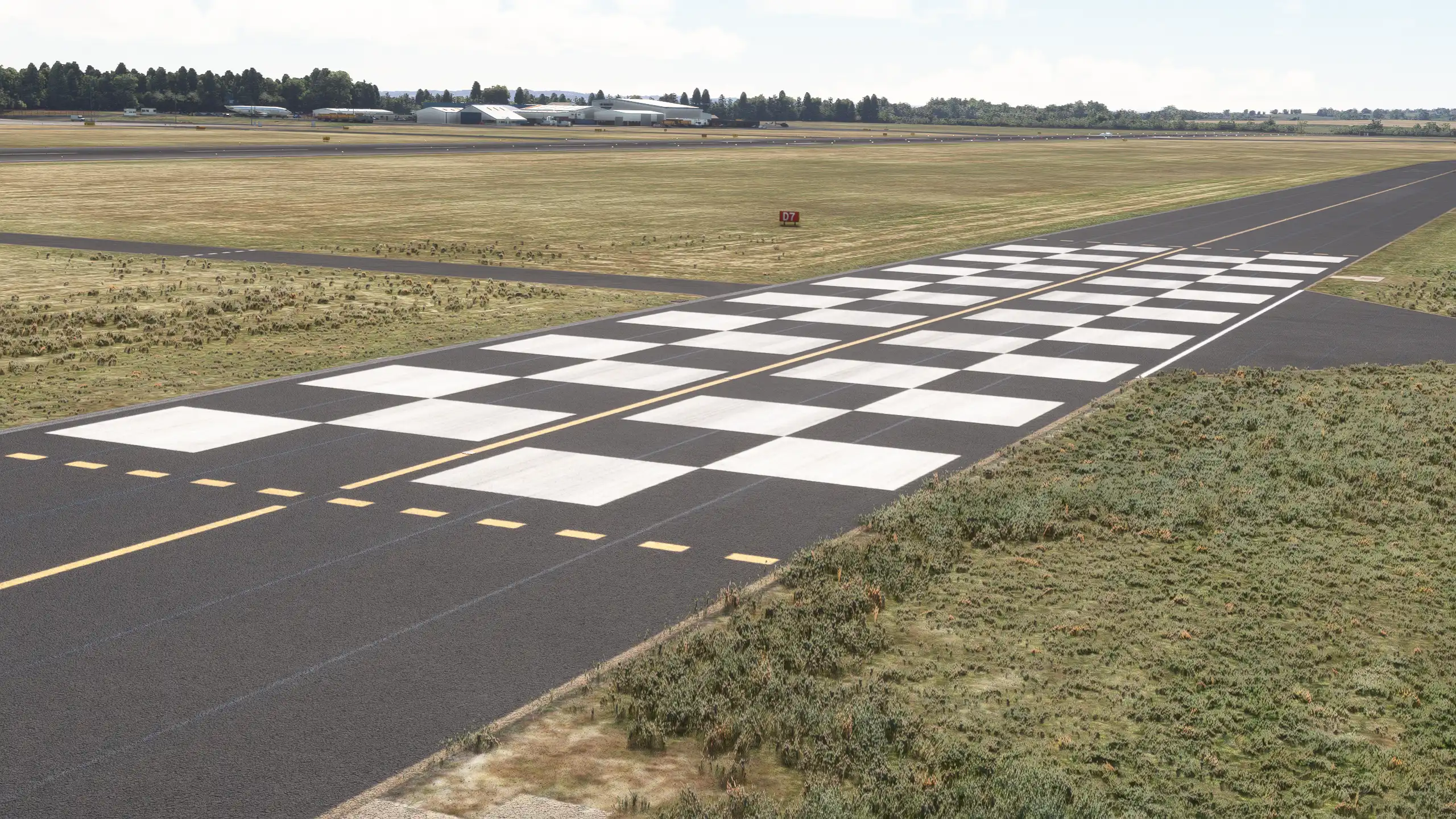
RW Profiles has definitely proven themselves with this release, and I'm very much looking forward to what they have in store next.
If you enjoy our content and want to support Threshold, consider joining us on Patreon!
Share this page

COMMENT ADVISORY:
Threshold encourages informed discussion and debate - though this can only happen if all commenters remain civil when voicing their opinions.